

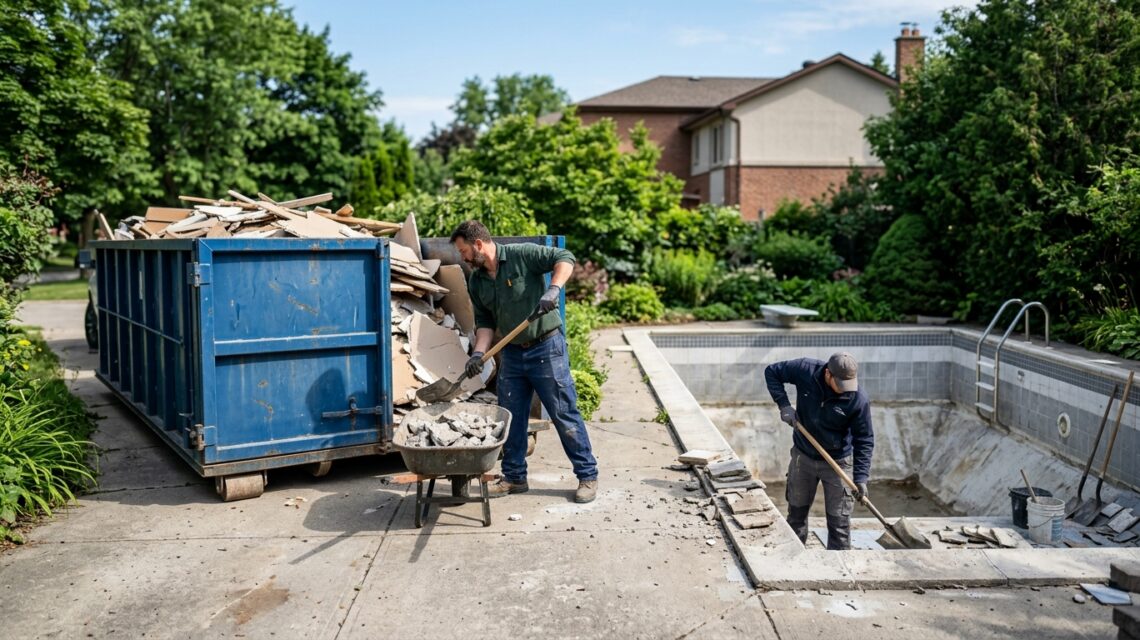
That cracked, algae-stained pool in your backyard isn’t just an eyesore anymore — it’s a liability you’re ready to deal with. Pool removal in 2026 involves more moving parts than most homeowners expect: permits, excavation, and tons of concrete or fiberglass debris that has to go somewhere. Costs vary widely depending on pool type and fill method. But the waste logistics are often the detail contractors underestimate. This article breaks down what you’ll pay, how the process unfolds, and where all that demolition debris actually ends up.
Why Homeowners Choose Pool Removal
Cost of Maintaining an Unused Pool
An empty or neglected pool isn’t just an eyesore. It’s a liability. Standing water breeds mosquitoes, cracked decking becomes a trip hazard, and an unsecured pool is a serious risk for children, pets, and wandering neighbors. Insurance carriers know this too. Some homeowners see premiums climb simply because a pool sits on the property, used or not. Safety concerns alone push many owners toward removal long before cost ever enters the conversation.
Then there’s the money. Chemicals, filters, pump repairs, and resurfacing add up fast, often running into thousands of dollars a year for a pool nobody swims in anymore. Compare that to a one-time removal project, and the math starts to look obvious. Once a pool is gone, so are the recurring bills tied to keeping it clean and safe.
Removal also hands back something most Los Angeles lots don’t have much of: space. A filled-in pool area can become a vegetable garden, a deck, a storage shed pad, or just a flat stretch of lawn for kids and dogs. For many owners, that reclaimed yard is worth more than the pool ever was.
How Removal Affects Property Value
Buyer tastes have shifted. A lot of house hunters in the Valley now see an aging pool as a future expense, not a feature. That perception can slow a sale or shrink an offer, especially on smaller lots where a pool eats most of the usable yard. Removing it can actually widen the pool of interested buyers. No pun intended, but it’s true.
Cost is naturally part of this decision, and homeowners comparing project estimates should know that yard dumpster rental cost is one of the more predictable line items in a removal budget. Contractor labor, by contrast, varies by site access and soil conditions. Knowing that number early helps owners weigh removal against the ongoing cost of upkeep with real figures instead of guesswork.
Appraisers and real estate agents increasingly treat a removed pool as a selling point rather than a loss, particularly in neighborhoods where families want more usable square footage. A flat, landscaped yard often shows better in listing photos than a dated pool ever did. For sellers weighing renovation against removal, that shift in buyer psychology is hard to ignore.
Pool Removal Options: Full vs Partial Demolition
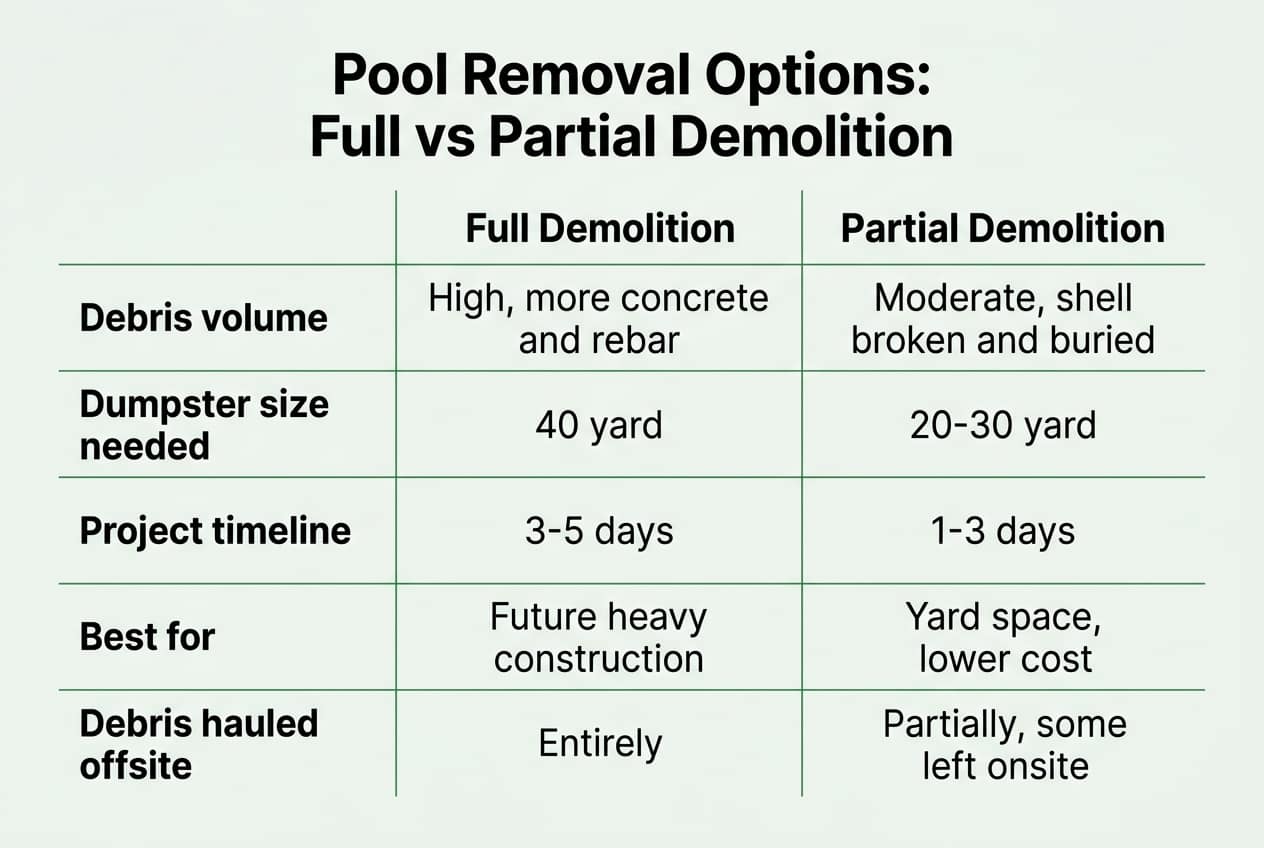
Not every backyard needs the same fix. Some pools get dug out completely, others get punctured and buried in place. The right call depends on your lot, your budget, and what you plan to build next. Before locking in a method, it helps to compare the two side by side, since the debris volume and future land use differ sharply between them.
|
Factor |
Full Removal |
Partial (Fill-In) Removal |
|---|---|---|
|
What happens to the shell |
Entire shell broken up and hauled offsite |
Shell punctured, left in ground, backfilled |
|
Debris generated |
Heavy: concrete, rebar, gunite |
Minimal: mostly broken bottom slab |
|
Typical cost tier |
Higher, general range $5,000-$20,000+ |
Lower, general range $3,000-$8,000 |
|
Future land use |
Allows building, additions, full re-grading |
Landscaping only, no structures above |
|
Disclosure on sale |
Clean record, no buried structure |
Must be disclosed to future buyers |
Full Removal Explained
Full removal means crews excavate the entire gunite or vinyl shell and cart it away, piece by piece. It’s the thorough option. Nothing stays buried, so the lot is free of future restrictions on building or grading. That matters if you’re dreaming of an addition, a guest house, or a deeper foundation someday. It’s also the messier job, generating far more broken concrete and rebar than a fill-in, which is why haul-away costs run higher.
Partial (Fill-In) Removal Explained
Partial removal takes a shortcut. Workers puncture the shell’s floor for drainage, drain remaining water, knock holes in the walls, and backfill the whole cavity with gravel, dirt, and the crushed remains of the pool floor. Less gets hauled off, so debris volume drops significantly compared to full removal. The tradeoff is permanence: that shell stays in the ground forever, and most cities require it be noted on property disclosures at resale.
Above ground pools are a different animal entirely, and worth separating out. Teardown there usually means draining, disassembling the metal or resin frame, and removing a thin liner, with little to no structural concrete involved. Inground demolition, by contrast, is a structural job dealing with reinforced concrete and steel, closer in scope to the kind of work covered in guides on AC installation projects, where equipment access and site prep drive the bulk of the cost.
Lot size and future plans usually settle the decision. Small urban lots with no room to expand often lean toward fill-in, since there’s nowhere else to build anyway. Larger lots, or homes heading to market soon, tend toward full removal to avoid disclosure headaches. Either way, understanding a roll off dumpster sizes guide early helps you plan the haul-away stage before the first hole gets dug.
The Pool Removal Process Step by Step
Pulling out an old pool isn’t a one-day job. It’s not just a guy with a jackhammer either. There’s a sequence to it, and skipping steps causes problems later — think settling soil or a failed inspection. Knowing the order helps you plan your dumpster timing and avoid surprises once the crew shows up.
What a Demolition Crew Handles On-Site
Most of the heavy lifting happens before any concrete gets touched. Prep work sets up everything that follows, and a rushed prep stage usually means delays mid-project. Here’s what a competent crew typically covers:
-
Pulling permits and scheduling utility locates so no gas, electric, or water lines get struck during excavation;
-
Draining thousands of gallons of pool water through an approved method, since dumping it straight into the street is often against local code;
-
Disconnecting and capping pumps, heaters, and filtration lines so nothing is live when the shell comes out;
-
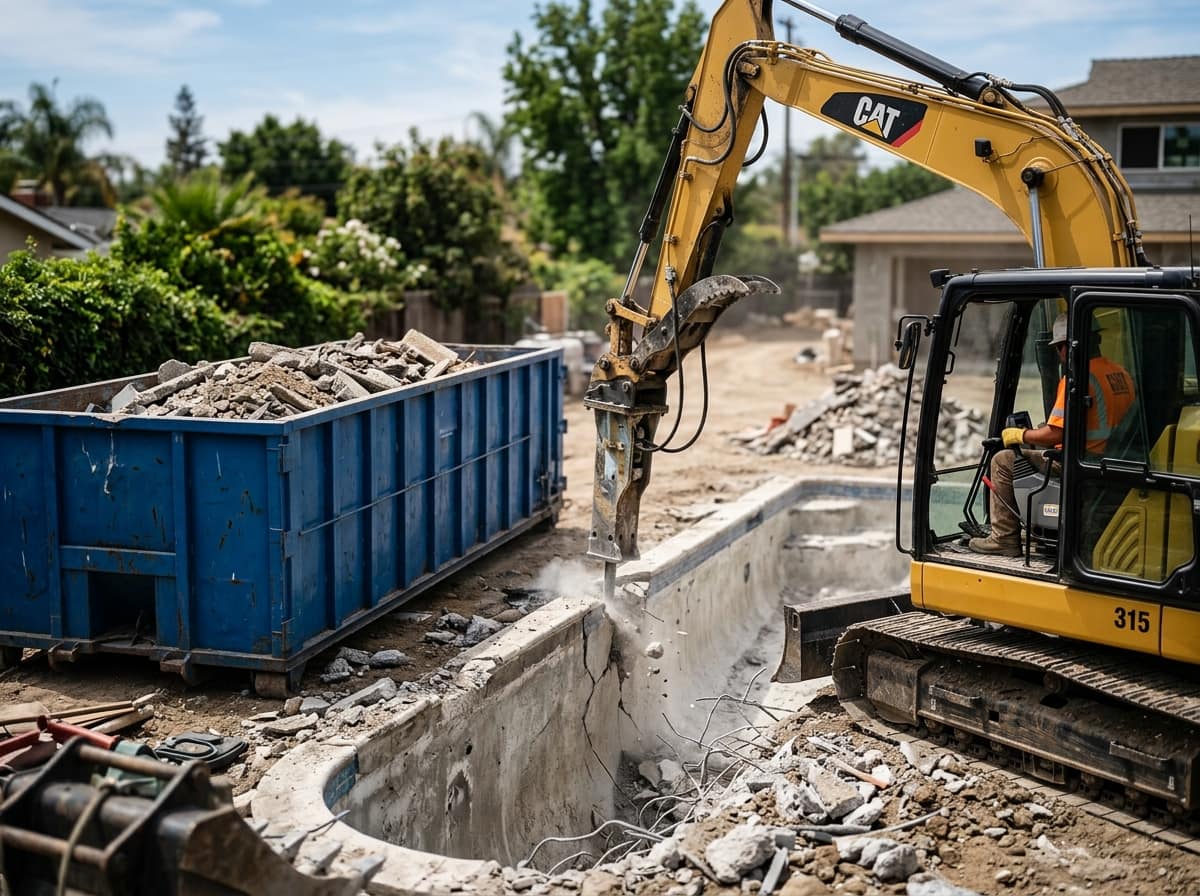
Breaking up the concrete, gunite, or fiberglass shell with excavators and hydraulic hammers, usually in a single aggressive push;
-
Backfilling the hole with soil and gravel in compacted layers to prevent future sinking;
-
Grading and leveling the yard so it’s usable again, whether for sod, pavers, or a shed.
That backfill step matters more than people expect. Poor compaction today means a sunken patch of yard in two years. A good crew compacts in stages, not all at once.
Where the Broken Concrete and Debris End Up
Once the shell is broken apart, you’re left with a serious pile of material — broken concrete, rebar, chunks of gunite, maybe old decking. None of that can sit in your driveway forever. Contractors typically load it straight into a heavy-duty container positioned curbside or on the property, since a standard rental can’t handle the tonnage. For concrete and dirt specifically, a 10 or 15 yard low-boy dumpster is built for that density, priced flat at $650 regardless of extra fees. Larger demolition jobs with mixed debris often call for a 40 yard container instead, which runs $700 with four tons included and $95 per additional ton. If you want to understand what actually happens to the material afterward, it helps to look into how concrete and debris recycling works, since a surprising share of broken concrete gets crushed and reused rather than landfilled. Any rental booked for this work includes 10 days on-site, with extra days billed at $20 — useful to know if your contractor’s timeline slips a bit, which it often does.
What Pool Demolition Debris Costs to Haul Away
Why Lowboy Dumpsters Suit Pool Debris
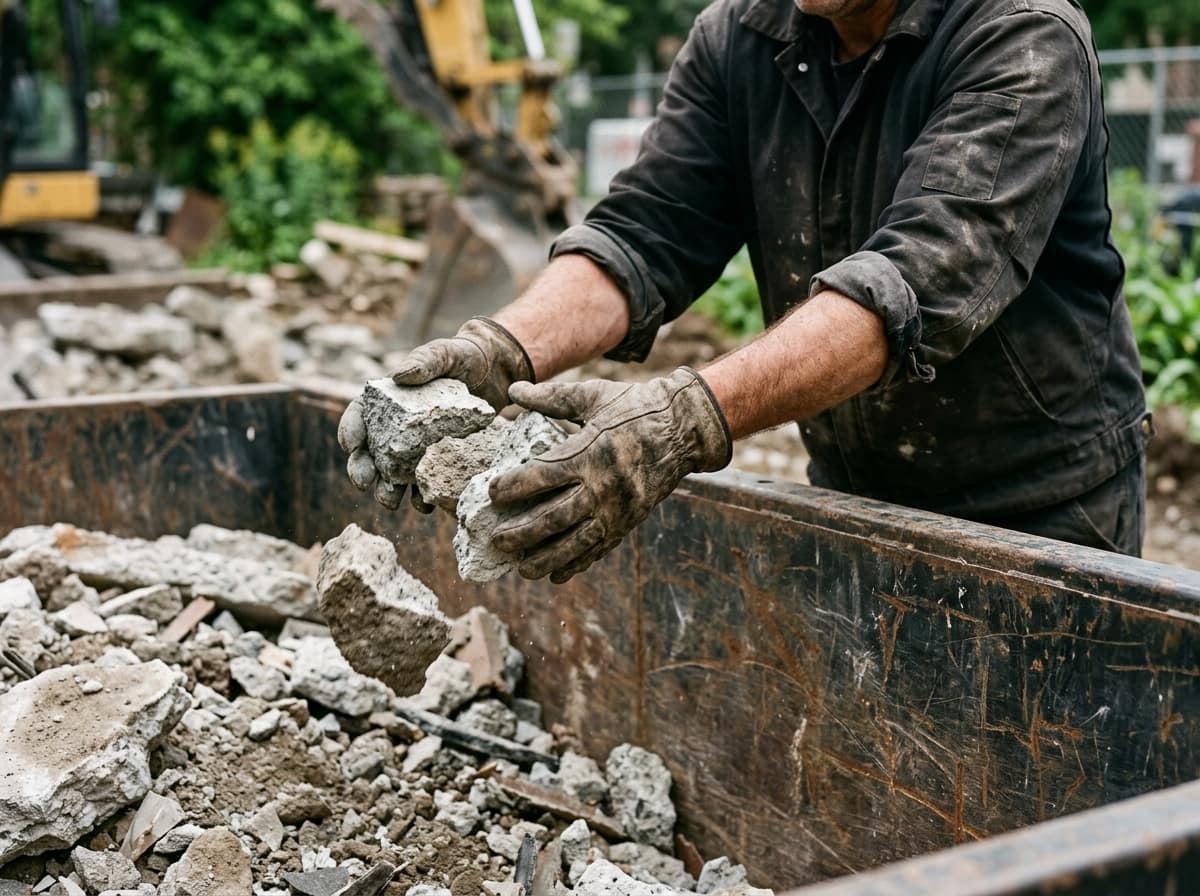
Pool shells aren’t like regular remodeling trash. You’re dealing with concrete, gunite, plaster, and tangled rebar, all of it dense and brutally heavy. A few cubic feet of broken shell can weigh more than an entire truckload of drywall or old furniture. That’s the thing people underestimate most about this job.
A demolition contractor handles the teardown itself, breaking up the shell and pulling the rebar free. Hauling it away is a separate task entirely, and that’s where a 10 yard lowboy dumpster rental earns its keep. It sits low to the ground, which makes loading chunks of busted concrete far safer and easier than tossing them over the wall of a tall container. For straight concrete or shell material, it runs a flat $650. For bigger inground projects with mixed debris, decking, old tile, fencing, pool equipment, a 40 yard dumpster rental at $700 gives you the room to consolidate everything in one spot.
Volume matters less here than weight. That’s the blunt truth. A dumpster can look half-empty and still hit its ton limit fast, because concrete and gunite pack density most households never generate. Construction debris loads include set tonnage, 1 ton for a 10 yard and 4 tons for a 40 yard, with extra tons billed at $95 each. Before loading starts, it genuinely helps to go over how dense demolition material behaves under load, since that’s what drives the final bill more than the container size does. A quick call to confirm expected tonnage, 818-457-7711, beats guessing after the shell is already in pieces.
Choosing the Right Dumpster Size for a Pool Project
Not every pool comes apart the same way, so the container that works for your neighbor’s project might be the wrong call for yours. Pool type, decking material, and how much landscaping gets torn out along the way all drive the decision. Here’s a quick breakdown to get you in the right range before you call anyone.
Matching Size to Pool Type
Size matching is pretty straightforward once you know what’s coming out of the ground. A small above-ground pool with a wood liner and basic decking is light work. A gunite inground pool with rebar and thick concrete is a different animal entirely. The debris weight, not just the pool’s footprint, is what determines the right container.
|
Pool Type |
Container Size |
Typical Debris |
Notes |
|---|---|---|---|
|
Small above-ground |
10 yard lowboy |
Liners, frames, light decking |
Good for compact backyard teardowns |
|
Mid-size fiberglass shell |
20 yard |
Shell, patio tear-out |
Handles surrounding hardscape too |
|
Estate-size with concrete decking |
30 yard |
Concrete, landscaping debris |
Best for larger lots |
|
Large inground gunite or commercial |
40 yard |
Heavy concrete, rebar, soil |
Suited for full demolition jobs |
Concrete and dirt are dense, so weight limits matter more than volume here. A 10 or 15 yard low-boy dedicated to clean concrete or dirt runs $650 flat, which keeps costs predictable on a material that’s heavy but not bulky.
When to Size Up for Mixed Debris
Here’s where people get tripped up. A pool rarely comes out alone — decking, old fencing, plants, and irrigation lines usually go with it. If your contractor is tearing out a concrete patio along with a mid-size shell, size up from 20 to 30 yard rather than ordering two smaller containers. It’s simpler, and often cheaper. For homeowners planning next steps, guidance on backfilling and regrading a removed pool site is worth reading before debris hauling even starts, since it affects how much extra fill material you’ll need to account for later.
Timing matters too. Coordinate container delivery with your licensed demolition contractor’s schedule so the dumpster arrives right as debris starts piling up, not days early or late. Every rental includes 10 days, with extra days at $20 each, which usually covers a standard teardown without a rush. Call 818-457-7711 to confirm sizing against your contractor’s timeline before the job starts.
Permits, Timing, and Local Regulations
Understanding San Fernando Valley Placement Rules
Most Los Angeles municipalities won’t let you touch an inground pool without a demolition permit on file first. This isn’t optional paperwork. Inspectors want to confirm the shell is either fully removed or properly fractured and drained, since an abandoned pool can trap water, breed mosquitoes, and become a liability. Some jurisdictions also fold in a grading or drainage review, especially if backfill affects runoff toward a neighboring lot. Your contractor should pull this permit before any equipment shows up, and it’s worth confirming that in writing rather than assuming it’s handled.
Separately, if the dumpster itself sits in the street rather than on your driveway, that often triggers its own city placement permit. Rules vary block by block in the Valley. Reseda, Tarzana, and Encino each have slightly different curb rules, and a corner lot near a fire hydrant has stricter setbacks than a straight residential stretch. Staff who handle these rentals daily tend to know which streets require a permit and which don’t, and sharing that guidance upfront saves customers a scramble. Filing the actual application, though, stays the homeowner’s or contractor’s job.
Timing matters more than people expect. A crew standing around waiting on a container is money burned. Same-day or next-day delivery keeps demolition schedules intact, though deliveries run Monday through Saturday rather than around the clock. Backfill and grading don’t always go as planned either. Dirt settles unevenly, inspections get rescheduled, weather slows compaction. Every rental already includes 10 days, and extending is simple at $20 per additional day if the job runs long. That flexibility beats guessing wrong and paying rush fees later. For context on why pool water chemistry matters once demolition starts, see this research on (PDF) Disinfection byproducts in swimming pool studies, which explains what drainage crews are managing before debris removal even begins.
Hiring a Pool Removal Contractor and Managing Debris Disposal
Demolition is specialized work. Gunite, rebar, and old plumbing don’t come apart by themselves, and the wrong equipment can crack a foundation or a fence. Get quotes from at least two or three licensed demolition contractors before you sign anything.
Questions to Ask Before Demolition Starts
A good contractor won’t mind a long list of questions. In fact, it’s a decent way to judge who actually knows what they’re doing.
-
Ask whether they supply their own dumpster for the job or expect you to arrange a roll-off separately, since this changes your total cost significantly.
-
Ask for a written breakdown of fees, because all-inclusive pricing that covers fuel and environmental charges avoids an invoice full of surprises later.
-
Ask how concrete and rebar are separated on site, since clean concrete can often go in a low-boy container built for heavy material rather than mixed debris.
-
Ask how metal gets handled, since scrap steel and rebar are recyclable and shouldn’t just get buried in a landfill-bound load.
-
Ask about their timeline and how many days the debris will actually sit before haul-away, so you can plan a rental window that matches.
Coordinating Delivery With Your Contractor’s Schedule
If the demolition crew isn’t bringing their own container, you’ll need one on site before the first swing of the hammer. A 40 yard dumpster suits most full pool teardowns, while a 10 yard lowboy handles straight concrete and dirt loads at a flat rate. Coordinate drop-off a day ahead so the crew isn’t waiting around.
Backyard renovations rarely end with the hole getting filled. Decking, landscaping, and hardscape work often follow in phases over several weeks. A long-term rental keeps one container on site through each stage instead of booking a new one every time, with extensions available if the project runs long. That’s simpler, and usually cheaper too.
Choosing between a scheduled curbside service and a dedicated container really comes down to volume, timing, and how much control you want over pickup day. If the job is a one-time push of debris rather than an ongoing weekly habit, it’s worth asking how long the work will actually take and whether a long-term rental with the option to extend might fit better than waiting on a fixed route. A quick call to compare rates and availability, paired with honest numbers on how much you’re clearing, usually makes the right choice obvious.