
Table of Contents
When your project demands maximum capacity, the 40 yard dumpster delivers. As the largest standard roll-off container available, it handles the massive debris volumes generated by major construction, commercial demolition, and large-scale cleanout projects that would overwhelm smaller options.
This comprehensive guide covers everything you need to know about 40 yard dumpsters – dimensions, rental costs, ideal applications, and key considerations for determining if this heavyweight container matches your project requirements.
Key Notes
- Dimensions: A 40 yard dumpster measures approximately 24′ long × 8′ wide × 8′ tall, providing the maximum capacity available in standard roll-off containers.
- Capacity: Holds 40 cubic yards of debris – equivalent to 3,200-4,200 trash bags or roughly 14-16 pickup truck loads.
- Cost: Expect $600-$900 for a weekly rental in Los Angeles, depending on materials and rental duration.
- Best For: Major construction and demolition projects, commercial renovations, large-scale roofing jobs, industrial cleanouts, and new construction sites.
- Weight Limit: 5-6 tons (10,000-12,000 lbs) for general debris. No dirt or concrete allowed.
What Is a 40 Yard Dumpster?
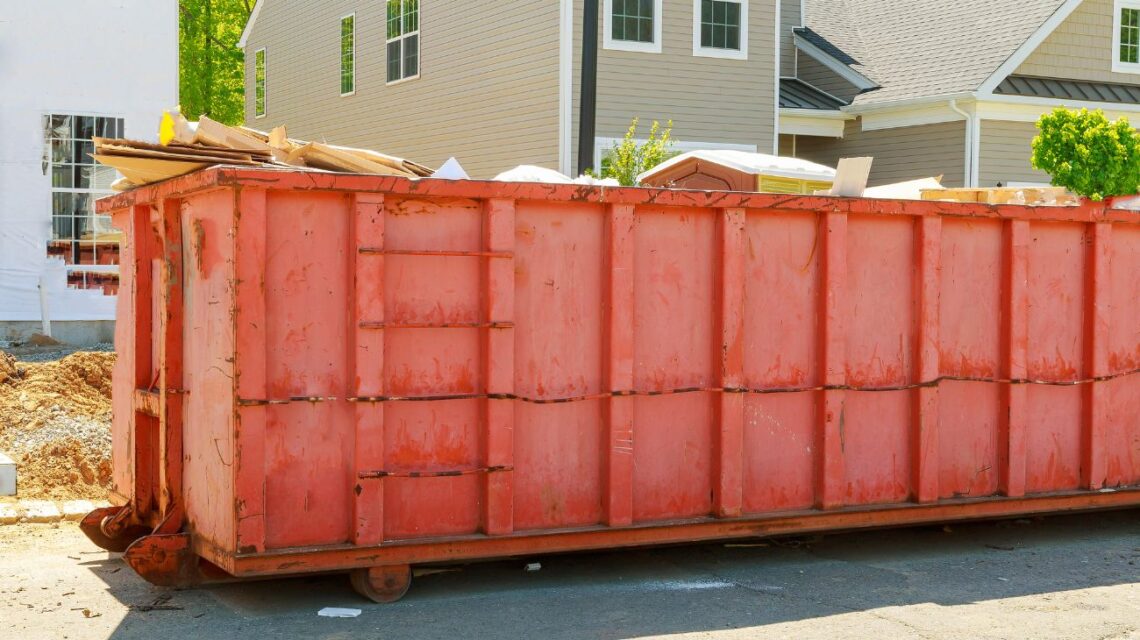
A 40 yard dumpster is the largest standard roll-off container available for rent. Holding 40 cubic yards of material, it serves as the go-to solution for projects that generate enormous volumes of debris – think commercial construction sites, major demolition jobs, and industrial-scale cleanouts.
The “40 yard” measurement refers to cubic yard capacity. To visualize this, imagine 40 cubes each measuring 3 feet × 3 feet × 3 feet stacked together. That’s enough space to hold the contents of multiple rooms, entire building renovations, or weeks of construction site debris.
What distinguishes the 40 yard from smaller options isn’t just volume – it’s the 8-foot wall height. While this creates some loading challenges (you’ll definitely use the rear door), it means fewer container swaps, reduced disruption to your workflow, and often better overall value for large projects.
40 Yard Dumpster Dimensions
Understanding exact specifications ensures proper site preparation and successful delivery.
Measurement | Specification |
Length | 24′ (24 feet) |
Width | 8′ (8 feet) |
Height | 8′ (8 feet) |
Cubic Capacity | 40 cubic yards |
Weight Capacity | 5-6 tons (10,000-12,000 lbs) |
The 8-foot walls are significantly taller than smaller dumpsters. Most people cannot toss items over the sides – instead, you’ll load through the rear swing door or use equipment. This design maximizes volume for projects where debris accumulates rapidly.
Space Requirements:
- Minimum placement length: 30 feet (with approach room)
- Minimum width: 12 feet for safe positioning
- Overhead clearance: 23-25 feet for the delivery truck’s roll-off mechanism
- Approach access: 70+ feet of straight clearance for truck maneuvering
- Ground requirements: Level, stable surface capable of supporting significant weight
How Much Does a 40 Yard Dumpster Rental Cost?
Rental costs vary based on location, duration, and material type.
Average Rental Costs in Los Angeles:
Rental Period | Estimated Cost |
3-Day Rental | $500-$650 |
7-Day Rental | $600-$900 |
10-Day Rental | $700-$1,000 |
2-Week Rental | $800-$1,200 |
At Green Star Roll Off, a 40 yard dumpster rental starts at $685, which includes delivery, pickup, and disposal within the weight allowance.
Standard Inclusions:
- Delivery to your location
- Scheduled pickup
- Disposal at an authorized facility
- Weight allowance (typically 5-6 tons)
- Rental period as agreed
Potential Additional Costs:
Item | Typical Cost | When Applied |
Weight overage | $75-$125/ton | Exceeding included limit |
Extended rental | $25-$40/day | Beyond standard period |
Swap service | $150-$250 | Empty and return same container |
Permit fees | $75-$200 | Street or public placement |
Specialty disposal | Varies | Mattresses, appliances, tires |
Cost Efficiency Note: Despite the higher base price, the 40 yard often provides the best per-cubic-yard value. For projects generating 30+ cubic yards of debris, one 40 yard rental typically costs less than two 20 yard rentals or multiple swaps.
What Can You Fit in a 40 Yard Dumpster?
The 40 yard’s massive capacity handles the largest residential and commercial projects:
Capacity Equivalents:
- 3,200-4,200 standard trash bags
- 14-16 full pickup truck loads
- Complete commercial space renovation debris
- Full new home construction waste
- Entire warehouse or industrial cleanout
- Multiple estate cleanouts combined
Commonly Accepted Materials:
- Construction and demolition debris
- Roofing materials (large-scale projects)
- Lumber, framing, and plywood
- Drywall, plaster, and insulation
- Commercial flooring materials
- Office furniture and fixtures
- Industrial equipment (non-hazardous)
- Large-scale landscaping debris
- Packaging and shipping materials
- General commercial waste
Materials NOT Allowed:
The 40 yard has specific restrictions regardless of its size:
- Dirt and soil – Requires 10 yard lowboy
- Concrete, brick, and stone – Too heavy for standard containers
- Hazardous materials – Chemicals, solvents, oils
- Asbestos – Requires licensed abatement
- Batteries and electronics – E-waste recycling required
- Refrigerant-containing appliances – Special handling needed
- Liquid waste – No liquids of any kind
- Medical or biohazardous waste
Ideal Uses for a 40 Yard Dumpster
The 40 yard excels in high-volume, large-scale scenarios:
Major Construction Projects
New construction generates continuous debris streams – packaging, cutoffs, damaged materials, and general job site waste. The 40 yard provides:
- Capacity for weeks of accumulation
- Reduced swap frequency
- Centralized waste management
- Efficient site organization
Typical applications:
- New home construction
- Commercial building construction
- Multi-unit residential development
- Industrial facility construction
Large-Scale Demolition
Tearing down structures produces enormous debris volumes. The 40 yard handles:
- Interior gut-outs of commercial spaces
- Structural demolition debris (excluding concrete)
- Complete building strip-outs
- Large-scale renovation demolition
Commercial Renovations
Office buildouts, retail remodels, and commercial space transformations generate substantial waste:
- Existing fixture and furniture removal
- Flooring and ceiling demolition
- Wall removal and reconfiguration
- Multiple floors or large footprint renovations
Industrial and Warehouse Cleanouts
Clearing industrial spaces often requires maximum capacity:
- Warehouse inventory disposal
- Factory equipment removal
- Industrial shelving and racking
- Years of accumulated materials
- Facility closure cleanouts
Large Roofing Projects
Commercial roofing or large residential roofs (3,500+ square feet) benefit from 40 yard capacity:
- Multiple layer tear-offs
- Large surface area coverage
- Commercial flat roof replacements
- Multi-building roofing projects
Note: Roofing shingles are heavy. Even with 40 yard capacity, weight limits may be reached before volume limits on large roofing jobs.
Community and Municipal Projects
Large-scale community efforts often require maximum container size:
- Neighborhood cleanup events
- Disaster debris removal
- Park and public space renovations
- Municipal facility cleanouts
40 Yard vs. Other Dumpster Sizes
Understanding how the 40 yard compares helps ensure appropriate selection:
Feature | 20 Yard | 30 Yard | 40 Yard |
Dimensions (L×W×H) | 22′ × 7′ × 3’6″ | 22′ × 7′ × 5’2″ | 24′ × 8′ × 8′ |
Cubic Capacity | 20 yards | 30 yards | 40 yards |
Trash Bag Equivalent | 2,000-2,600 | 2,500-3,250 | 3,200-4,200 |
Pickup Truck Loads | 8 | 10-12 | 14-16 |
Wall Height | 3’6″ | 5’2″ | 8′ |
Weight Limit | 3-4 tons | 4-5 tons | 5-6 tons |
Average Weekly Cost | $400-$650 | $500-$800 | $600-$900 |
Choose the 40 Yard When:
- Project scale is commercial or industrial
- Debris volume exceeds 30 cubic yards
- You need to minimize container swaps
- Multiple trades generate simultaneous waste
- Project timeline extends several weeks
- Site can accommodate the larger footprint
Choose a Smaller Size When:
- Residential-scale project
- Limited placement space
- Shorter project duration
- Lighter debris volume expected
- Budget constraints exist
Placement and Delivery Requirements
The 40 yard’s size demands careful site preparation:
Pre-Delivery Checklist:
- Confirm dimensions – Verify 30+ feet length, 12+ feet width available
- Check overhead clearance – Minimum 23-25 feet, no wires or obstructions
- Clear the placement area – Remove all vehicles, equipment, materials
- Assess truck access – Ensure 70+ feet straight approach clearance
- Evaluate ground conditions – Level, stable surface required
- Identify underground utilities – Heavy loaded containers stress the ground
- Coordinate with site activities – Plan placement to avoid workflow disruption
Placement Considerations:
Factor | Requirement |
Surface type | Concrete, asphalt, or compacted gravel preferred |
Grade | Level or near-level surface |
Load-bearing | Must support 20,000+ lbs when loaded |
Access | Clear path for workers and equipment |
Swing door clearance | 8+ feet behind container for door operation |
Common Placement Locations:
- Construction site staging areas
- Commercial parking lots
- Industrial yards
- Large residential properties (with adequate space)
Permit Requirements
Street placement of 40 yard containers typically requires permits. In Los Angeles County:
- Permit fees range from $75-$200
- Duration restrictions may apply
- Safety marking requirements vary by jurisdiction
- Some areas prohibit containers over certain sizes on residential streets
Contact your local public works department or ask your dumpster provider about specific requirements.
Loading a 40 Yard Dumpster
The 8-foot walls require different loading approaches than smaller containers:
Loading Methods
Rear Door Access: The swing-open rear door is essential for 40 yard loading:
- Walk in bulky items
- Roll wheelbarrows and carts directly inside
- Use hand trucks for heavy items
- Drive small equipment through when appropriate
Equipment Loading: Large projects often use machinery:
- Skid steer loaders
- Excavators with thumb attachments
- Conveyor systems for roofing debris
- Forklifts for palletized materials
Manual Loading: For items that can be lifted:
- Use the door rather than throwing over walls
- Create a loading ramp if needed
- Work in teams for heavy items
- Take appropriate safety precautions
Maximizing Capacity
- Load systematically – Start at the back, work toward the front
- Place flat items first – Create a stable base layer
- Break down materials – Disassemble furniture, cut lumber, flatten boxes
- Fill voids – Pack smaller debris into gaps
- Distribute weight evenly – Prevent unsafe weight concentration
- Don’t exceed the rim – Keep debris below top edges
Weight Management
Even with 40 cubic yards of space, weight limits exist:
Materials that hit weight limits quickly:
- Roofing shingles (multiple layers)
- Tile and ceramic materials
- Dense wood products
- Multiple appliances
- Large amounts of drywall
Monitoring weight:
- Track heavy item quantities
- Estimate weights as you load
- Contact your provider if concerned about limits
- Consider separate containers for heavy materials
FAQ About Recycling
How tall is a 40 yard dumpster?
A standard 40 yard dumpster stands 8 feet tall. This is significantly higher than smaller containers (a 20 yard is only 3.5 feet tall). The height maximizes volume but requires using the rear door for most loading.
How long can I rent a 40 yard dumpster?
Standard rentals are typically 7-14 days. Construction projects often arrange extended rentals or scheduled swap services for ongoing needs. Extensions beyond the initial period incur daily fees.
Will a 40 yard dumpster fit in a residential driveway?
Rarely. The 24′ × 8′ footprint exceeds most residential driveways, and the delivery truck requires extensive maneuvering space. The 40 yard is designed primarily for commercial and construction sites. Residential projects typically use 20 or 30 yard containers.
What's the weight limit for a 40 yard dumpster?
Typically 5-6 tons (10,000-12,000 lbs), though this varies by provider. The generous volume means you’ll usually fill the space before reaching weight limits – unless loading dense materials like shingles or tile.
Can I put construction debris in a 40 yard dumpster?
Yes, most construction debris is accepted: lumber, drywall, flooring, roofing materials, insulation, and general demolition debris. Concrete, brick, dirt, and hazardous materials are not permitted regardless of container size.
How many times can a 40 yard dumpster be swapped during a project?
As many times as needed. Many construction projects schedule regular swaps (weekly or bi-weekly) to maintain continuous capacity. Each swap incurs an additional fee, typically $150-$250.
Do I need a permit for a 40 yard dumpster?
For placement on private commercial property, permits usually aren’t required. Street placement, public property, or some residential areas require permits. Requirements vary by jurisdiction – your dumpster provider can advise on local regulations.
How far in advance should I book a 40 yard dumpster?
For standard delivery, book 3-5 business days ahead. During peak construction season (spring through fall), book 1-2 weeks in advance to ensure availability. Large projects requiring multiple containers should coordinate scheduling even earlier.
Schedule Your 40 Yard Dumpster Rental
The 40 yard dumpster provides the maximum capacity for your largest projects. When standard sizes can’t keep up with debris generation, this heavyweight container delivers the volume to maintain workflow and minimize disruption.
Green Star Roll Off provides 40 yard dumpster rentals throughout Los Angeles and the San Fernando Valley. Our experienced team understands large-scale project requirements and ensures reliable delivery, pickup, and service throughout your rental period.
Why choose Green Star Roll Off:
- Competitive pricing starting at $685
- Same-day delivery available
- Flexible rental periods
- No hidden fees
- Expert guidance on size selection
- Reliable, professional service
Call 818-457-7711 or get a free quote to reserve your 40 yard dumpster today.