

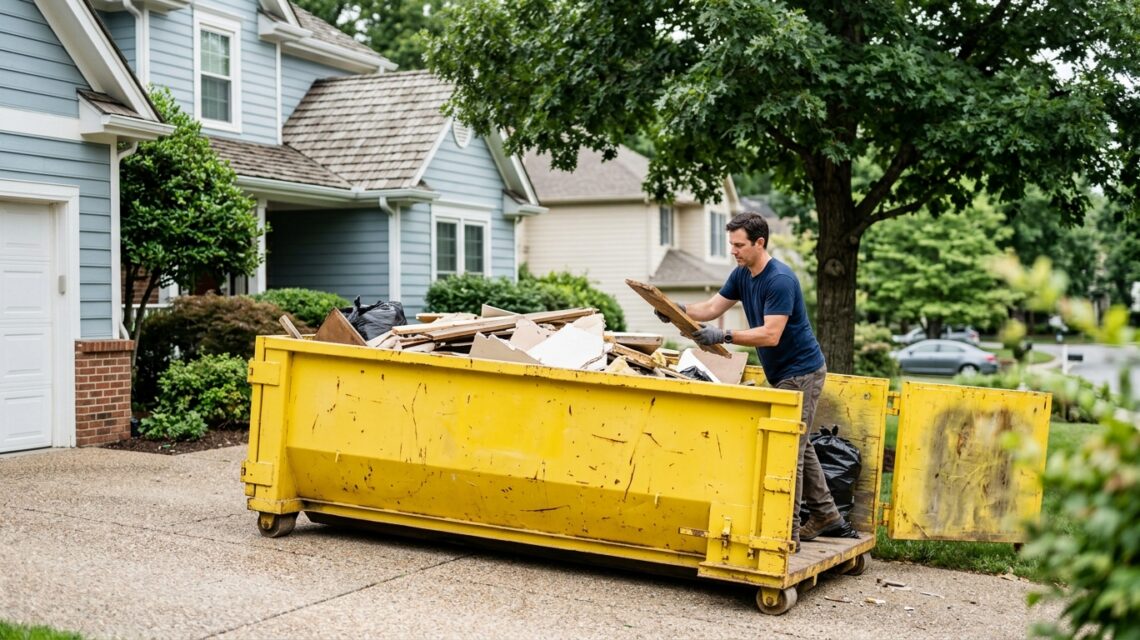
Ordering a dumpster without knowing exactly how much space it will take up—or how much debris it can actually hold—often leads to costly surprises, from driveway damage to overflow fees. Understanding precise 15 yard dumpster dimensions before you book helps you confirm the unit will fit your driveway, clear your gate, and handle your project’s material volume without a second rental. Green Star Roll Off breaks down the length, width, height, and capacity details you need, along with real-world comparisons to help you decide if this size is the right match for your cleanout, renovation, or construction job.
What Is a 15 Yard Roll-Off Dumpster
How Roll-Off Dumpsters Work
A roll-off dumpster is an open-top steel container built for heavy debris and rough handling. The walls are welded steel, and the base sits on small wheels that let the box roll on and off a special delivery truck. That’s where the name “roll-off” comes from.
A truck with a hydraulic tilt-frame or cable system drops the empty container at your driveway, curb, or job site. When the rental period ends, the same truck tilts back, hooks the box, and pulls it onto the flatbed. It works the same way whether you’re hauling out a garage or tackling a full demolition.
Where the 15 Yard Fits in the Size Lineup
Roll-off dumpsters typically range from 10 to 40 cubic yards. The 15 yard size sits toward the smaller end, a mid-small option for moderate cleanouts. It holds more than a compact 10 yard box but far less than a 30 yard roll off dumpster used for large-scale builds.
Many local businesses choose this size for kitchen remodels, small roofing jobs, or yard debris removal. Providers offering dumpster rentals los angeles san fernando valley often recommend it as a practical starting point for homeowners unsure which size fits their project.
15 Yard Dumpster Dimensions Explained
Length, Width, and Height Breakdown
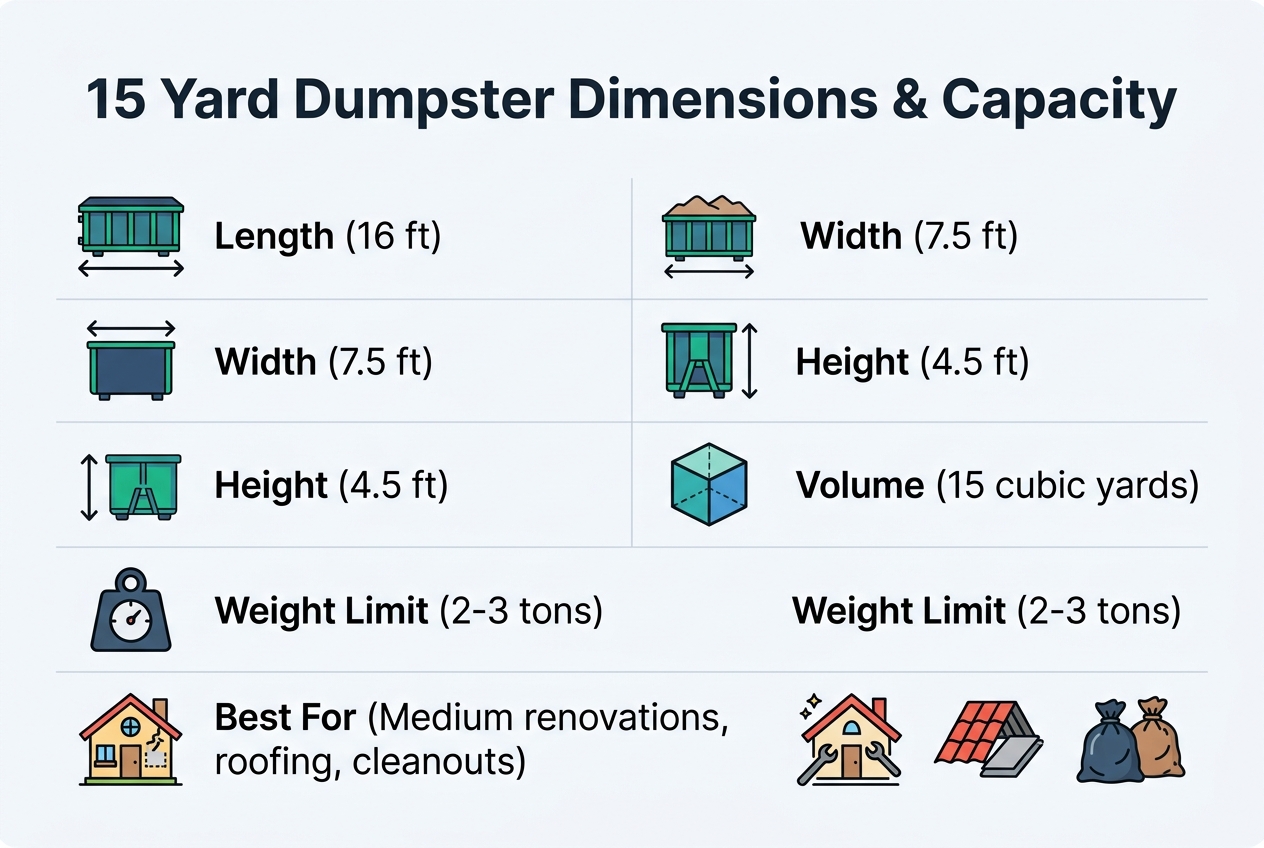
A 15 yard dumpster typically measures 14 feet long, 7.5 feet wide, and 4.5 feet tall. These numbers shift slightly by manufacturer. Some units run a bit shorter but deeper. Always confirm exact specs before booking a 15 Yard Dumpster Rental, especially if space is tight on your property.
| Dimension | Measurement | Why It Matters |
|---|---|---|
| Length | 14 ft | Determines driveway or curb space needed |
| Width | 7.5 ft | Affects clearance between gates or fences |
| Height | 4.5 ft | Sets the loading reach for heavy debris |
| Door Opening | 4 ft wide (approx.) | Controls how easily items roll in |
Door Openings and Loading Access
Most units include a swing-open door on one end. This door access makes wheeling in heavy items much easier. Wheelbarrows, appliances, and furniture roll straight inside instead of getting lifted over a wall.
Visualizing the Size in Real Terms
Picture two mid-size cars parked end to end. That’s roughly the length of this container. The height sits below most kitchen counters, so tossing bags over the side stays simple. For bigger jobs, compare it against 30 yard dumpster dimensions to see the size jump.
How Much a 15 Yard Dumpster Actually Holds
Volume Capacity in Practical Terms
A 15 cubic yard capacity sounds abstract until you break it down. One cubic yard equals a space 3 feet long, 3 feet wide, and 3 feet tall. Multiply that by 15, and you get enough room for a small kitchen remodel’s debris, old flooring, or a garage cleanout. Thinking in cubic yards helps you avoid guessing when comparing this size to something like 20 yard dumpster dimensions for a bigger job.
Here’s a simpler way to picture it: this dumpster holds roughly six to eight pickup truck loads of material. That comparison helps homeowners judge whether one container covers the whole project. Many local businesses use this rule of thumb when deciding between several truck runs and a single rental.
Weight Limits to Keep in Mind
Most containers this size carry a weight limit between 2 and 3 tons, though exact limits vary by provider. Heavy materials like concrete, roofing shingles, or wet soil eat up the weight allowance fast, even when the bin still looks half empty. Check the specific terms of any 15 Yard Roll-Off Dumpster Rental agreement to avoid surprises at pickup.
Going over the weight limit triggers overage fees, charged per ton beyond the allowance. These charges add up fast on dense debris projects. Estimating your material’s weight beforehand keeps costs predictable and prevents billing surprises later.
Comparing the 15 Yard Dumpster to Other Sizes
Picking the right size gets easier when you see the numbers side by side. The table below lines up four common dumpster sizes by length, width, height, and typical use.
| Size | Length x Width x Height | Best For | Approx. Weight Limit |
|---|---|---|---|
| 10 Yard | 12 ft x 8 ft x 3.5 ft | Small cleanouts, single-room remodels | 2-3 tons |
| 15 Yard | 14 ft x 8 ft x 4.5 ft | Mid-size renovations, garage cleanouts | 2-3 tons |
| 20 Yard | 16 ft x 8 ft x 5.5 ft | Flooring, roofing, larger cleanouts | 3-4 tons |
| 30 Yard | 20 ft x 8 ft x 6 ft | New construction, whole-home cleanouts | 4-5 tons |
10 vs 15 Yard Dumpster
The 10 yard dumpster holds less bulk and sits lower. A 15 yard bin adds one extra foot of height and length, giving roughly 50% more capacity. Pick the 10 yard for single-room jobs. Pick the 15 yard for multi-room projects or bulky furniture.
15 vs 20 Yard Dumpster
The 20 yard dumpster stands a foot taller and holds more debris. If your project includes roofing shingles or large flooring tear-outs, that extra height matters.
Choosing Between Similar Sizes
A common mistake is guessing by eye instead of estimating debris weight. Heavy materials like concrete fill weight limits before space runs out. For large-scale demolition, a 40 yard dumpster rental may fit better than stacking multiple smaller bins.
Best Projects for This Dumpster Size
Home Cleanouts and Decluttering
A 15 yard container fits most whole-home decluttering jobs. It handles garage cleanouts, attic purges, and basement clear-outs with room to spare. For a typical residential dumpster rental, this size works well for homes under 2,000 square feet clearing out light furniture, boxes, and household junk.
Small Remodeling and Bathroom Renovations
This size shines during smaller remodels. It suits single-room updates where debris stays limited and manageable. Consider these common scenarios:
- A single bathroom renovation generating tile, drywall, and an old vanity or tub.
- A kitchen refresh limited to cabinets and countertops, without major structural demo.
- A small bedroom or closet remodel producing flooring and trim waste.
- A 200 to 400 square foot addition project with light framing debris.
Roofing and Landscaping Jobs
Roofing tear-offs on homes up to about 2,000 square feet often fit this container. Landscaping cleanups, including dirt, sod, and small branches, fit comfortably too. This size works for residential jobs and light commercial tasks alike, like small retail storefront cleanups or office landscaping refreshes, where debris volume stays moderate rather than heavy.
What You Can and Cannot Throw Away
Acceptable Materials
Knowing what can you throw in a dumpster helps you avoid extra fees and delays. Most general household and construction debris is fine. Common accepted items include:
- Household junk like old furniture, mattresses, and broken appliances without refrigerant.
- Construction debris such as drywall, lumber, flooring, and roofing shingles.
- Yard waste including branches, sod, and old fencing material.
- Non-hazardous packaging materials like cardboard, plastic, and wood pallets.
- Clean concrete, brick, or asphalt in smaller quantities.
Always check your local rules, since some cities restrict yard waste or bulky items differently.
Prohibited and Restricted Items
Certain materials are banned because of safety or environmental risk. These usually include:
- Hazardous chemicals like paint thinners, solvents, and pesticides.
- Batteries, motor oil, and other fluids that can leak or contaminate soil.
- Asbestos-containing material, which requires special disposal permits.
- Tires and large appliances with refrigerant, which often need separate pickup arrangements.
Ask about special handling before loading these items. Many providers arrange separate disposal for a small added fee, keeping your project compliant and on schedule.
Signs You Might Need a Different Size
When to Size Up
Some jobs outgrow a 15 yard bin fast. If you’re gutting more than one room, tearing off a full roof, or clearing out a whole house, the debris pile grows quicker than expected. A common warning sign: the container fills past the line before the crew even hits the halfway mark on the project. When that happens repeatedly, a bigger container saves time and money. Many homeowners compare options through a 20 yard dumpster rental before booking, since the extra space handles bulky furniture and large volumes of mixed waste without a second pickup.
Weight matters just as much as volume. Concrete, dirt, brick, and tile are heavy debris types that fill weight limits long before the bin looks full. If your project involves tearing out a driveway or excavating soil, a heavier-rated container built for dense material is the safer choice.
When a Smaller Bin Makes More Sense
A 15 yard dumpster is sometimes still too much space. Small garage cleanouts, single-room renovations, or a modest deck removal often fill only a third of the container. Paying for unused capacity adds cost without added benefit. A smaller container keeps pricing aligned with the actual debris volume.
Checking actual measurements, not just the labeled size, helps avoid overpaying or underestimating space for the job ahead.
Renting the Right Dumpster Step by Step
Step 1: Get a Quote and Confirm Size
Start by describing your project and debris type when you request a quote. A good provider will confirm that your measurements match standard roll off dumpster dimensions before booking. This step avoids surprises on delivery day.
Step 2: Prepare the Delivery Location
Pick a flat, firm surface with enough overhead clearance. Driveways work best, but many local businesses also use street parking with a permit. Clear the area of vehicles, low branches, and fragile surfaces before the truck arrives.
Step 3: Load, Schedule Pickup, and Haul Away
Once the container is placed, load heavy debris first and fill gaps with smaller pieces. Schedule pickup once you’re near the fill line. The table below breaks down this process from start to finish.
| Stage | Action | Typical Timeframe |
|---|---|---|
| Quote | Confirm size, weight limit, price | Same day |
| Placement | Choose flat surface, clear obstacles | Before delivery |
| Delivery | Container dropped at set spot | 1-2 hours |
| Loading | Fill evenly, avoid overloading | Days to weeks |
| Pickup | Haul away and dispose properly | 24-48 hours notice |
Following these steps keeps your rental process smooth and efficient.
Understanding Rental Costs and Pricing Factors
Average Cost Range
A 15 yard dumpster typically rents for $300 to $550 in most markets. Prices shift based on your city, local landfill fees, and how busy the rental season is. Some regions with higher disposal costs push totals closer to $600, while smaller towns often land on the lower end.
Rental periods usually run 7 to 10 days, and that window is baked into the base price. For a deeper breakdown of what shapes these numbers, this guide on dumpster rental cost walks through real pricing examples across different project types.
What Influences the Final Price
Weight limits matter most. Most 15 yard dumpsters include a limit between 1.5 and 3 tons. Heavy materials like concrete, roofing shingles, or dirt can push you over that limit fast, triggering overage charges per extra ton.
Rental length also affects cost. Keeping the dumpster longer than the included period adds daily fees, often $5 to $15 per day. Location plays a role too, since placement on a street may require a permit, adding to the total.
Watch for extra fees on prohibited items, like mattresses or electronics, and trip charges if the truck can’t access your driveway easily.
Permits, Placement, and Rental Duration
Do You Need a Permit
A permit usually depends on where the dumpster sits. If it stays on your own driveway or private property, most cities skip the paperwork. Placing it on a street, curb, or public right-of-way almost always triggers a permit requirement. Local rules vary, so check with your city office before delivery day to save headaches later.
Fees and processing times differ by city too. Some approve permits within 24 hours; others take a week. Our roll off dumpster rental guide breaks down typical requirements so you can plan ahead and avoid delivery delays.
Choosing the Best Spot for Delivery
A flat, solid surface works best. Concrete driveways are ideal. Asphalt works fine in cooler weather but can soften and dent under heavy loads during summer heat. Grass and dirt are risky, since a loaded 15 yard dumpster can weigh several tons and sink into soft ground.
Leave at least 20 feet of clearance for the delivery truck and roughly 10 feet of overhead space for low branches or wires. Placing the bin close to your work area cuts down on hauling distance for heavy debris.
How Long You Can Keep the Dumpster
Standard rental periods usually run 7 to 10 days. This covers most cleanouts, small remodels, and yard projects without rushing the work.
Need more time? Extensions are common and typically billed daily. Just call ahead before the original period ends to avoid late fees or scheduling conflicts with the next customer.
Frequently Asked Questions About 15 Yard Dumpsters
Sizing and Capacity Questions
Many homeowners mix up volume and weight when planning a 15 yard dumpster rental. Volume tells you how much space is available. Weight tells you how heavy that material can get before you hit limits. A dumpster can look half-empty but still be over its weight cap if it’s packed with dense debris.
- A 15 yard dumpster holds roughly six pickup truck loads of mixed household or renovation debris.
- Weight limits usually run between 2 and 3 tons, so heavy materials like concrete or shingles fill it faster than bulky items.
- Furniture from a full room clean-out, including a couch, mattress, and dresser, typically fits with room to spare.
- Overloading past the fill line is not allowed, since open loads create safety hazards during transport.
- Mixed debris, like drywall plus wood plus old carpet, weighs less per yard than pure concrete or dirt.
Cost and Scheduling Questions
Pricing depends on weight, rental length, and location, not just the container size. Most rentals run 7 to 10 days, though shorter or longer terms are often available. Same-day drop-off is common when a provider has units staged nearby, which helps when a move or renovation deadline is tight.
Now that you know roughly how much space fourteen feet of steel takes up, the useful next step is measuring your own driveway or side yard and picturing the container sitting there with room to walk around it and swing the back door open. From there it’s mostly a matter of matching the load to the box — a 15 yard handles most garage and single-room cleanouts comfortably, while a heavier concrete job is better suited to something like the 10 yard lowboy Green Star Roll Off keeps on hand. Knowing the footprint before anything shows up saves you the awkward shuffle of moving cars and trimming branches at the last minute.