
Staring at a mountain of construction debris, storm damage, or years of accumulated junk can make any cleanup project feel impossible before it even begins. The right roll off dumpster rental turns that overwhelming mess into a manageable task—but only if you pick the right size, understand how pricing works, and know what to expect from delivery to pickup. Green Star Roll Off breaks down everything you need to know in 2026, from cost factors to permit requirements, so you can book with confidence and skip the costly surprises.
What Is a Roll Off Dumpster Rental
How Roll Off Containers Work
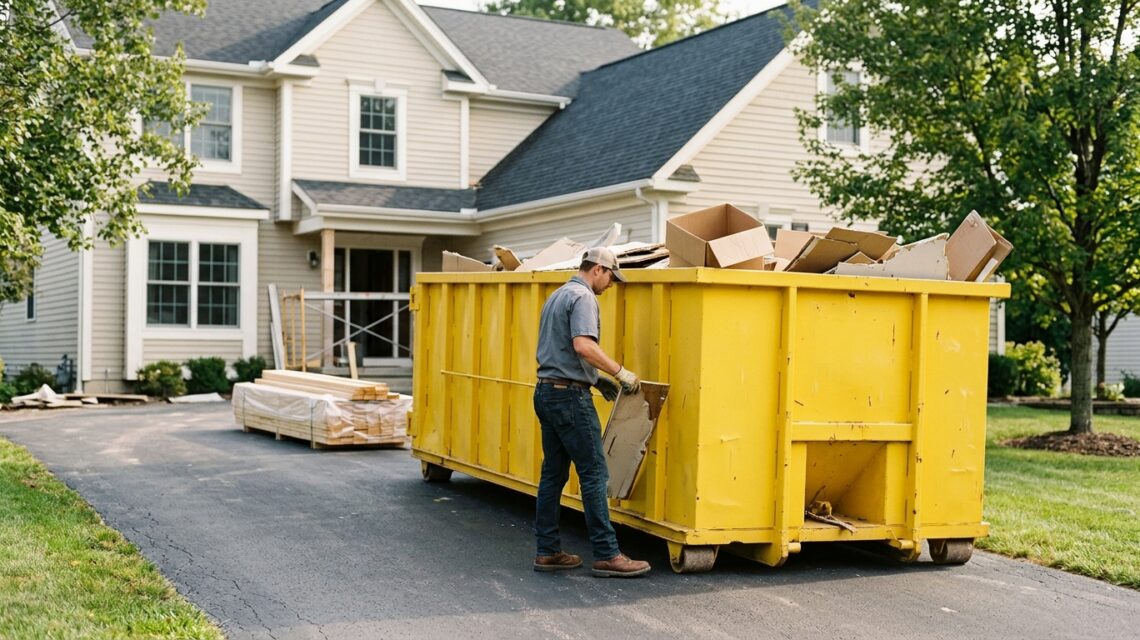
A roll off container is an open-top steel box hauled by a special truck. The truck tilts and rolls the box off its frame, then sets it down on your driveway or lot. Sizes usually range from 10 to 40 cubic yards. The 30 yard roll off dumpster is a favorite for large cleanouts and roofing tear-offs.
Once the container is full, the same truck comes back, hooks a cable to the front, and pulls it onto the frame. You don’t lift or shovel anything yourself. This setup makes roll offs perfect for heavy, bulky, or high-volume debris that would swamp a smaller bin.
Common Uses for Homes and Businesses
Homeowners use roll off containers for garage cleanouts, kitchen remodels, and yard debris after storms. Contractors rely on them for demolition, roofing shingles, and construction waste. Plenty of local businesses use them during office renovations or seasonal inventory purges too.
Every job produces different volumes and debris types. A bathroom remodel might only need a small container, while a whole-home renovation calls for something much bigger. Check a dumpster sizes guide before you book so the container actually matches your load.
Roll Off vs Other Waste Removal Options
Bin rental services usually rely on smaller front-load containers built for ongoing weekly pickups, not one-time projects. Junk removal crews send workers to load debris by hand, which costs more per pound but skips the need for equipment on-site.
Roll off rentals land in the middle. You get a large on-site container for a set rental period, with no labor fees attached. Size and weight limits shift depending on the container and your location, so choosing correctly and knowing the permit rules matters before delivery day arrives.
Find the Right Dumpster Size for Your Project
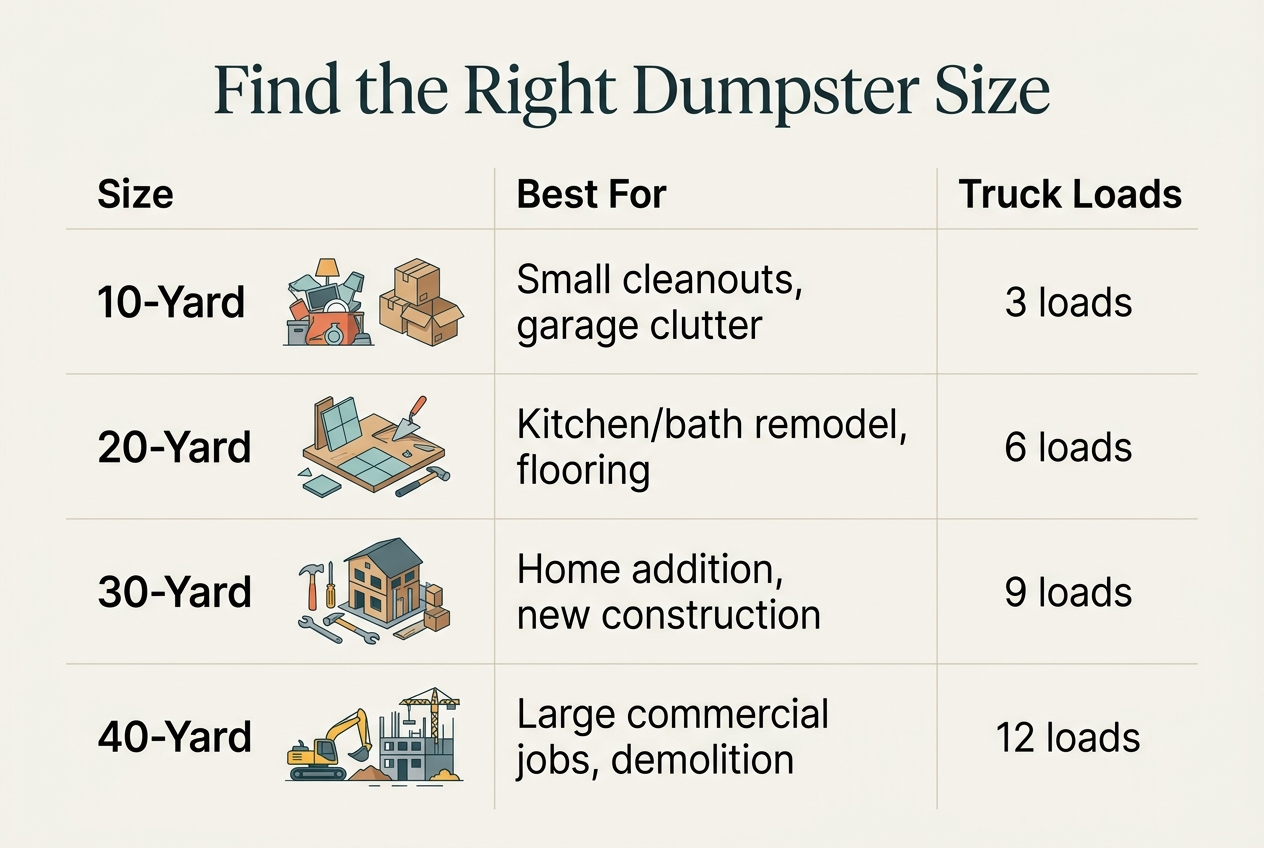
Picking the right size saves money and hassle down the line. The table below breaks down common yardage options and the projects each one handles best. Use it as a quick reference before you book.
| Size | Best For | Typical Load Estimate |
|---|---|---|
| 10 Yard | Small cleanouts, garage clutter, single-room remodels | 3-4 pickup truck loads |
| 15 Yard | Bathroom remodels, small roofing jobs, yard debris | 4-6 pickup truck loads |
| 20 Yard | Kitchen remodels, flooring removal, medium cleanouts | 6-8 pickup truck loads |
| 30 Yard | New construction, additions, large renovations | 9-12 pickup truck loads |
| 40 Yard | Commercial teardowns, large construction sites | 12-16 pickup truck loads |
10 and 15 Yard Dumpsters
These smaller bins work well for homeowners tackling one room at a time. A 10 yard dumpster fits tight driveways and handles lighter debris loads. Step up to the 15 yard size for a yard waste dumpster project, like clearing branches and old landscaping materials after a big cleanup.
20 and 30 Yard Dumpsters
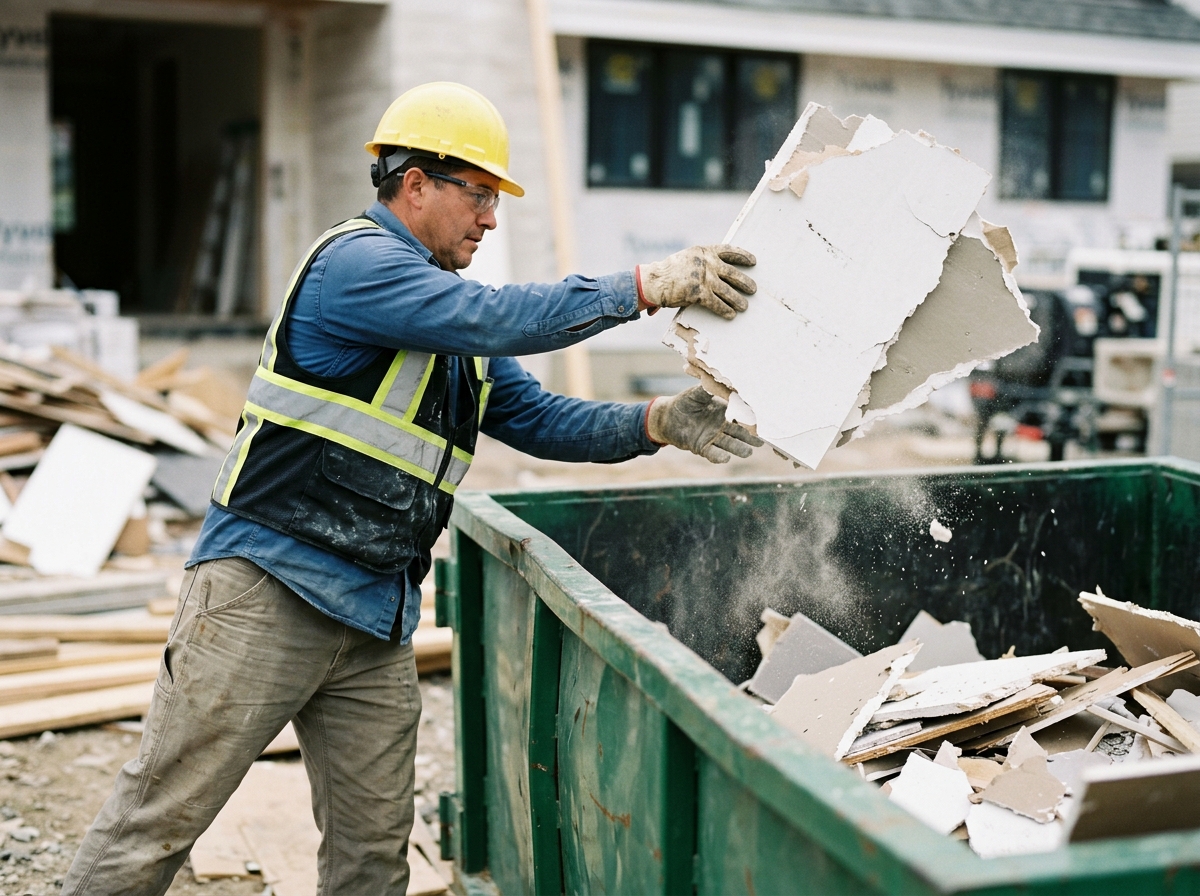
Mid-size dumpsters handle heavier volume without crowding your property. A 20 yard bin covers most kitchen or flooring jobs. The 30 yard option suits contractors managing framing lumber, drywall, and multi-room debris from bigger renovations.
40 Yard Dumpsters for Large Jobs
Large commercial projects and full demolitions need serious capacity. A 40 yard dumpster cuts down on the number of hauls needed at busy job sites. Not sure which tier fits your debris volume? Try a dumpster size calculator so you don’t get stuck with overage fees from guessing too small.
Dumpster Rentals for Every Type of Project
Residential Cleanouts and Renovations
Homeowners usually need a dumpster for a one-time job. A garage cleanout, kitchen remodel, or estate cleanout often fits in a 10 or 15-yard container. These projects generate mixed debris: old furniture, drywall, cabinets, and general household junk. Most homeowners rent for a few days to a week, matching the container to the actual scope of work.
Renovation projects can run longer, especially whole-house remodels. In these cases, a single rental period may stretch across several weeks as contractors work room by room. Local guidelines matter here too, and resources on dumpster rentals los angeles san fernando valley can help homeowners plan placement and timing before debris starts piling up.
Commercial and Business Waste Needs
Businesses face different volume demands than homeowners. Retail stores, restaurants, and offices often need a recurring pickup schedule instead of a single haul-away. This keeps waste from piling up between deliveries and keeps daily operations running smoothly.
Many local businesses choose weekly or biweekly service, especially during inventory changes or seasonal cleanouts. Larger operations sometimes rotate multiple bins across locations to manage steady waste output.
Construction and Demolition Debris
Construction sites produce heavier, denser material than homes or offices. Concrete, brick, lumber, and roofing debris need larger containers, often 20 to 30 yards. Weight limits matter more here, since heavy debris fills a dumpster’s weight capacity long before it reaches full volume.
Demolition projects frequently call for a one-time large-scale rental, while ongoing builds may need multiple swaps as work progresses. Crews often schedule exchanges around project milestones so debris never slows down daily progress on site.
What You Can and Cannot Put in a Roll Off Dumpster
Accepted Materials
Most everyday debris is safe to toss in a roll off container. Knowing what can you throw in a dumpster helps you dodge delays and extra fees on pickup day.
- Household junk, including old furniture, mattresses, and broken appliances that no longer work.
- Construction debris such as wood scraps, drywall, flooring, and roofing shingles from remodel projects.
- Yard waste like branches, leaves, sod, and small stumps cleared during landscaping work.
- General trash from garage cleanouts, estate cleanups, or moving out of a home.
- Concrete, brick, and asphalt in smaller amounts, though heavy loads may need a special bin.
Prohibited and Hazardous Items
Some materials are never allowed. These items can harm workers, pollute soil, or damage equipment.
- Paint, solvents, and other flammable liquids that pose fire risks during transport.
- Tires, batteries, and motor oil, which require special recycling facilities.
- Asbestos, medical waste, and chemicals classified as hazardous under state law.
- Propane tanks and other pressurized containers that could explode under pressure.
A standard Roll Off Dumpster Rental service can walk you through local disposal rules for these banned materials.
Weight Limits and Overage Charges
Every dumpster carries a weight limit tied to its size. Go over that limit and you’ll face extra charges, usually billed per ton. Overfilling above the container’s rim also breaks transport safety rules and can get your pickup refused.
How Roll Off Dumpster Rental Pricing Works
Most quotes follow one of two models. A flat rate covers delivery, pickup, disposal, and a set weight limit in one price. Weight-based pricing charges a lower base fee, then adds cost per ton once you cross the included limit. Flat rates work best for predictable projects like a home cleanout. Weight-based plans suit jobs with heavy debris, like concrete or dirt.
Factors That Affect Your Quote
Several details shape your final price: container size, rental length, debris type, weight limits, and distance from the disposal facility. Local dump fees and seasonal demand can push costs up or down too. For a deeper breakdown, check this guide on dumpster rental cost.
Typical Price Ranges by Container Size
Prices vary by region, but the table below shows common ranges many local businesses quote for standard rentals.
| Container Size | Typical Price Range | Best For |
|---|---|---|
| 10-yard | $275 – $400 | Small cleanouts, garage projects |
| 20-yard | $350 – $475 | Roofing, medium renovations |
| 30-yard | $425 – $550 | New construction, large remodels |
| 40-yard | $475 – $650 | Commercial jobs, major demolition |
Hidden Fees to Watch For
Watch for overage charges, extended rental fees, and penalties for prohibited items. Trip fees may apply for hard-to-reach locations. Anyone comparing options, including Residential Dumpster Rental services, should ask for a full fee breakdown before booking.
Renting a Dumpster in 3 Simple Steps
Step 1: Get a Quote and Choose a Size
Start by calling or filling out an online form. A dispatcher will ask about your project type, debris amount, and timeline. This helps match you with the right container. A homeowner tackling a garage cleanout needs different service than a contractor tearing down a structure, so be ready to describe the job in detail. Larger jobs often call for a 40 yard dumpster rental, while smaller cleanups need much less space.
Step 2: Schedule Delivery
Once you pick a size, set a delivery date. Same-day delivery is often available if you call early in the morning. Standard scheduling gives you flexibility for planned projects.
- Confirm the exact delivery address and any gate codes or access restrictions the driver should know.
- Choose a firm, level surface like a driveway or paved area for placement.
- Ask about turnaround time if you need the bin within hours instead of days.
- Discuss rental length, since most agreements run seven to fourteen days by default.
- Homeowners exploring Residential Dumpster Rental Services should also ask about weekend delivery windows.
Step 3: Fill It and Schedule Pickup
Load the dumpster steadily, keeping weight distributed evenly across the floor. Don’t stack debris above the container’s rim. When the job wraps up, call to schedule pickup. Many providers offer next-day removal once you confirm the bin is ready.
Where to Place Your Dumpster
Choosing a Safe, Accessible Spot
A driveway is usually the best spot for a roll off dumpster. It offers a flat, stable surface and keeps the container off public streets. Street placement works when a driveway is too small, but it often needs extra planning and clearance for traffic.
Pick a location with at least 60 feet of straight clearance so the delivery truck can maneuver safely. Avoid spots near low branches, power lines, or narrow gates. Accessibility matters most, since crews need room to load debris without blocking walkways or doors.
Protecting Driveways and Surfaces
Dumpsters get heavy fast, especially once filled with concrete, shingles, or wood debris. Placing wooden boards or plywood sheets under the container’s rails helps prevent cracks, stains, or dents on asphalt and concrete driveways. This small step saves homeowners costly repairs later.
Many local businesses request these protective boards directly from their rental provider before delivery day. If you’re tackling a large renovation, a 20 yard dumpster rental can still fit safely on most driveways when placed correctly with proper padding underneath.
When You Need a Permit
Placing a dumpster on private property, like a driveway, rarely requires a permit. Public property is different. Curbside placement, street parking, or blocking a sidewalk usually calls for city approval first.
Rules vary widely by location. Always confirm local requirements before placing a dumpster on public property to avoid fines or delays.
Permits and Local Regulations to Know
City Permit Requirements
Most driveway placements need no permit. But a city permit becomes necessary once a dumpster sits on a public street, sidewalk, or curb. Los Angeles and many San Fernando Valley cities require this because the container blocks right-of-way space that belongs to the public.
Permit rules vary by city, so check local codes before delivery day. Some cities process permits in 24 hours; others take a week or longer. Fees depend on placement duration and container size. Skip this step and you risk fines or forced removal of the dumpster.
HOA and Neighborhood Rules
Homeowners associations often set their own limits on dumpster placement, size, and rental length. Some HOAs require written approval before delivery. Others restrict visible curb placement to protect neighborhood appearance.
Renters should review community bylaws early, since violations can trigger fines separate from city penalties.
Recycling and Responsible Disposal Practices
Many materials, like wood, metal, and concrete, can be recycled instead of landfilled. Responsible disposal reduces landfill strain and often lowers overall project costs. Sorting debris on-site makes this process much easier.
For a clear breakdown of what qualifies, this recycling 101 guide explains sorting basics simply. Following these practices keeps responsible disposal standards intact and helps many local businesses stay compliant with regional waste regulations.
Roll Off Dumpster Rental Mistakes to Avoid
Underestimating the Size You Need
Many renters guess low on size to save money, then pay more later. A small kitchen remodel often needs more space than expected once flooring and cabinets pile up. If you’re unsure, check a guide like the 15 yard dumpster rental page to compare capacity against common project types. Choosing the wrong size usually leads to a second rental and extra delivery fees.
Overloading or Prohibited Items
Overfilling a dumpster or tossing in banned materials creates real problems. Weight limits and load lines exist for safety and legal hauling. Watch out for these common errors:
- Filling the bin above the fill line, which drivers cannot legally transport.
- Mixing in tires, batteries, or paint cans without checking the rules first.
- Loading heavy debris like concrete or dirt into a bin not rated for it.
- Ignoring weight allowances, which triggers overage charges per ton.
- Ignoring signage on the local disposal restrictions.
Poor Scheduling and Pickup Delays
Timing mistakes cost money too. Booking too late can delay your project start by days. Some renters forget to confirm pickup dates, which leads to extended rental fees. Plan pickup and delivery around your work schedule, not the other way around.
Frequently Asked Questions About Dumpster Rentals
How Long Can I Keep the Dumpster
Most rental periods run seven to ten days. This window covers weekend cleanouts, small remodels, and short demolition jobs without extra charges. Standard rental terms vary by provider, so always confirm the exact number of days before signing.
Need more time? Extensions are usually easy to arrange. A quick call can add a few extra days or a full week, often for a flat daily fee. Homeowners tackling a garage cleanout, for example, sometimes need three or four extra days once they see how much debris has piled up.
Keeping the dumpster longer than agreed without notifying the provider can lead to unexpected fees. It’s smart to plan your project timeline first, then choose a rental length that matches your workload with a small buffer built in.
Can I Get Same-Day Delivery
Yes, many local businesses offer same-day delivery when you call early enough in the day. This works well for urgent situations like storm cleanup, last-minute renovation debris, or a sudden move-out deadline. Availability depends on your location and the size you need.
Smaller units, like a 10 yard dumpster rental, are often easiest to deliver quickly because they’re compact and widely stocked. Larger sizes may need a bit more lead time, especially during busy seasons like spring cleaning or after major storms.
To boost your odds of same-day service, call in the morning, have your placement spot ready, and know your project type. This helps the driver plan an efficient route and get your container dropped off before day’s end.
What Happens If I Need a Bigger Size
Underestimating debris volume is common. If your dumpster fills up faster than expected, most providers can swap it for a larger size. This usually means a quick phone call and a scheduled exchange, often within a day or two.
Swaps typically involve removing the full container and dropping off the next size up. Keep the area around the dumpster clear so the driver can complete the exchange safely and quickly, without delays to your project timeline.
To avoid this hassle altogether, overestimate slightly when ordering. Choosing a size one step up from your initial estimate often saves money compared to paying for a mid-project swap, plus it keeps your work moving without interruption.
So as you weigh your options, the honest first step is matching the container to the work you actually have in front of you — the debris a tree crew leaves behind, the pile your contractor is generating, or the rooms you’re slowly emptying on weekends. A steel roll-off sitting in the driveway for a few days tends to be the simplest answer when you or your crew are doing the loading, and something like a 10 yard lowboy from Green Star Roll Off handles the heavy, compact stuff that fills up faster than you’d expect. Give yourself a realistic sense of volume and timeline first, and the rest of the decision mostly makes itself.