

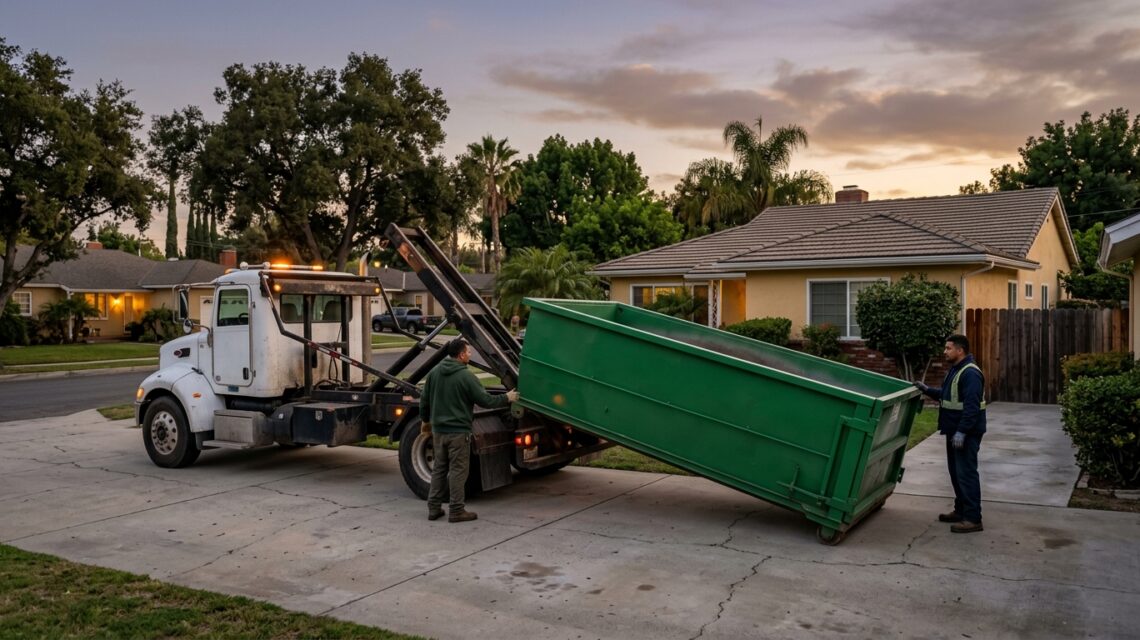
Searching for waste management dumpster rental prices in Los Angeles can feel like chasing a moving target. Quotes swing wildly depending on who you call and what they assume you need. One contractor quotes you $400. Another wants $900 for what sounds like the same 20-yard container. That’s frustrating. We’re breaking down exactly what drives those numbers for 2026, so you can budget with confidence and avoid overpaying for your next project.
Waste Management Dumpster Rental Prices Explained
Why Prices Vary by Company and City
Ask five haulers in Los Angeles for a quote and you’ll likely get five different numbers. That’s not random. Cost depends on dump fees at the specific landfill or transfer station a company uses, how far the truck has to drive, local permit rules, and how competitive a given zip code is. The San Fernando Valley market has its own quirks, too. Some cities require street permits while others don’t, and that paperwork can quietly add cost if a company isn’t upfront about it.
Weight also plays a bigger role than most renters expect. A dumpster full of yard waste weighs far less than one packed with concrete or roofing shingles, and haulers price accordingly. Before comparing quotes, it helps to actually read up on yard dumpster rental cost breakdowns, since a small size can still carry surprisingly high fees if the debris is dense. Size alone never tells the full story.
National chains and small local outfits also just operate differently. A regional company answering its own phones can quote a flat rate because it knows its own dump fees cold. A call center booking jobs across five states usually can’t, so it pads the estimate to cover unknowns.
What ‘All-Inclusive’ Really Means
All-inclusive pricing means the number you’re quoted is close to the number you’ll pay. Delivery, pickup, fuel surcharges, and environmental fees get folded into one flat rate instead of tacked on later as surprise line items. A 10-yard lowboy at $650 or a 40-yard unit at $685 sounds simple because it is; the only common add-on is a weight fee, often around $95 per ton, for loads that exceed the included allowance.
Hidden-fee pricing works the opposite way. A national hauler might advertise a low base rate, then stack on delivery charges, “convenience” fees, and disposal surcharges that only show up on the final invoice. Reading a detailed independent breakdown before booking is worth the ten minutes it takes, and a source like the Waste Management Dumpster Review 2026: Pricing & … is a good gut-check on what “typical” pricing actually includes. It’s a useful sanity check against any quote that seems too good.
Once you’ve confirmed pricing, look for a straightforward process at checkout, too. A clean booking confirmed screen with a locked-in rate and delivery window tells you the company isn’t planning to nickel-and-dime you later. If the confirmation is vague on price, that’s a red flag, not a formality.
Dumpster Sizes, Uses, and Price Ranges
Matching Size to Project Type
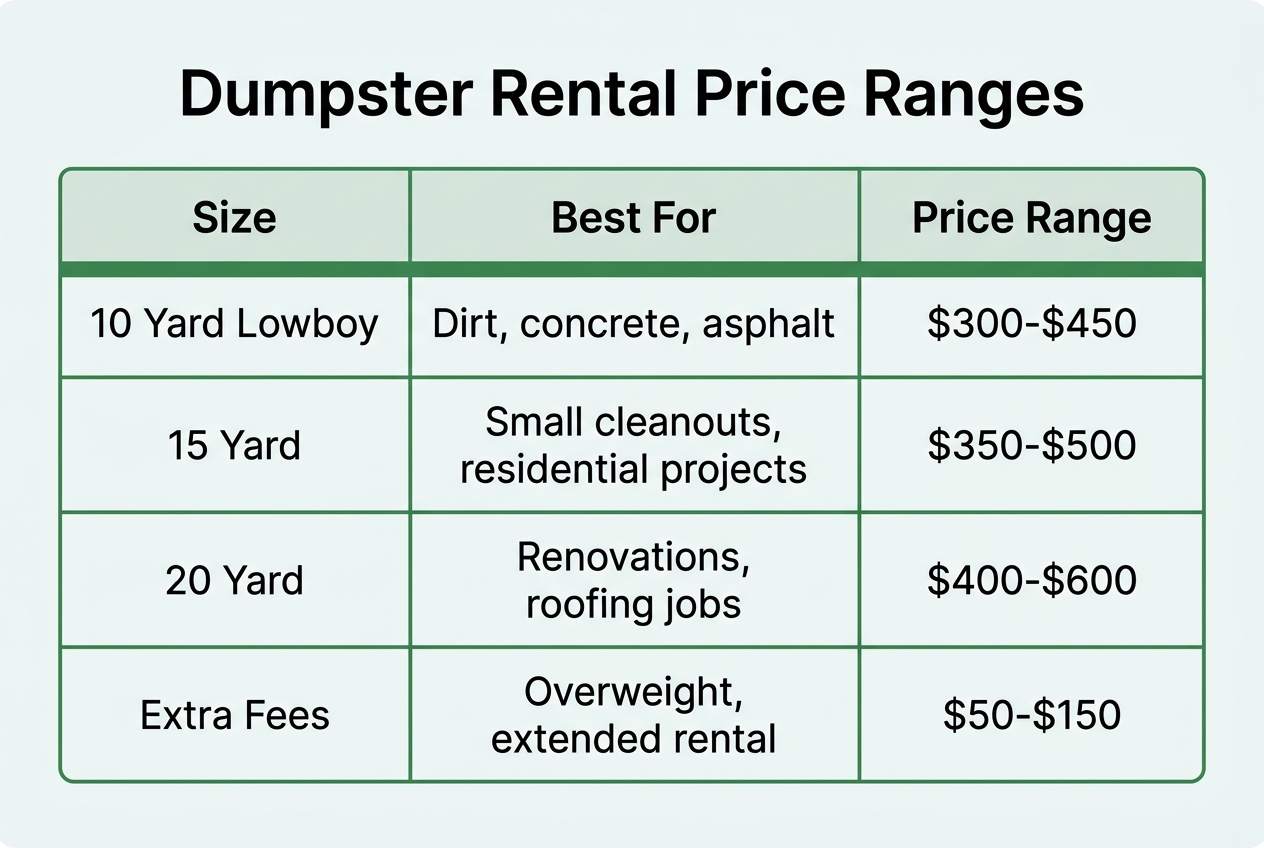
Picking the right size comes down to one question: what’s actually going in the bin? Heavy stuff like dirt, concrete, and asphalt needs a squat, low-walled container built for weight, not volume. That’s what a 10 yard lowboy is for. It sits low to the ground, so shoveling or wheelbarrowing debris in doesn’t wreck your back. A smaller option, like a yard dumpster rental, can also work for tight driveways or modest cleanout jobs where a full-size roll-off just won’t fit.
Bigger isn’t always better. A 40 yard box dropped at a small bathroom remodel is just wasted space you’re paying for. Below is a quick reference for how size lines up with real project types and typical costs.
| Size | Best For | Typical Price Range |
|---|---|---|
| 10 yard lowboy | Dirt, concrete, asphalt, small demo | $550–$700 |
| 15 yard | Small residential cleanouts, garage purges | $500–$650 |
| 20 yard | Kitchen/bath renovations, roofing tear-offs | $550–$700 |
| 30 yard | Estate cleanups, commercial jobs | $650–$800 |
| 40 yard | Major construction, full demolition | $685–$850 |
Notice the 20 yard and 30 yard sizes are the workhorses. Most roofing crews and remodel contractors land here. Weight, not just volume, drives your final bill, especially with shingles or plaster, so budget for tonnage overages on top of the base rate. If you’re managing a job near the west valley, checking availability through a dumpster rental van nuys page can help you confirm sizes and delivery windows before committing. And if cost comparisons across the metro area matter to your budget, reviewing a broader Dumpster Rental Cost in Los Angeles (2026 Price Guide) can put these ranges in context.

How to Choose the Right Dumpster Size
Most sizing mistakes come down to two things: guessing at volume and forgetting weight altogether. A homeowner clearing out a garage will eyeball the pile and grab a 15-yard bin, only to find it’s overflowing by Tuesday. Meanwhile, someone tearing out a tile floor books the same size and gets hit with steep overage charges, because tile, concrete, and dirt are dense and heavy even in small amounts. Volume and weight are two different problems, and pricing usually accounts for both. If you’re unsure, browsing a breakdown of dumpster sizes before you call gives you a much better starting point than a rough guess.
Before booking, answer three questions honestly: what material are you tossing, how long will the project run, and how much space do you actually have for delivery and pickup? A driveway that’s tight or blocked by low branches can rule out larger containers entirely. Duration matters too — a two-day cleanout doesn’t need the same rental terms as a three-month remodel. If you want a second opinion, talking to an operator directly usually beats guesswork, and it’s worth checking general pricing expectations, since research into How much does it cost to rent a dumpster from Waste … shows costs swing widely by region and material type.
As a rule, size up for demolition, roofing tear-offs, or anything with mixed debris — you’ll almost always fill it faster than expected. Size down for light cleanouts, single-room purges, or projects in tight spaces like older neighborhoods, where a smaller footprint matters more than capacity; residents searching for dumpster rental toluca lake options often deal with exactly this constraint. Guessing wrong costs money. Guessing right just takes five honest minutes of planning.
What Affects Your Final Rental Cost
The quoted price on a dumpster is just the starting point. What actually shows up on your invoice depends on how you use it. Most quotes come with a set weight limit built in, and going over that limit means paying per ton for the extra. A roofing job with heavy shingles or a yard full of wet dirt can blow past the included tonnage fast, so it pays to ask upfront what the cutoff is.
Avoiding Surprise Fees
Most cost surprises trace back to a handful of predictable culprits. Know these ahead of time and you’ll dodge the worst of them.
- Weight overages beyond the included tonnage, often billed around $95 per ton once you cross the line, which adds up quick on concrete or dirt loads;
- Rental duration overages, where keeping a container past the agreed window triggers a daily extension fee even if you’re only a day or two late;
- Prohibited items like tires, paint, batteries, and refrigerants, which can mean rejected loads or hazardous-material surcharges tacked onto your bill;
- Rush or same day dumpster rental requests, since squeezing in fast delivery sometimes costs a bit more than scheduling a few days out;
- Overfilling the container past the fill line, which many providers flag on pickup and charge for separately.
A quick gut check: if a quote seems way cheaper than everything else you’ve seen, ask why. It’s probably missing something.
Permit Costs and Local Regulations
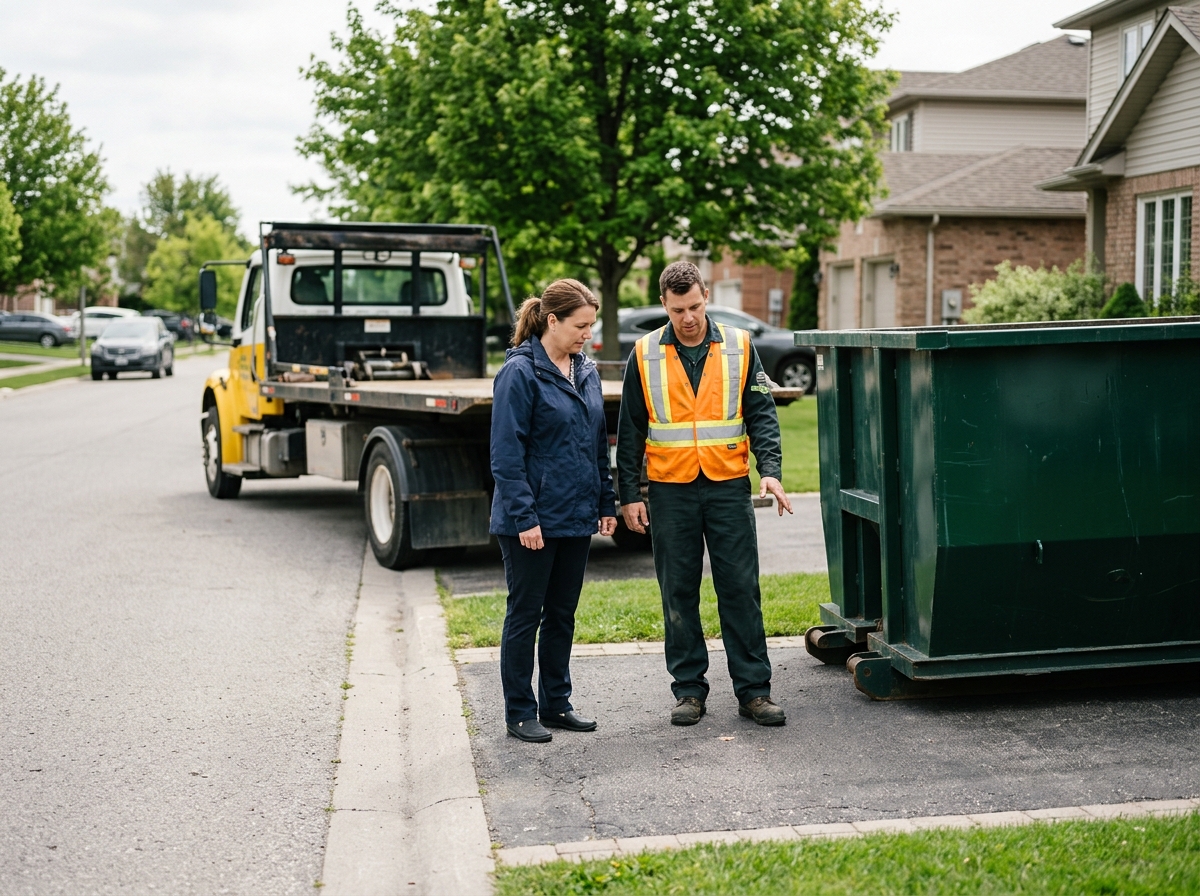
If the dumpster sits in your driveway, you’re usually fine without a permit. Place it on the street, though, and Los Angeles requires one, with fees and rules varying by neighborhood. Areas further out, like where you’d find a dumpster rental sun valley residents rely on, may carry different permit timelines than dense central neighborhoods. Skipping this step risks fines, so confirm placement rules before delivery day, not after.
Construction, Commercial, and Residential Dumpster Options Compared
Not every dumpster does the same job, and pricing structures shift depending on who’s renting and why. Construction dumpsters handle the heavy stuff: framing scraps, drywall, shingles, and demolition debris that piles up fast on an active job site. Contractors and demolition crews often need multiple swaps over weeks, and if you’re managing a full remodel or teardown, learning the basics of construction dumpster rental pricing before the job starts can save you from budget surprises. Commercial dumpsters serve a different crowd, businesses and property managers juggling ongoing waste from retail spaces, offices, or apartment complexes, often on a recurring schedule rather than a one-time haul.
Residential dumpsters, meanwhile, are built for homeowners tackling cleanouts, garage purges, or kitchen remodels. Smaller loads, shorter timelines, simpler pricing. The table below breaks down how rental length and use case typically affect cost and terms.
| Category | Typical Rental Length | Common Use | Pricing Pattern |
|---|---|---|---|
| Residential (short-term) | 3–7 days | Garage cleanouts, small remodels | Flat rate, fewer swaps needed |
| Construction (short-term) | 1–2 weeks | Single-phase demolition or renovation | Flat rate plus tonnage overage fees |
| Construction (long-term) | 1–3 months | Multi-phase builds, ongoing demolition | Discounted per-swap rate, contract pricing |
| Commercial (long-term) | Ongoing/monthly | Retail, offices, property management | Scheduled pickups, negotiated monthly rate |
Short-term rentals cost less upfront but charge more per day if you go over. Long-term arrangements trade flexibility for lower per-use rates, which makes sense for businesses with steady debris output. Homeowners near the Valley weighing options for a quick weekend project should look into dumpster rental northridge availability, since local delivery windows often shape which rental length actually makes sense.
Steps to Renting a Roll-Off Dumpster
Renting a dumpster isn’t complicated, but skipping a step will cost you time or money. Most delays come from guessing on size or ignoring placement rules until the truck’s already on its way. Here’s the actual order of operations, from planning to pickup.
- Step 1: determine size and material type — figure out whether you’re hauling light debris like household junk or heavy material like concrete and dirt, since that decides whether you need a compact 10-yard lowboy or something bigger.
- Step 2: check same-day or next-day availability — call in the morning if you’re in a hurry, because trucks fill up fast and afternoon slots aren’t guaranteed.
- Step 3: confirm all-inclusive quote and payment method — get the total in writing, including delivery, pickup, and disposal, so there’s no surprise line item later.
- Step 4: schedule delivery window and placement location — decide if the dumpster sits in your driveway or on the street, since street placement often needs a permit.
- Step 5: fill dumpster and schedule pickup or request extension — don’t overload past the fill line, and call ahead if your project runs long instead of waiting until the deadline.
Same-Day Delivery: When It’s Possible
Same-day delivery is real, but it depends on timing and truck availability, not luck. Call before noon and you’ve got a decent shot, especially on weekdays. Wait until 4 p.m. on a Friday, and you’re probably looking at Monday instead. Before you even pick up the phone, it helps to skim a roll off dumpster sizes guide so you’re not guessing when the dispatcher asks what you need.
Rush jobs — storm cleanup, last-minute renovations, an eviction cleanout — are exactly where fast delivery earns its keep. Just know that same-day requests for 30 or 40-yard containers are harder to fill than smaller ones, simply because fewer trucks carry them. If you’re comparing options or just want a broader industry view, resources like Dumpster Rentals for Home & Business can give you a sense of standard timelines. Bottom line: plan ahead when you can, but don’t panic if you can’t. Fast delivery exists for a reason.
Eco-Friendly Disposal and Choosing a Reliable Local Provider
Why Local Expertise Matters in Los Angeles
Not every dumpster ends up at a landfill, and that matters more than most people realize. Providers that follow LEED-aligned recycling practices track what goes into every container and report how much gets diverted rather than buried. This isn’t just a feel-good detail. Many commercial projects, especially those chasing green building certifications, actually need that documentation to hit their sustainability targets. Reading up on eco friendly waste management practices before you book can help you ask the right questions about what happens after pickup.
Once a dumpster leaves your site, sorted debris typically heads to a materials recovery facility where crews and machinery separate wood, metal, cardboard, and concrete. Concrete and asphalt often get crushed and reused as aggregate. Metal gets baled and sold to scrap buyers. Wood may be chipped for mulch or biomass fuel. It’s a whole second life for stuff you’d otherwise never think about again.
Working with a locally owned company has real, practical upside. They know which neighborhoods require street permits, how LA’s zoning quirks affect placement, and which materials trigger extra disposal scrutiny. That local knowledge saves you fines and headaches. A national call-center outfit won’t know that a corner lot in Reseda needs a different permit than one in Van Nuys. A crew based here just does.
When comparing providers, focus on a few concrete things: pricing that’s actually all-inclusive, not padded with vague “environmental fees” later. Response times matter too, especially if you need same-day delivery. Check review counts and consistency, not just star ratings. For reference on how municipal rate structures and rules get published, the WM Service Spokane Valley page shows how larger providers lay out tiered pricing. Finally, confirm accepted payment types upfront. It’s a small detail that says a lot about how a company runs its business.
Before you commit to a plan, it helps to be honest about who is actually doing the lifting and where the material ends up. A crew that loads and hauls in one visit saves your back and your weekend, while a container parked in the driveway for a few days costs less and lets you work at your own pace — but only if someone is genuinely available to fill it. Think about the volume you’re facing, whether anything in the pile carries special handling rules, and how much time you realistically have, and the right answer usually becomes obvious.