
Searching for a 2 yard dumpster to handle a small cleanup? Here’s the catch: most roll-off companies, including Green Star Roll Off, don’t carry a bin that small. And renting undersized equipment for a real project usually backfires. Before you commit to anything, you need to know what actually fits your job and your budget. This guide breaks down the seven essentials so you don’t overpay or run out of room halfway through.
What Is a 2 Yard Dumpster Used For
Typical dimensions and capacity
A 2 yard dumpster is small. We’re talking roughly 6 feet long, 3 feet wide, and 3 feet tall — about the footprint of a large refrigerator lying on its back. That tiny frame holds somewhere around 400 to 500 pounds of loose trash. Sounds like a lot, until you realize a single kitchen remodel can produce ten times that in drywall and flooring alone. These bins are built for bulk, not weight. They’re not rated to handle dense debris at all.
Because the capacity is so limited, these containers get emptied constantly — often multiple times a week — rather than sitting on-site for days like a construction bin would. If you’ve ever tried to picture roll off dumpster dimensions next to one of these units, the difference is almost comical. A 10 yard roll-off alone dwarfs it five times over. That tells you a lot about what each one is actually designed to do.
Who normally rents this size
These bins belong to restaurants, offices, salons, and small retail shops — businesses generating a steady trickle of everyday trash, not renovation debris. Think food wrappers, paper cups, packaging, and general office waste. It’s a subscription-style service tied to a scheduled hauler route, usually run by a municipal contractor or a front-load waste company. It’s not a one-time delivery you book for a project.
That’s the key distinction. A roll-off is dropped off, filled at your pace, then hauled away once. A 2 yard unit stays put and gets serviced on a recurring loop, week after week, month after month. If you’re a business owner wondering whether one fits your needs, it comes down to volume and timeline: steady low-volume trash, yes; a weekend cleanout or a bathroom tear-out, no. Many local businesses assume a small bin can double for occasional bulk waste, then find themselves overflowing after one busy week. It can’t stretch to cover a one-off job — that’s just not what it’s built for.
Why a 2 Yard Container Isn’t Built for Renovation or Cleanout Debris
Weight and material limits to watch for
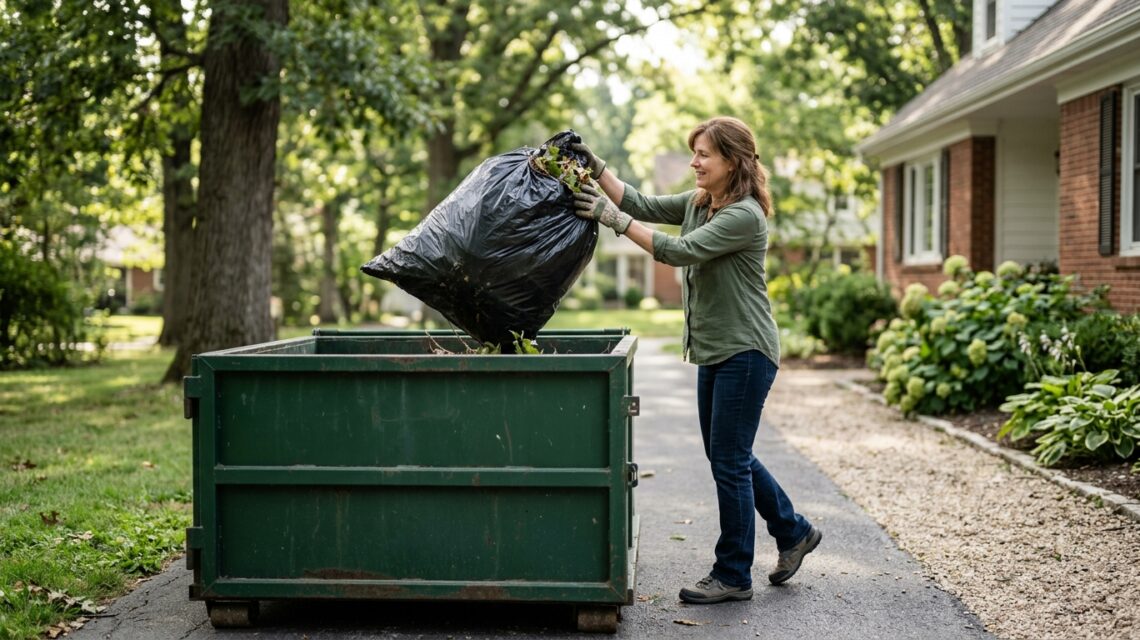
A 2 yard bin holds about what fits in two washing machines stacked side by side. That’s fine for a restaurant’s daily food waste or an office’s paper trash. It’s nowhere close to enough for a bathroom tear-out, a flooring swap, or a garage cleanout. Homeowners who try to squeeze renovation debris into one of these small bins usually end up overflowing it within a day, then scrambling for a real solution anyway.
Here’s the thing most people don’t realize: 2 yard containers are typically front-load equipment tied to a hauler’s regular pickup route, not something dropped off for a weekend project. You sign a service agreement, and a truck empties it on a fixed schedule, week after week. There’s no version of that arrangement built for a one-time job with a start and an end date.
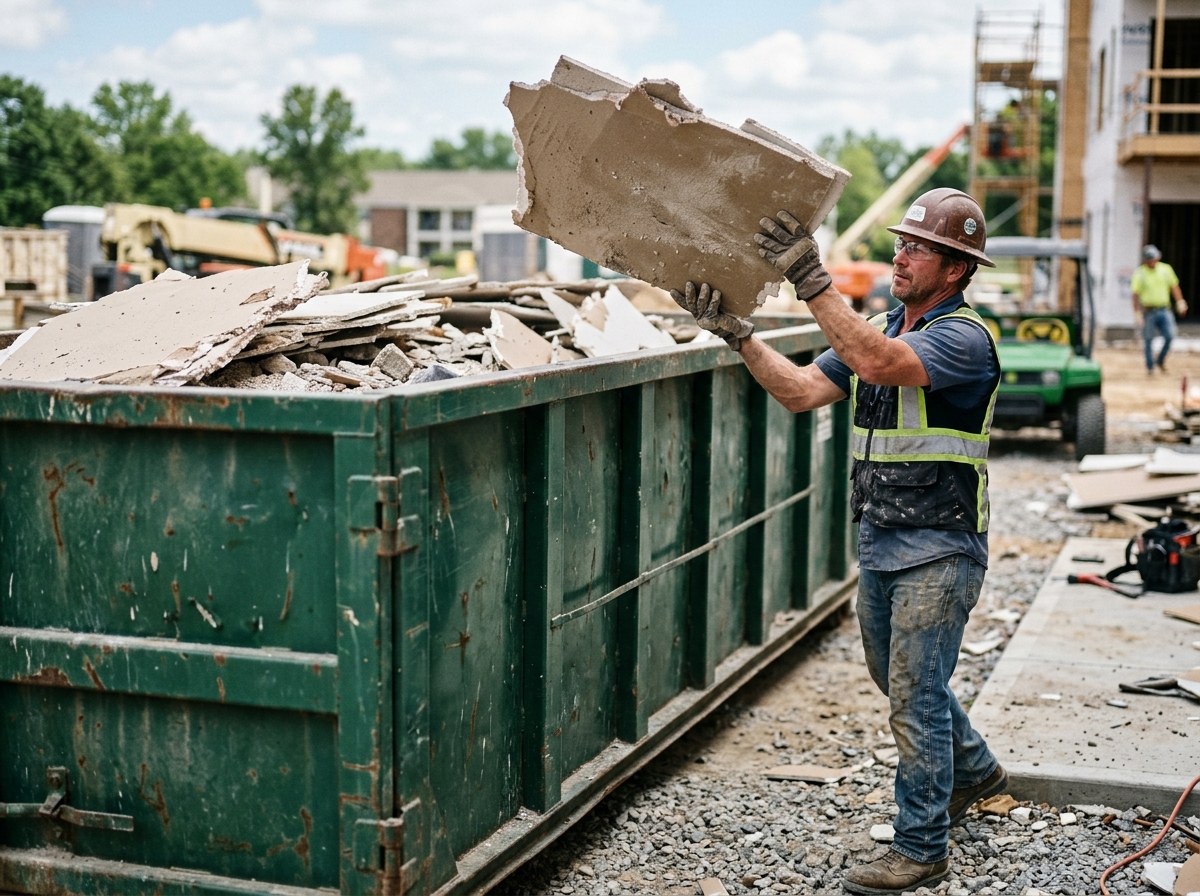
Weight is the other problem. Drywall, wood scraps, and old flooring are heavier than they look, and these bins simply aren’t rated for that kind of tonnage. A roll-off, by contrast, is built and priced around weight limits from the start. That’s exactly what heavier renovation debris demands. For anyone comparing container types, it helps to see how a yard roll off dumpster handles bulk loads that a small front-load bin can’t touch. If you’re gutting a kitchen or ripping out a deck, a driveway-ready roll-off, sized for the job and gone when you’re done, is the practical fit. Even homeowners near a dumpster rental toluca lake project have found the same lesson applies: small bins are for ongoing trash, not renovation debris.
2 Yard Dumpster vs Roll-Off Dumpster Sizes
Capacity and best-use breakdown
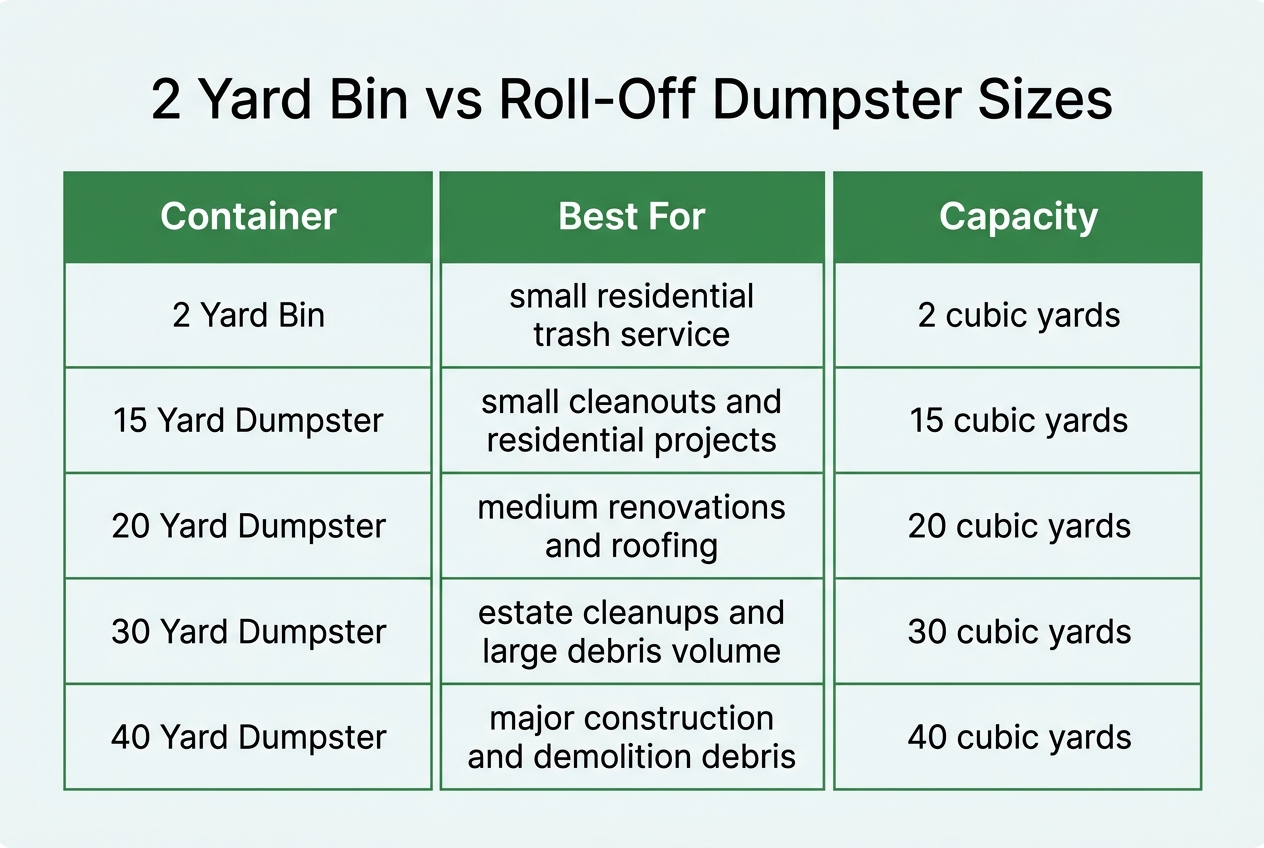
A 2 yard bin holds about 2 cubic yards, roughly what a small office or a handful of apartment units toss out between pickups. It’s built for repeat service, not a one-time load of debris. Roll-off dumpsters work the opposite way: you rent one size, fill it once, and it’s hauled off. Before picking either, it helps to run the numbers through a roll off dumpster sizes guide so you’re not guessing at volume.
| Size | Cubic Yardage | Best-Fit Project | Delivery Style |
|---|---|---|---|
| 2 Yard | 2 cu yd | Recurring small trash, retail or office bins | Scheduled, ongoing pickup |
| 10 Yard Lowboy | 10 cu yd | Dirt, concrete, asphalt | One-time drop, low profile |
| 15 Yard | 15 cu yd | Small residential cleanouts | One-time drop, single load |
| 20 Yard | 20 cu yd | Renovations, roofing tear-offs | One-time drop, standard roll-off |
| 30 Yard | 30 cu yd | Estate cleanups, large commercial jobs | One-time drop, extended rental option |
| 40 Yard | 40 cu yd | Major construction, demolition debris, warehouse cleanouts | One-time drop, long-term available |
Notice the pattern. Each roll-off jumps in yardage to match a bigger job, while the 2 yard bin stays fixed no matter what you throw at it. That’s fine for a coffee shop’s daily trash. It’s useless for a torn-off roof or a garage full of old furniture. Contractors working across the Valley often size up rather than down, since a partially full 30 yard container still beats a second trip with something small. If you’re near the east end of the service area, dumpster rental Sun Valley options follow the same sizing logic. Bottom line: pick capacity based on the job’s actual volume, not what fits on the curb.
6 Situations Where a Larger Roll-Off Makes More Sense
A small bin has its place. But plenty of projects outgrow it fast, and knowing the tipping point saves you a second delivery fee. Here’s when to size up.
Residential projects
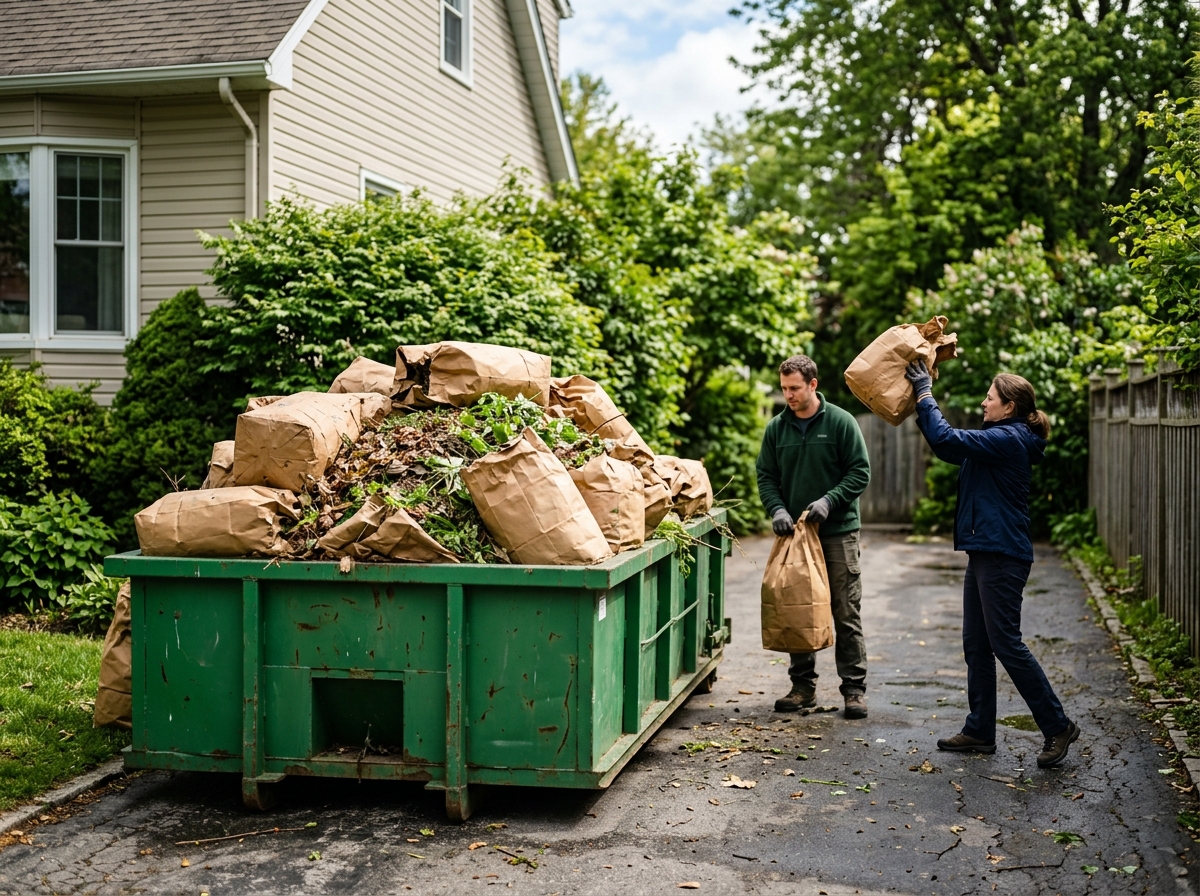
Most homeowners underestimate how fast debris piles up once a project actually starts. A weekend garage cleanout or a room-by-room renovation rarely fits in anything small, and hauling load after load to the curb wastes your whole Saturday. Here’s where stepping up in size pays off:
- A home renovation or garage cleanout that would otherwise take multiple truckloads to the dump is better handled with a 15 or 20 yard residential dumpster, especially if you or your contractor plan to load it yourselves rather than hire a crew.
- A roofing tear-off or siding replacement generates heavy, bulky material fast, and a 20 yard dumpster keeps shingles and old siding contained without filling up halfway through the job.
- An estate cleanup involving years of accumulated furniture and belongings usually needs a 30 yard dumpster, paired with a separate cleanout crew to actually clear the rooms while the container handles what they haul out.
- A cleanout that includes old appliances or mattresses can often go into that same residential dumpster, though it’s worth calling ahead since certain items carry disposal restrictions or added fees.
Commercial and construction projects
Contractors and property managers deal with a different scale of debris entirely, and undersizing here just means paying for a second haul-away. Consider the following:
- Demolition debris from a contractor teardown is typically suited to a 40 yard dumpster for mixed materials, or a 10 yard lowboy specifically for concrete, brick, and other heavy dense debris that adds weight fast.
- A commercial property producing more trash than its scheduled bin service can absorb between pickups often does better with a long-term commercial rental sized to actual volume, rather than waiting on the next collection day.
- A seasonal event or short-term project, like a store remodel or a one-time yard overhaul, usually calls for a single delivery instead of locking into a recurring contract, and choosing a short term dumpster rental keeps costs tied to the actual job rather than an ongoing service.
Not sure which size clears your specific job? If you’re near the Valley, checking a dumpster rental northridge providers offer can give you a quick read on what’s typically delivered for similar-sized projects nearby. Guessing small to save a few dollars almost always backfires — you end up paying for two deliveries instead of one.
How to Choose the Right Size If a 2 Yard Bin Won’t Cut It
Matching size to project type
Once you’ve outgrown a 2 yard bin, guessing at size just wastes money. A better method: count rooms or square footage. A single-room cleanout usually fills a 15 yard container, while a whole-house purge or roofing job pushes you toward 20 or 30 yards. Reviewing typical dumpster sizes against your project scope before you call saves a second delivery fee later. Weight matters just as much as volume, too. Concrete, dirt, and roofing shingles are dense and heavy, and a standard open-top box isn’t built for that load — that’s where a 10 yard lowboy or reinforced container earns its keep.
Questions to ask before booking
Before you commit to a size or a date, run through a short checklist with whoever’s taking your call. It’s a five-minute conversation that prevents an expensive surprise mid-project.
- Ask how debris volume is estimated for your specific job, since room count or square footage gives a more reliable answer than a rough guess.
- Confirm whether your material is heavy enough — think concrete, tile, or shingles — to require a lowboy or reinforced dumpster rather than a standard box.
- Check same-day or next-day delivery availability if you’re working against a tight deadline or a contractor’s schedule.
- Get pricing in writing that’s genuinely all-inclusive, so weight fees and delivery charges don’t show up as a surprise on the invoice.
- Ask what happens if the project runs long, since rental extensions aren’t automatic everywhere and availability can vary.
If you’re renting for a job near the west Valley, checking dumpster rental lake balboa options can clarify local delivery windows and pricing norms. Skip the guesswork, ask these questions upfront, and you’ll rent the right box once instead of twice.
What You Can and Can’t Load Into Any Dumpster Size
Every roll-off, no matter the size, plays by the same basic rules about what goes in. Knowing them before delivery day saves you from a rejected load or an unexpected fee. The list below applies whether you’re renting the smallest bin available or something much bigger.
Commonly accepted debris
Most dumpsters are built for dry, solid debris. Household junk, construction scraps, yard waste, and packaging materials make up the bulk of what haulers expect to see. That’s true for a small residential cleanout and just as true for a busy jobsite. Think old furniture, drywall, lumber, cardboard, branches, and general clutter. If it’s dry and it fits through the door, it’s usually fine.
Items that need a specialty disposal service
Some materials just aren’t welcome in a roll-off, and that’s for good reason. Hazardous waste, paint, chemicals, and asbestos fall into that category almost everywhere, and they legally need a licensed hazmat facility instead. Liquids and septic waste are another hard no. No roll-off or front load dumpster is designed to hold them safely, so a licensed liquid waste hauler is the right call there. Appliances and mattresses sit in a gray zone: often allowed, but sometimes taxed with extra fees depending on the hauler’s policy.
| Material | Accepted in Standard Roll-Off? | Where It Actually Goes |
|---|---|---|
| Household junk, furniture | Yes | Standard dumpster load |
| Construction debris, lumber | Yes | Standard dumpster load |
| Paint, chemicals, asbestos | No | Licensed hazmat facility |
| Liquids, septic waste | No | Licensed liquid waste hauler |
| Mattresses, freon appliances | Often, with fees | Confirm restrictions by phone |
Bottom line: dry debris is the safe zone, liquids and hazmat never are. When you’re unsure about an item, it’s worth a quick call before loading day rather than a surprise at pickup.
Steps to Renting a Dumpster for Your Project
Renting a roll-off isn’t complicated, but skipping a step can cost you a delay or a surprise fee. Here’s the order that actually works, whether you’re clearing out a garage or running a job site.
Before delivery
Start with a phone call or quote request, and describe the project honestly. Old carpet and furniture is a different job than roofing tear-off or concrete, and the size that fits one won’t fit the other. This is also when you settle logistics: delivery date, exactly where the container will sit, and whether your street needs a placement permit. Homeowners doing a project near dumpster rental van nuys streets often assume driveway placement skips permitting entirely, which isn’t always true if the driveway’s too short. Staff can walk you through local rules, though pulling the actual permit is on you.
| Step | What Happens | Typical Timing |
|---|---|---|
| Request a quote | Describe debris type and volume for a size recommendation | Same day |
| Confirm placement | Choose driveway or street; check permit rules | 1-2 days before |
| Delivery | Container dropped at agreed spot | Same-day or next-day |
| Loading | You or your contractor fill it during the rental term | Full rental period |
| Pickup or extension | Schedule removal, or request more time if needed | End of term |
During and after the rental
Once it’s on-site, loading is your job or your contractor’s, not a crew’s. That’s exactly why a 15 or 20 yard residential bin runs cheaper than a hauling service — you’re doing the work. Keep weight distributed evenly and don’t stack above the rim. If the project drags on longer than planned, don’t just leave debris piling up beside it. Call and request an extension before the scheduled pickup. Extensions depend on availability, so a heads-up two or three days out beats a last-minute scramble. When you’re done, one call sets pickup in motion.
A 2 yard dumpster simply isn’t part of the roll-off world, and for good reason—these containers are built for real project debris, not the small-scale loads that a bin that size might handle. The smallest practical option, a 10 yard lowboy, gives that same low-profile convenience with room for actual results, and it’s the size Green Star Roll Off’s customers often reach for when they want a quick response and a crew that shows up ready to work. Weighing the scope of what’s being cleared out is the natural next step toward landing on the right container size.