
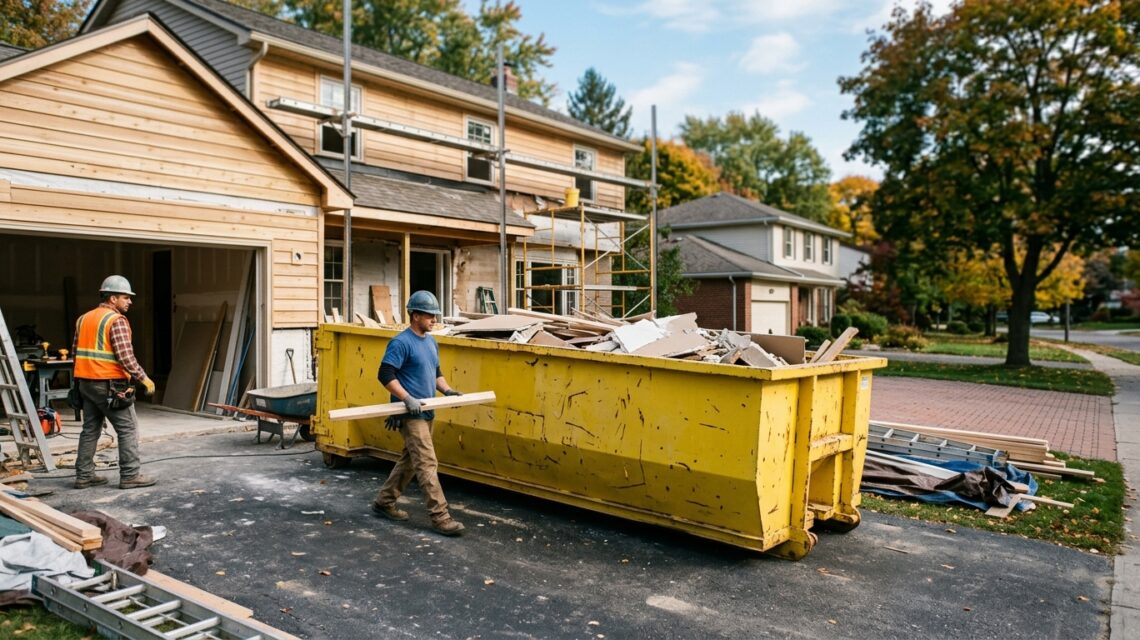
Standing in the middle of a demolition project, a whole-home cleanout, or a major roofing job, most homeowners and contractors reach the same frustrating conclusion: their debris pile is too big for a small container but seems wasteful to overpay for space they won’t use. A 30 yard roll off dumpster solves this exact dilemma. It gives you the capacity to handle large-scale waste without the premium cost of oversized bins. Green Star Roll Off breaks down everything you need to know for 2026, from pricing and weight limits to what actually fits inside, so you can book the right size the first time and skip the costly overage fees.
What Is a 30 Yard Roll Off Dumpster
Standard Dimensions and Capacity
A 30 yard roll off dumpster typically measures about 22 feet long, 8 feet wide, and 6 feet tall. Those numbers shift slightly by manufacturer, but the overall footprint stays close to this range. This container holds roughly 30 cubic yards of debris — about 9 to 12 pickup truck loads of material.
That’s one of the larger options you’ll find for rent, and it handles bulky loads without multiple hauls. For projects generating a mix of heavy and lightweight debris, this size strikes a practical balance between space and manageable weight limits.
Most rental agreements pair this dumpster with a weight allowance between 3 and 5 tons. Go over that limit, and extra fees kick in, so knowing your debris type matters before booking. Smaller jobs may do better with a 20 yard dumpster rental instead.
How It Compares to a Standard Dumpster Look
Visually, this container looks like a long, open-top steel box mounted on a truck bed for delivery. The walls stand tall enough to contain bulky debris but low enough for manual loading. Most units feature a swing-open door at one end, making it easier to walk in wheelbarrows or push heavier items inside.
Compared to smaller bins, this size has noticeably taller walls and a longer body. It sits higher off the ground once placed, so a small step or ramp helps with loading. The overall shape stays consistent across brands, though color and door style vary by supplier.
Ideal Debris Types for This Size
This size suits large home renovations, roofing tear-offs, and whole-house decluttering projects well. It also works for an estate cleanout, where furniture, boxes, and household items pile up fast. Contractors often pick it for multi-room remodels that need steady debris removal.
It handles bulky, lightweight materials better than dense debris like concrete or dirt. Wood, drywall, furniture, and packaging fit comfortably within the weight limit. Heavier loads should stick to smaller containers built for that density.
30 yard roll off dumpster: Is It the Right Size for Your Project
Estimating Debris Volume Before You Book
Before you commit to a size, picture your debris in real terms. A 30 yard container holds about the volume of six pickup truck loads. That’s roughly 30 cubic yards of material — enough space for a full home cleanout, a whole-house remodel, or a moderate demolition job. Measuring by loads, not guesswork, prevents costly mistakes.
Walk your property and count what needs to go. Old furniture, flooring, cabinets, and drywall all add up fast. If you’re clearing multiple rooms or an entire structure, this size usually covers it without a second haul.
Signs You Need This Size Over a Smaller Option
Some projects clearly outgrow smaller bins. If you’re tackling a multi-room renovation, tearing down a shed, or clearing a garage packed with years of stuff, the larger option saves time and repeat trips. Frequent overflow is a clear warning sign. Many local businesses learn this the hard way after ordering something too small.
Compare your load estimate against a 15 yard dumpster rental, which suits smaller cleanups. If your project exceeds that scope even a little, sizing up avoids overage fees and delivery delays.
When a Larger Container Makes More Sense
Certain jobs still exceed 30 yards. Full commercial demolitions, large-scale roofing tear-offs, or multi-building cleanouts often generate more debris than expected. A roofing dumpster rental project involving heavy shingles, for instance, may fill space quickly due to weight, not just volume.
If your estimate sits near the container’s limit, ask about a larger size. Oversizing slightly costs less than a second rental. Weigh both volume and weight limits before finalizing your choice.
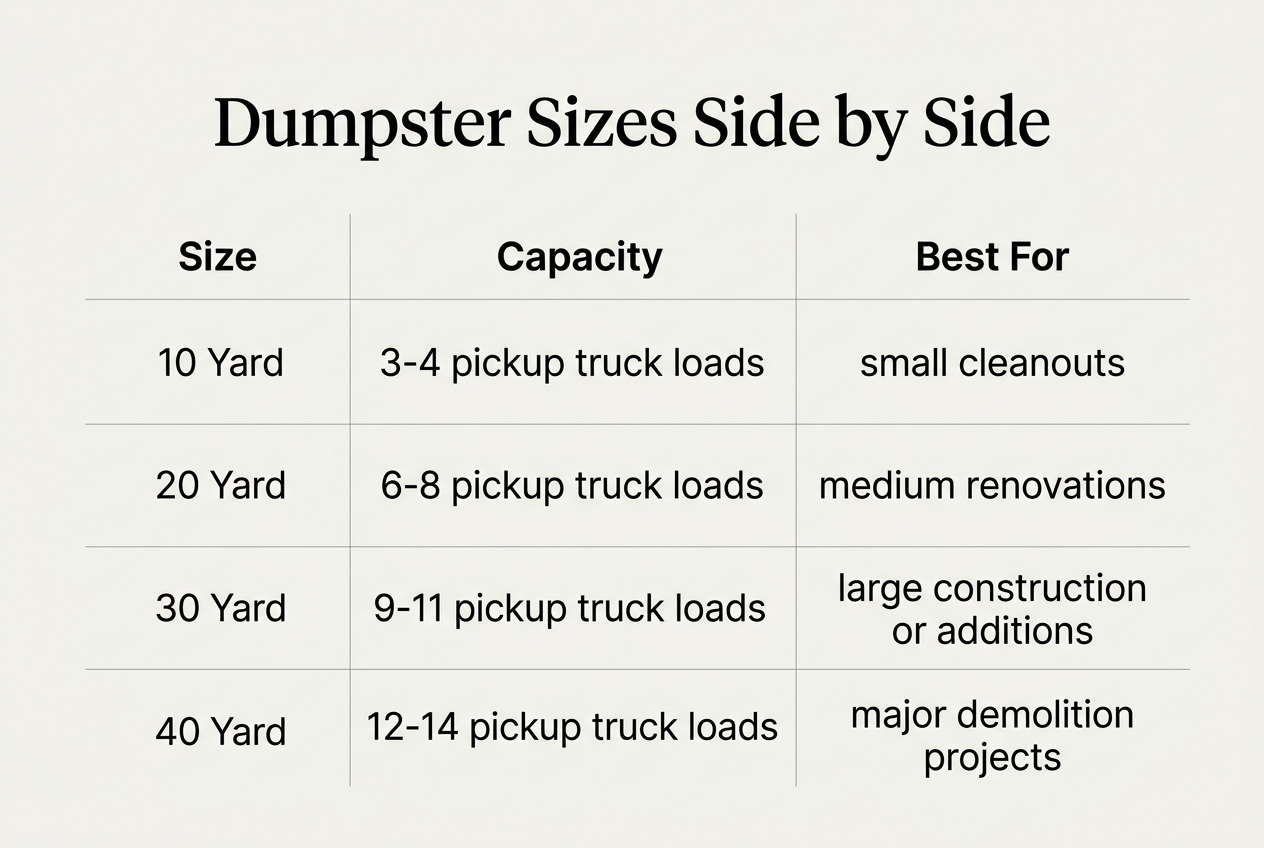
Comparing Dumpster Sizes Side by Side
Choosing the right container starts with real numbers. This dumpster sizes guide breakdown shows how dimensions and weight limits shift as size increases.
| Size | Dimensions (L x W x H) | Weight Limit | Best Use |
|---|---|---|---|
| 15 Yard | 16 ft x 7.5 ft x 4 ft | 2-3 tons | Small cleanouts, single-room remodels |
| 20 Yard | 22 ft x 7.5 ft x 4.5 ft | 3 tons | Garage cleanouts, flooring removal |
| 24 Yard | 22 ft x 8 ft x 6 ft | 4 tons | Mid-size remodels, roofing jobs |
| 30 Yard | 22 ft x 8 ft x 6 ft | 5 tons | Whole-home cleanouts, new construction |
| 40 Yard | 22 ft x 8 ft x 8 ft | 6+ tons | Commercial demolition, large-scale builds |
15 to 20 Yard Containers
These smaller bins fit tight driveways. They work well for basement cleanouts, small renovations, and yard waste. Many local businesses rent this size for quick, single-day jobs.
24 to 30 Yard Containers
This mid-to-large range handles bigger loads without multiple pickups. Contractors researching 30 Yard Dumpster Rental options often choose this tier for whole-house cleanouts or new builds.
40 Yard Containers
The largest standard option suits major demolition and commercial projects. It holds bulky debris but needs more space for placement and access.
Best Projects for This Container Size
Home Renovation and Demolition
A 30 yard container works well for big remodeling jobs. It handles bulky debris from multiple rooms at once, making it a smart choice for a residential dumpster rental tied to major upgrades.
- Full kitchen or bathroom remodels that produce cabinets, tile, and old fixtures.
- Whole-house flooring removal, including carpet, hardwood, and underlayment.
- Interior wall demolition that generates drywall, studs, and insulation debris.
- Garage or basement cleanouts combined with structural teardown work.
Roofing and Construction Debris
Roofing jobs create heavy, dense waste. Shingles and underlayment add weight fast, so volume matters less than weight limits here. This size still suits mid-sized construction projects, similar to options described in the 30-Yard Dumpster Rental | Large Roll-Off Dumpster | TDS guide.
- Full roof tear-offs on homes with two or more layers of shingles.
- New construction sites generating lumber scraps, packaging, and drywall cutoffs.
- Siding replacement projects that produce large panels and trim pieces.
Estate Cleanouts and Large Decluttering Jobs
Estate cleanouts often mix furniture, boxes, and household junk. The extra volume handles mixed materials without multiple hauls.
- Whole-home cleanouts after a family transition or property sale.
- Hoarding situations requiring removal of furniture, appliances, and clutter.
- Office or retail cleanouts for many local businesses closing or relocating.
Rental Costs and Pricing Factors
Average Price Range in 2026
Most 30 yard containers rent for $450 to $750 per project in 2026. Prices shift based on your city, landfill fees, and how long you keep the unit. Rural areas often see lower rates. Dense metro regions, including parts of Los Angeles, tend to run higher because of trucking distance and disposal costs.
A detailed dumpster rental cost breakdown can help you compare quotes before booking. Always ask whether the price includes delivery, pickup, and a set number of rental days. Some quotes look cheap but leave these basics out, leading to surprise charges later.
Factors That Influence Your Quote
Weight is the biggest factor. Heavy debris like concrete, shingles, or dirt costs more to haul and dump than mixed household junk. Location matters too, since longer travel distances raise fuel and labor costs for the hauling company.
Rental duration also affects price. A quick three-day cleanout costs less than a month-long renovation project. Local disposal fees, seasonal demand, and permit requirements can shift your final number as well. Comparing options like a 30 Yard Roll-Off Dumpster Rental from different providers shows how much these variables can change a quote.
Understanding Overage and Extra Day Charges
Most rentals include a set weight limit, often between 4 and 6 tons. Exceed it, and overage fees kick in, usually charged per ton. Keeping loads level and avoiding dense materials helps you stay within limits.
Extra rental days also cost extra, typically $10 to $25 daily. Planning your project timeline in advance helps you dodge these added charges completely.
Steps to Renting and Using Your Dumpster
Requesting a Quote and Scheduling Delivery
Renting a large container follows a simple path from quote to pickup. The table below breaks down each stage so you know what to expect.
| Step | What Happens | Typical Timeframe |
|---|---|---|
| Request a quote | Share project type, debris amount, and address | Same day |
| Schedule delivery | Pick a date and confirm placement details | 1-2 days |
| Drop-off | Driver positions the dumpster on-site | 30-45 minutes |
| Loading period | You fill the container over your rental window | 3-14 days |
| Pickup | Driver hauls it away once you call for swap or removal | Scheduled by you |
Choosing a Safe, Accessible Placement Spot
Pick a flat, paved area with clear overhead space. Placement matters, because trucks need about 60 feet of straight clearance to load and unload safely. Driveways usually work best. Avoid soft grass or narrow alleys that block the truck’s path.
Loading Tips and Pickup Coordination
Load heavy debris first, then fill gaps with lighter items. Keep waste below the fill line for safe transport. Smaller cleanouts may only need a 10 yard dumpster rental instead. Homeowners handling smaller loads can also review options like Residential Dumpster Rental – Roll Off Dumpsters for comparison. Call your provider a day ahead to lock in final pickup.
What You Can and Cannot Throw Away
Accepted Household and Construction Debris
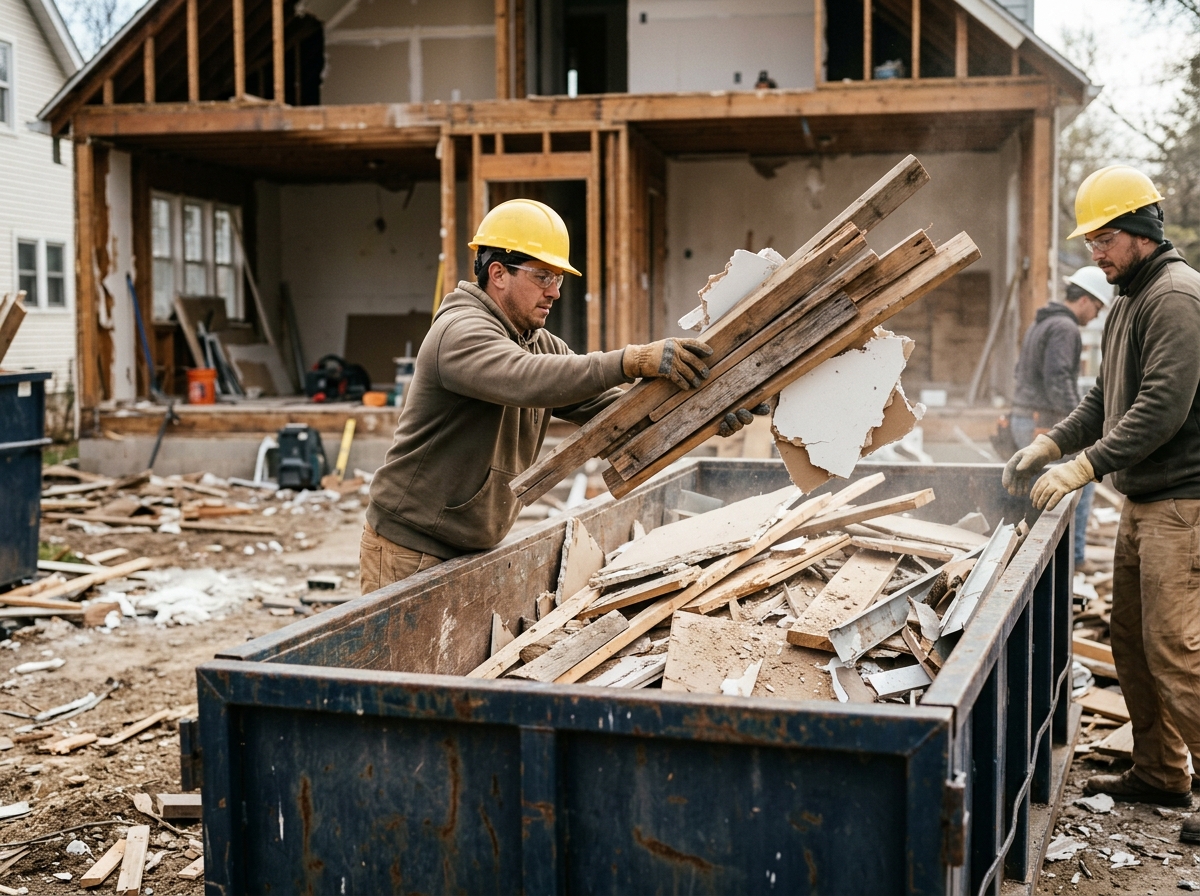
A 30 yard bin handles most everyday waste from cleanouts and remodels. Knowing what can you throw in a dumpster saves time and avoids rejected loads. In general, this container accepts:
- Old furniture, mattresses, and bulky household junk cleared out during a move or estate cleanout.
- Wood scraps, drywall, and framing materials left over from renovation or new construction work.
- Shingles, siding, and other roofing debris removed during a roof tear-off project.
- Dirt, brick, and concrete in smaller quantities, though heavy debris may need a separate load due to weight limits.
- Cardboard, packaging, and general trash generated by office or retail cleanouts.
Prohibited Items and Hazardous Materials
Some materials are banned because they pose safety or environmental risks. Hazardous waste cannot go in any roll off container. Avoid placing these items in the dumpster:
- Paint, solvents, and chemical cleaners that can leak and contaminate soil or groundwater.
- Batteries, motor oil, and antifreeze, which require special handling facilities.
- Tires, which most landfills reject due to recycling regulations.
- Asbestos-containing materials, which demand certified abatement contractors.
- Appliances containing refrigerants, such as refrigerators or air conditioners, unless pre-approved.
Alternatives for Disposing Restricted Waste
Restricted items still need proper disposal. Many local businesses drop off electronics and chemicals at municipal hazardous waste centers. Tire shops often recycle old tires for a small fee. For appliances, check if your provider offers Freon removal service. A quick call before ordering a 30-Yard Roll-Off Dumpster Rental clarifies which local rules apply to your project.
Permits and Placement Rules
When You Need a Permit
Most cities require a permit when a dumpster sits on a public street or curb. If the container stays entirely on private property, like a driveway, a permit is often unnecessary. Rules change by city, so always check local codes before delivery day.
Large projects, like full home renovations, often need permits because the dumpster blocks part of the road for weeks. Learning about dumpster permits early can save you fines and delays. A quick call to your local permitting office clears up most confusion within minutes.
Driveway, Street, and Property Line Rules
Driveway placement is usually the simplest option. It skips the permit paperwork and keeps the container off public roads. Just make sure there’s enough clearance, since a 30 yard dumpster needs roughly 60 feet of straight space for delivery trucks.
Street placement adds rules about lane width, sidewalk access, and reflective safety markers. Some cities require cones or lights at night. Property line setbacks also matter, since dumpsters placed too close to a neighbor’s yard can cause disputes or code violations.
Special Considerations for Apartments or Shared Property
Shared properties often add another layer of rules. HOAs may restrict dumpster size, placement, or rental duration, so checking guidelines first prevents conflicts with neighbors or property managers.
Apartment complexes may require written approval before delivery. Some buildings only allow placement in designated loading zones. Resources like 30 Yard Dumpster Rentals in NJ show how other regions handle similar shared-property restrictions.
Preparing Your Property for Delivery
Clearing Access Paths and Overhead Obstructions
A 30 yard container is long and heavy, so the delivery truck needs a straight, open path. Measure your driveway and gate width before delivery day. Most trucks need at least 12 feet of clearance and about 60 feet of straight-line space to place the container safely.
Check for overhead obstructions too. Low tree branches, power lines, and awnings can block the truck’s tilted bed during drop-off. Trim branches back several feet, and note any wires near the planned placement spot. This simple step prevents delays and protects your property from damage.
Protecting Driveways and Landscaping
Roll off containers are heavy, especially once loaded with debris. Placing plywood boards or planks under the drop zone helps distribute weight and protects asphalt or concrete from cracking. This is a common tip shared in guides like Should you choose a 30 yard dumpster? | Dumpsters.com, which walks through sizing and setup basics.
Mark off nearby landscaping with stakes or flags. Sprinkler heads, garden beds, and low walls sit closer to driveways than people expect. A few minutes of prep saves costly repairs later, especially for renovation or moving projects where multiple deliveries may happen.
Scheduling Delivery and Pickup Windows
Confirm your delivery date at least two to three days ahead, and always ask about arrival windows. Many drivers work four-hour blocks, so having someone on-site helps guide truck positioning quickly and safely.
Coordinate pickup timing around your project schedule, not just the rental period’s end. This matters most during a moving dumpster rental, when packing timelines shift. Clear communication keeps the whole process on track.
Frequently Asked Questions About Roll Off Rentals
How Full Can You Legally Fill the Container
Fill lines matter more than most renters expect. Never fill debris above the container’s rim. Trucks cannot legally haul loads that rise higher than the walls, since material can spill onto roads during transport. Flat filling, level with the top edge, is the safe rule to follow.
What Happens If the Load Exceeds Weight Limits
Every rental includes a weight allowance, and going over it triggers extra charges. Overweight fees are billed per ton and can add up fast on heavy debris like concrete or shingles. Common outcomes include:
- Additional per-ton charges added directly to your final invoice after the dumpster is weighed at the facility
- A required swap to a larger container if the load cannot be safely hauled
- Delivery of a second bin when leftover debris will not fit within the weight cap
- Delays in pickup while the provider arranges proper equipment for a heavier haul
How Long Is a Typical Rental Period
Most rentals run seven to ten days, though timelines flex for larger jobs. Landscaping crews using a yard waste dumpster often need shorter windows, while renovation projects may request extensions. Options typically include:
- Standard weekly rentals for cleanouts, small demolitions, and general household projects
- Extended rentals for multi-week construction or remodeling schedules
- Short-term one to two day rentals for quick yard or garage cleanups
If you’re ready to tackle that next big cleanout or construction project, Green Star Roll Off makes the process easy with same-day rentals and competitive pricing across Los Angeles and the San Fernando Valley. Their team understands the ins and outs of residential, commercial, and construction jobs, so you get expert guidance on whether a 30 yard dumpster is truly the right fit. Reach out today to book your rental and get your project moving without the hassle.