
Staring down a garage cleanout, roof tear-off, or midsize renovation, you need a container big enough to handle the debris without paying for space you’ll never fill. A 15 yard dumpster rental hits that sweet spot for many homeowners and contractors, but only if you understand the real costs, what actually fits inside, and how local rules affect your booking. Green Star Roll Off breaks down current 2026 pricing, size comparisons, and the exact steps to reserve your container so you can order with confidence and avoid costly surprises on delivery day.
What Is a 15 Yard Dumpster Rental?
How the 15 Yard Size Fits Into the Dumpster Lineup
Dumpster sizes work a lot like clothing sizes. Small bins cover light cleanups. Large bins handle full demolitions. The 15 yard dumpster sits right in the middle. It holds more than a 10 yard dumpster rental, but costs less and takes up less room than a 20 or 30 yard unit.
That middle spot makes it a practical default choice. Homeowners often start their search here before deciding they need something smaller or larger. Contractors treat it as a benchmark size too. According to industry guides like the 15 Yard Dumpster Rental overview, this size balances capacity and cost better than most other options. It fills a real gap between compact bins and heavy-duty roll-offs.
Who Typically Needs This Size
Homeowners tackling a garage cleanout or a bathroom remodel often pick this size first. It handles old furniture, broken drywall, and bagged debris without overflowing. Landscapers use it too, especially after a big tree removal or sod replacement job.
Small business owners renovating an office space find it useful as well. It manages moderate debris loads without eating up too much parking. Many local businesses rely on it during seasonal cleanouts, storage purges, or minor construction upgrades. Its balance of size and price makes it a common starting point for first-time renters.
Dimensions and Capacity Explained
Standard Measurements
A 15 yard dumpster follows fairly consistent industry dimensions. Most units run about 14 feet long, 7.5 feet wide, and 3.5 feet high. That low wall makes loading heavy debris easier than with taller containers. The table below breaks down these specs alongside capacity details.
| Spec | Typical Measurement | Practical Detail |
|---|---|---|
| Length | 14 ft | Fits most driveways |
| Width | 7.5 ft | Standard parking space width |
| Height | 3.5 ft | Easy to toss debris over the wall |
| Weight Limit | 2-3 tons | Varies by provider and material type |
How Much Debris It Actually Holds
Picture a 15 yard container holding roughly six pickup truckloads of debris. In household terms, that’s about 90 to 100 standard trash bags. It works well for a yard waste dumpster project or a mid-size cleanout. Weight matters just as much as volume, though. Dense materials like shingles or concrete hit weight limits fast, even with room left in the bin. Reviewing a Residential Dumpster Rental – Roll Off Dumpsters guide beforehand helps you match debris type to realistic capacity expectations.
Ideal Projects for a 15 Yard Dumpster
Home Cleanouts and Decluttering
A 15 yard dumpster fits most single-room or garage cleanouts with ease. It handles old furniture, boxes, appliances, and general clutter without much guesswork. Check a dumpster sizes guide first if your cleanout spans multiple rooms.
Small Remodels and Flooring Removal
This size works well for focused remodel jobs. It gets tight once demolition debris or drywall volume climbs past a single room’s worth of material.
- Bathroom remodels involving tile, a vanity, and old fixtures typically fit in one load.
- Flooring tear-outs covering carpet, hardwood, or vinyl across 1,000-1,500 square feet usually stay within capacity.
- Kitchen cabinet swaps without major structural work leave room to spare.
- Drywall removal from one or two rooms fills the bin quickly due to weight, not volume.
- Deck or fence replacements generate manageable debris loads for this size.
Yard Waste and Landscaping Jobs
Landscaping projects often pair well with this bin. Branches, sod, mulch, and small tree removal load efficiently. Larger tree removal or full-property overhauls may need a bigger option, as detailed in the 15 Yard Roll-Off Dumpster Rental resource.
Comparing the 15 Yard Bin to Other Sizes
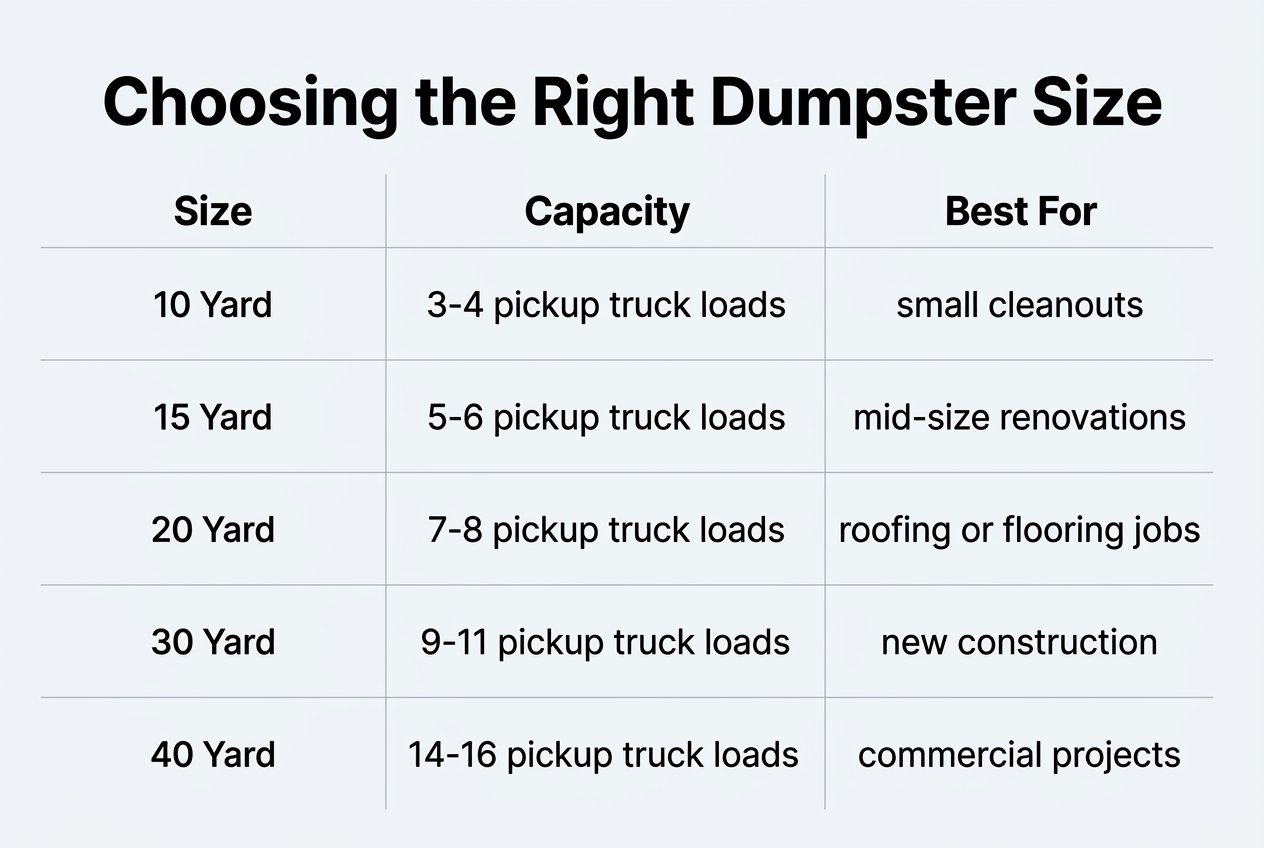
Choosing the right size means weighing capacity against footprint and price. The table below lines up common options side by side, so you can judge value before you commit.
| Size | Capacity (pickup loads) | Typical Footprint | Best For |
|---|---|---|---|
| 10 Yard | 3 loads | 12 ft x 8 ft | Small cleanouts, single-room jobs |
| 15 Yard | 4-5 loads | 16 ft x 8 ft | Mid-size remodels, garage cleanouts |
| 20 Yard | 6 loads | 18 ft x 8 ft | Larger renovations, flooring removal |
| 30 Yard | 9 loads | 22 ft x 8 ft | New construction, whole-home cleanouts |
| 40 Yard | 12 loads | 22 ft x 8 ft (taller walls) | Commercial demolition, major builds |
10 vs 15 Yard
The 15 yard bin holds roughly 50% more debris than the 10 yard model, yet only adds a few feet of length. That extra capacity often saves you from a costly second haul.
15 vs 20 Yard
A 20 yard container fits more waste but costs more upfront. Reviewing dumpster rental cost data shows the 15 yard often wins on cost-per-yard for mid-size jobs.
15 vs 30 and 40 Yard
Large bins suit demolition, not typical home projects. Checking guides like 15 yard dumpster rental prices: Avoid Hidden Fees 2025 helps confirm the 15 yard remains the smarter, cheaper pick.
15 Yard Dumpster Rental Cost Breakdown
Average Price Range
Most homeowners pay between $300 and $500 for a 15 yard dumpster rental. The national average sits close to $400 for a standard week-long rental. Prices shift based on location, dump fees, and how busy the local market is.
Los Angeles pricing often lands in the mid-to-upper part of that range. Dense areas with strict disposal rules tend to charge more. A 15 Yard Dumpster stays a solid mid-range option, cheaper than larger bins but roomier than the smallest sizes.
What’s Included in a Standard Quote
A flat-rate quote usually bundles delivery, pickup, and a set rental period. Most companies include seven to ten days of use. The price also covers a fixed weight limit, often between 2 and 3 tons.
Disposal fees get folded into this base rate too. That means one predictable number instead of surprise charges later. Many local businesses use this pricing model for small renovations and cleanouts, and it works well for a moving dumpster rental project as well.
Common Add-On Charges
Extra costs can pop up if you go over the weight limit. Overage fees often run $50 to $100 per additional ton. Keeping loads level and skipping heavy debris like concrete helps control this cost.
Extended rental days, trip fees for hard-to-reach driveways, and prohibited item charges are other common add-ons. Ask for a full fee list before booking. This upfront clarity prevents billing surprises once the job wraps up.
Factors That Affect Your Final Price
Location and Landfill Fees
Your zip code plays a big role in pricing. Local dump and landfill fees vary widely across the region, and providers pass these costs on to customers. Areas with higher tipping fees or longer hauls to the disposal site often carry a higher base price. A detailed 15 Yard Dumpster Rental quote should always break down these charges clearly.
Rental Period Length
Rental duration and extension charges can shift your final bill. Most quotes include a standard rental window, often 7 to 10 days. Keeping the bin longer usually adds a daily fee.
Debris Type and Weight Limits
The type of debris you toss matters just as much as volume. Heavier materials push weight limits fast, triggering extra charges. Before booking, ask about local rules and check into dumpster permits if the bin sits on a street.
- Mixed household junk usually stays within standard weight allowances without added cost.
- Construction debris like concrete, brick, or shingles is dense and can trigger overage fees quickly.
- Yard waste and soil often carry hidden weight that surprises first-time renters.
- Furniture and mattresses may require separate disposal handling depending on local regulations.
- Prohibited items like tires or paint can result in rejection fees if discovered at the landfill.
Permits, Placement, and Delivery Logistics
Do You Need a Permit
Placement location usually decides the permit question. If the dumpster sits on private property, like a driveway, most cities skip the permit requirement. Street placement almost always needs a permit from your local public works department. Fees vary, but many run between $20 and $75, and processing can take a few business days.
Always check before delivery day. Some cities issue same-day permits online, while others need a week’s notice. Skipping this step can lead to fines or a forced dumpster relocation, which delays your project and adds unexpected cost.
Choosing the Right Location
A driveway is the easiest spot for most homeowners. It’s flat, close to the house, and skips the permit paperwork entirely. Make sure there’s at least 60 feet of straight clearance for the delivery truck to maneuver safely.
Street placement works well for tight properties or major renovations. Confirm overhead clearance, since low branches or wires can block the truck. Many local businesses choose curbside spots when parking lots are full or construction blocks the driveway.
Preparing the Area for Drop-Off
Clear the drop zone of cars, toys, and low branches at least a day early. Lay down plywood boards if you’re worried about driveway cracks from the container’s weight.
Sort materials before loading begins. Reviewing what can you throw in a dumpster saves time and avoids rejected loads. For household cleanouts, guidance on 15 Yard Dumpster Household Debris helps you plan disposal efficiently before the truck ever arrives.
What You Can and Cannot Throw Away
Accepted Debris
A 15 yard bin handles most everyday project waste. Knowing what qualifies as accepted debris helps you avoid delays or rejected loads at drop-off.
- Household junk such as old furniture, mattresses, broken appliances, and general clutter from a garage cleanout.
- Construction debris including drywall scraps, wood framing, flooring material, and small amounts of concrete or brick.
- Yard waste like branches, sod, and shrubs pulled during a landscaping overhaul.
- Shingles and underlayment from a roofing tear-off, which is why many contractors book a roofing dumpster rental for this exact job.
- Non-hazardous packaging, cardboard, and scrap metal left over from renovations.
Restricted and Banned Items
Certain materials are banned for safety and environmental reasons. Paints, solvents, motor oil, batteries, propane tanks, and asbestos cannot go in a roll-off. Tires, freon-containing appliances, and medical waste usually need special handling through a separate service. Electronics often need recycling drop-off instead of a spot in the bin.
Always ask your provider before loading questionable items. Mixing prohibited materials into your dumpster can trigger extra fees or a refused pickup, so a quick phone call saves time and money later.
Steps to Book and Use Your Dumpster
Requesting a Quote and Scheduling
Booking starts with a quick quote request. Share your project type, zip code, and rental length. Most providers confirm pricing within minutes and can schedule same-day or next-day delivery. This works well for both job sites and residential dumpster rental cleanouts, since homeowners often need a bin fast.
Loading the Dumpster Correctly
Loading matters as much as booking. The table below shows common mistakes and the fix that keeps your rental on track.
| Loading Mistake | Why It’s a Problem | Correct Approach |
|---|---|---|
| Piling debris above rim | Truck can’t haul it safely | Keep waste level with the top |
| Tossing heavy items last | Wastes space, adds weight fast | Load heavy debris first |
| Ignoring flat-packing | Boxes and drywall eat space | Break down items before tossing |
| Mixing banned materials | Causes rejected pickup | Sort trash from restricted items |
Pickup Day Expectations
On pickup day, keep the area clear. A driver hooks the bin and hauls it to disposal or recycling. Most pickups take under 20 minutes.
Avoiding Overage and Overweight Charges
Understanding Weight Limits
Every 15 yard dumpster comes with a weight allowance, usually between 1.5 and 3 tons. This limit gets enforced at the dump or transfer station, where the loaded truck rolls across a certified scale. The ticket printed there becomes the official record. If your load weighs more than your contract allows, the extra tonnage gets billed afterward, often at $50 to $100 per ton.
Certain materials trigger these overages fast. Concrete, dirt, shingles, and wet debris weigh far more than household junk. A single yard of packed soil can weigh 2,000 pounds. Anyone planning a heavy-material project should ask about weight-rated bins before booking a construction dumpster rental, since standard containers aren’t built for dense debris.
Tips to Prevent Extra Fees
Watch for warning signs before pickup day. If debris sits level with the container walls but feels unusually heavy when lifted, you’re likely near the ton limit. Trucks that struggle to tilt the bin during loading are another clue. Calling ahead for a rough weight estimate helps avoid surprises on your final invoice.
Spread heavy materials evenly and mix them with lighter debris instead of loading all at once. Break up concrete into smaller pieces, avoid tossing in wet soil, and keep water-logged items out entirely. Many local businesses order a slightly larger container for mixed-weight jobs rather than risk repeated overage charges.
Frequently Asked Questions About Renting a 15 Yard Dumpster
How Long Is the Rental Period
Most rental periods run 7 to 10 days, though this varies by provider. That window covers weekend cleanups, small remodels, and multi-day projects without extra stress. If your job runs long, many providers allow extensions for a small daily fee, so ask before booking if you expect delays.
Same-day and next-day drop-off is common, which helps when a project starts sooner than planned. Need more time upfront? Ask about longer terms when scheduling. An estate cleanout, for example, often takes longer than a bathroom remodel, so requesting extra days at booking avoids late fees later. Always confirm pickup timing in writing before the truck leaves your driveway.
Can I Use One at a Rental Property or Apartment
Yes, renters and property managers can order a 15 yard dumpster for cleanouts, renovations, or tenant turnovers. You’ll typically need permission from the landlord or HOA regarding placement, especially in shared driveways or apartment complexes with limited parking.
Overfilling is the top concern at multi-unit properties. Waste piled above the rim isn’t allowed on the truck for safety reasons. Keep debris level with the top edge, and ask about a second bin if the project generates more waste than expected. This keeps pickup on schedule and avoids added fees.
Getting Started With Your Rental
Confirming Your Project Needs
Before you call a provider, review your project scope one more time. Think about debris type, estimated weight, and how many days you need the bin on-site. A 15 yard dumpster works well for mid-sized jobs like roof tear-offs, flooring removal, or a full garage cleanout. Matching the size to your actual debris volume prevents costly upgrades mid-project.
Also confirm your driveway space and any placement restrictions from your city or HOA. Knowing these details upfront saves time when you’re ready to book.
Requesting a Fast, Accurate Quote
Once your project details are clear, request a same-day quote. A dedicated provider can usually confirm pricing, delivery windows, and pickup timing within minutes. Have your zip code, project type, and rental length ready to speed up the process.
Before finalizing anything, double-check weight limits, rental duration, and accepted materials. Many local businesses find that a quick phone call clears up questions faster than searching online. A few minutes of preparation now means fewer surprises once the dumpster arrives.
If a 15 yard dumpster sounds like the right fit for your next cleanout or project, the team at Green Star Roll Off is ready to help. Serving Los Angeles and the San Fernando Valley, they offer same-day rentals with competitive pricing for residential, commercial, and construction jobs alike. Visit their site or give them a call today to book your dumpster and get started with confidence.