

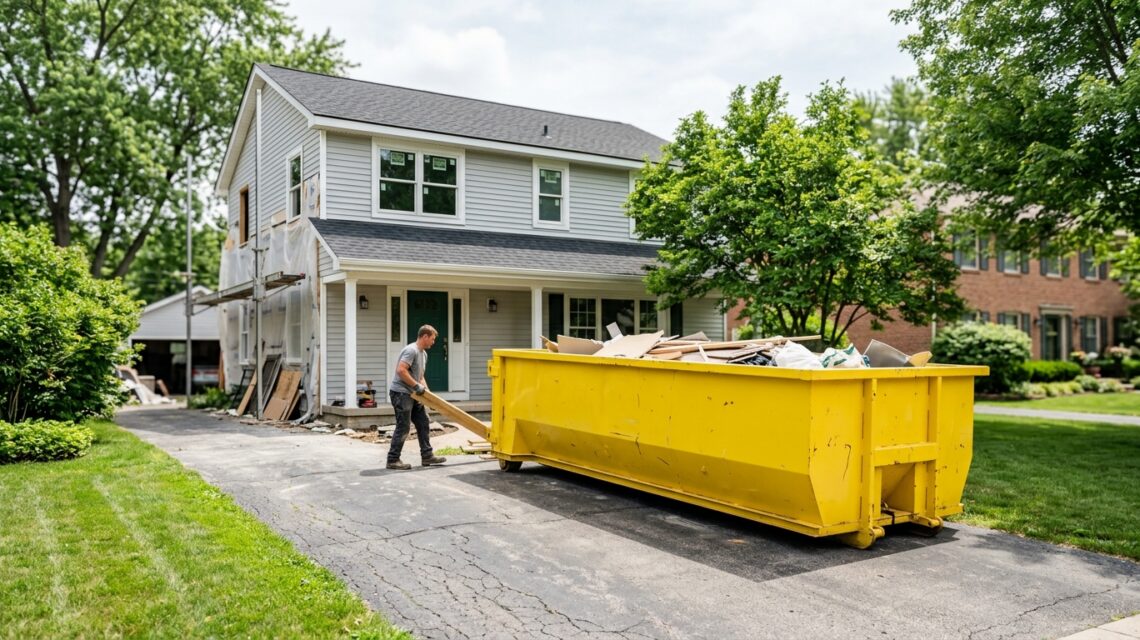
Picking the wrong dumpster size can wreck your budget and your timeline before the project even starts. A 20 yard dumpster hits the sweet spot for most mid-size cleanouts, renovations, and construction jobs, but knowing if it’s right for you means understanding the details upfront. Weight limits, permit rules, fill lines, rental periods — they all matter. Here’s what you need to know before you book.
Is a 20 Yard Dumpster the Right Fit for Your Project?
A 20 yard container holds roughly 10 to 14 pickup truck loads of debris. That’s a lot more than most homeowners expect. Typical dimensions run about 22 feet long, 8 feet wide, and 4.5 feet tall, though you should always confirm specs since container shapes vary by manufacturer. That footprint takes up close to one and a half parking spaces. You’ll want a driveway or curb area with enough clearance for drop-off and pickup. It’s the size that handles a messy middle ground: not a quick bedroom cleanout, not a full teardown.
This size earns its keep on medium renovation jobs. Think roofing tear-offs on an average single-family home, flooring replacement across several rooms, or a garage and basement cleanout where furniture, boxes, and old drywall all pile up at once. Contractors lean on it for kitchen remodels too, since cabinets, countertops, and scrap lumber fill space fast without generating the sheer tonnage a demolition project would. If you’re comparing specs against larger bins, reviewing yard dumpster dimensions for bigger models helps confirm whether 20 yards actually covers your volume.
Go too small, and you’ll pay for it twice, literally. Overage fees kick in once debris rises above the fill line, and a second haul-away adds delivery charges you didn’t budget for. Go too large, and you’re paying for empty space you’ll never use. Matching size to scope is the whole game. A good rule: if you’re unsure between two sizes, size up slightly rather than risk an overflowing bin and a surprise fee.
Common red flags that signal you need a bigger or smaller bin.
Some warning signs show up before delivery even happens. If you’re tearing off more than one layer of roofing shingles, or demolishing an attached structure like a patio cover, a 20 yard bin can fill faster than planned. That’s a signal to size up to 30 yards instead. On the flip side, a single-room cleanout or a small bathroom gut job rarely needs this much capacity. Pushing a bin like this for a half-empty load just means you’ve overpaid for space.
Weight is the other red flag people overlook. Heavy debris like shingles, tile, or wet drywall can hit the weight limit long before the container looks full. That’s when a lowboy model built for dense material makes more sense than a taller box. Once you’ve settled on a size, locking in your delivery window matters too; getting a booking confirmed ahead of a demolition crew’s schedule avoids costly downtime. Note: Green Star hauls away the debris a demolition contractor generates; the actual teardown is the contractor’s job, not theirs. Either way, a quick call to compare notes before you order beats guessing.
How a 20 Yard Compares to Other Common Sizes
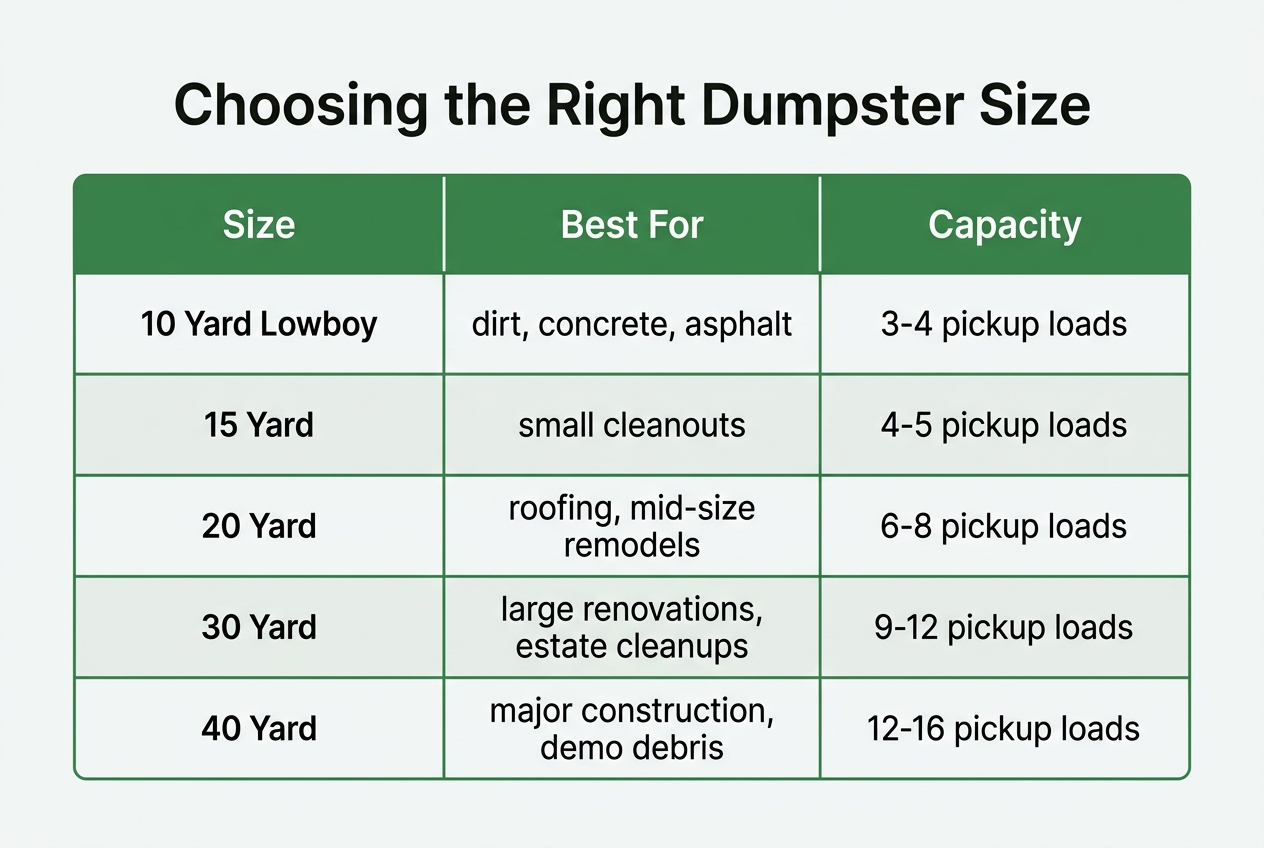
Numbers help more than adjectives do. Instead of guessing what “medium” or “large” means, look at the actual dimensions and weight limits side by side. Here’s how the five common sizes stack up.
| Size | Typical Dimensions | Weight Capacity | Best For |
|---|---|---|---|
| 10 yard lowboy | 12′ x 7.5′ x 3′ | ~2-3 tons | Dirt, concrete, asphalt, small tear-outs |
| 15 yard | 14′ x 7.5′ x 4′ | ~3-4 tons | Small cleanouts, garage or yard debris |
| 20 yard | 16′ x 7.5′ x 5′ | ~4-5 tons | Roofing jobs, mid-size renovations |
| 30 yard | 20′ x 7.5′ x 6′ | ~5-6 tons | Estate cleanups, large commercial loads |
| 40 yard | 22′ x 7.5′ x 8′ | ~7-8 tons | Major construction, full demolition debris |
Notice the jump in height, not just length. A 20 yard sits a couple feet taller than a 15, which matters more than you’d think once you’re tossing shingles or drywall over the side. Weight, not volume, is usually what trips people up, and that’s exactly why checking a breakdown of dumpster sizes before you commit saves you from an overage fee later. Heavy debris like roofing or concrete fills a container’s weight limit long before it looks full. That’s the trap. If you’re near the edge between two sizes, a five-minute phone call beats guessing every time. Staff who quote containers daily can hear “roof tear-off, 2,200 square feet” and tell you instantly whether a 20 or 30 makes more sense, something a size chart alone can’t do.
What Fits Inside a 20 Yard Container
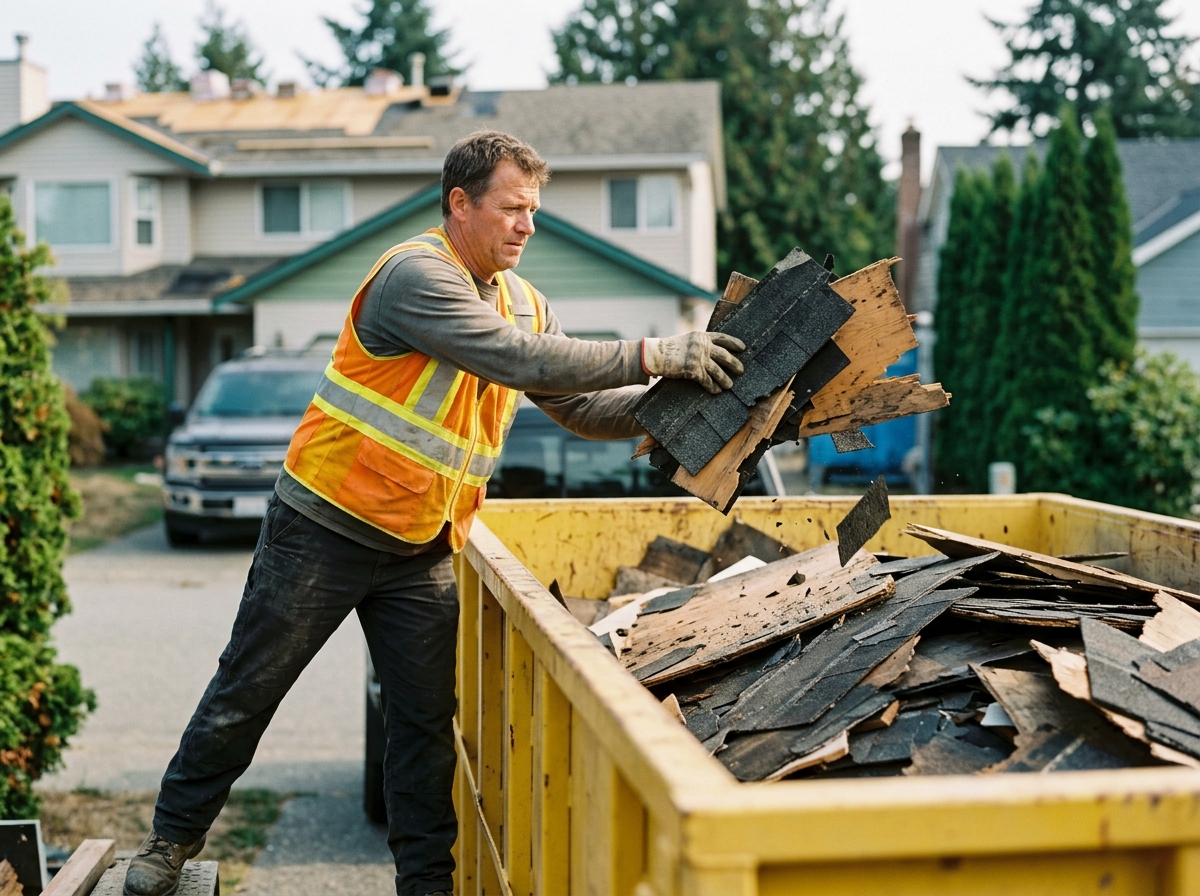
A 20 yard dumpster holds roughly four pickup truck loads, which lines up well with mid-size jobs. Think kitchen tear-outs, bathroom gut jobs, or a whole-room cleanout where furniture and flooring are coming out together. Note that this is a container you load yourself, or your contractor loads — there’s no crew included to haul items out of the house for you. A small deck demolition fits too, as long as the contractor has already broken the structure down into manageable pieces. If you’re clearing a yard after a tree crew has finished cutting and grinding, pairing the container with guidance on what counts as an accepted yard waste dumpster load helps you avoid rejected loads at the transfer station.
Here’s what typically goes in without issue:
- Roofing shingles torn off during a reroof, as long as the total weight stays within the container’s rated limit.
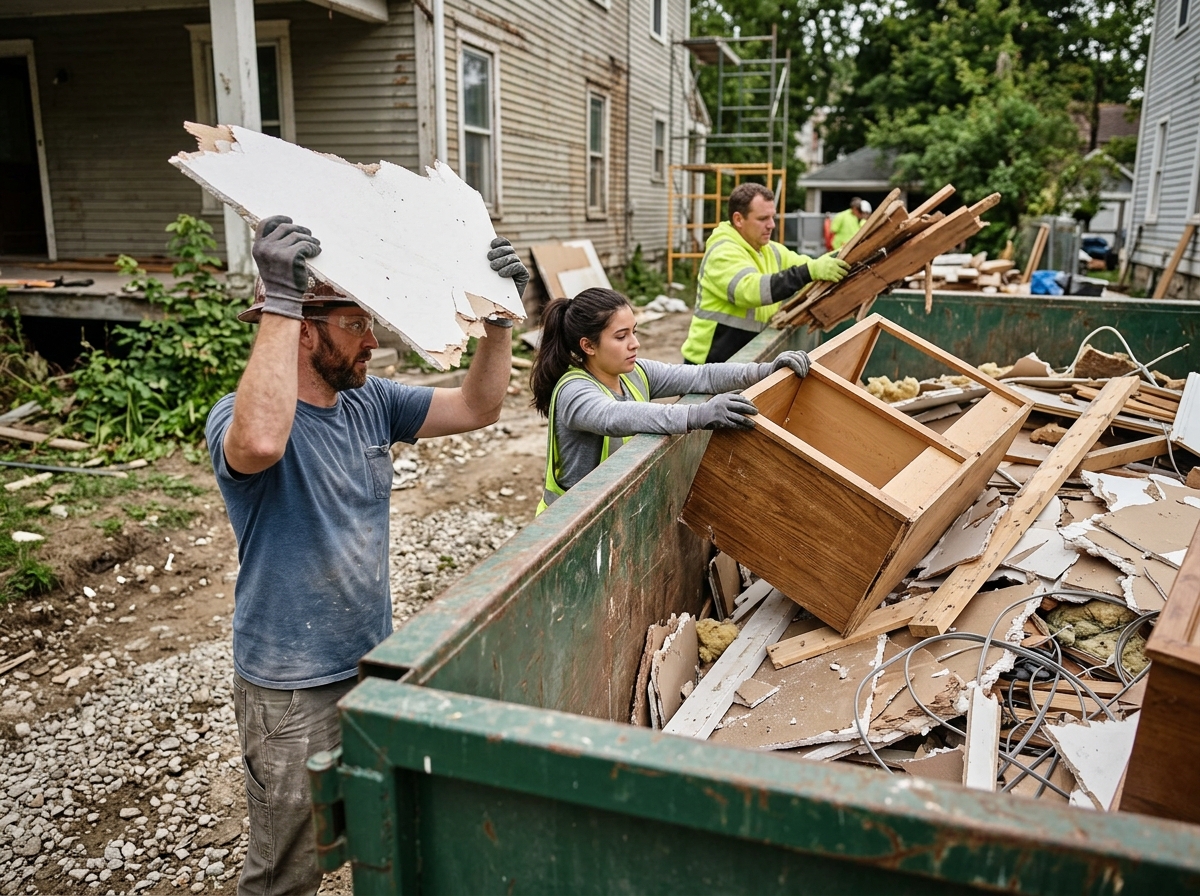
- Drywall, plaster, and lath pulled during a remodel, bundled loosely so they don’t compact into dead weight.
- Wood scraps, old cabinetry, and trim removed during a kitchen or bathroom renovation.
- Flooring materials like tile, laminate, or carpet pulled up during a remodel.
- Furniture and household items cleared out during a single-room cleanout or light staging job.
Some materials need a different disposal path entirely. Hazardous items and liquids are never accepted in a roll-off, full stop. Paint, solvents, batteries, and anything flammable belong at a licensed hazmat or liquid waste facility, not in your container. And worth repeating: for teardown debris, the contractor handles the actual demolition. The dumpster’s job is simple. It just hauls away what’s left over once the work is done.
Pricing: What Actually Drives the Cost
Size isn’t the only thing that sets the price tag on a roll-off. Weight limits, rental length, and what’s actually hidden in the fine print matter just as much, sometimes more. Before you commit to any provider, it helps to know what a true all-inclusive quote should contain: delivery, pickup, fuel surcharges, and environmental fees baked in, not tacked on after the truck leaves.
Questions to ask any provider before booking to avoid surprise charges
Start by asking for the base rate and exactly what tonnage it covers. Overage fees tend to run around $95 per ton, and that number can balloon fast if you underestimate a roofing tear-off or a garage full of old furniture. A quick look at what similar jobs usually cost, like this breakdown of yard dumpster rental cost comparisons across sizes, gives you a reasonable baseline before you call anyone. The table below shows how price doesn’t scale in a straight line with size, so bigger isn’t automatically more expensive.
| Question to Ask | Why It Matters | Example Reference |
|---|---|---|
| Is delivery and fuel included? | Avoids add-on fees after drop-off | All-inclusive quote, no surprise surcharge |
| What’s the included weight limit? | Overages run about $95/ton | Heavy debris like shingles adds up fast |
| How does size affect price? | Cost isn’t always linear | 10-yard lowboy at $650, 40-yard at $685 |
| How long is the rental period? | Standard terms vary by provider | Extensions available based on availability |
| What payment methods are accepted? | Affects convenience, not cost | Cash, checks, major credit cards |
Notice that the 40-yard container isn’t dramatically pricier than the 10-yard lowboy. That’s because lowboys are built for dense material like concrete and dirt, which hits weight limits long before it fills the box. A standard rental period usually runs about a week to ten days; if your project runs long, ask about a rental period extension early, since availability isn’t guaranteed. Renters near the valley’s eastern edge should also check dumpster rental sun valley options, since local zoning can shift what’s permitted curbside.
Steps to Book and Place Your Rental
Booking a roll-off isn’t complicated, but a little order keeps the whole project moving. Think of it as six small decisions, each one setting up the next. Skip a step and you’ll feel it later, usually as a delay or a surprise charge.
- Step 1: measure the project first, walk the space, estimate debris volume, and confirm a 20 yarder actually matches the job rather than guessing and overpaying for excess capacity.
- Step 2: pick a delivery date that fits your timeline, and know that same day dumpster rental or next-day scheduling exists for jobs that can’t wait on a standard booking window.
- Step 3: clear a flat, accessible spot, driveway or curb, with enough overhead clearance and width for a truck to maneuver and drop the container safely.
- Step 4: check local permit requirements before delivery day, especially if the container will sit on a public street rather than private property.
- Step 5: load debris evenly across the container and stop at the fill line; overloaded dumpsters can get flagged, and heaped loads usually mean extra weight fees.
- Step 6: schedule pickup once you’re done, or call ahead for a rental period extension if the project runs longer than planned.
Permit basics every Los Angeles renter should know
Here’s the short version: driveway placement almost never needs a permit. Curb or street placement usually does, and Los Angeles requires one before the container touches public right-of-way. Rules vary by neighborhood, and some areas add restrictions near fire lanes or on narrow streets. Staff who know these rules well can walk you through what your block typically requires, pointing you toward the right city office and application — though filing the actual paperwork stays on your side as the customer. It’s a quick call worth making. Plenty of renters learn this the hard way, after a ticket shows up instead of a dumpster. For broader context on how this corner of the industry actually runs day to day, it’s worth reading how one operator describes how Lindner alum dives into the dumpster business, which gives a candid look at logistics most renters never see. Get the permit question settled early, and the rest of the rental tends to go smoothly.
Residential vs Construction vs Commercial Use
Short-term vs long-term rental scenarios
A homeowner tearing off shingles or clearing out a garage usually needs a container for a few days, maybe a week. That’s a short-term job. You or your contractor load it, it gets hauled away, done. A roofing project is a classic example: the crew tosses shingles and underlayment straight into a 20 yard, and it’s picked up once the job wraps. Short-term rentals fit anything with a clear end date and a predictable debris volume.
Construction sites run differently. Framing, drywall, and old fixtures pile up day after day over weeks or months, not hours. A contractor doesn’t want to schedule a new delivery every few days, so the container often stays put, gets swapped when full, and keeps pace with the job. That’s a longer commitment, and it’s built around ongoing output rather than a single cleanout. Keep in mind this covers debris only; if the crew needs a jobsite restroom, that’s a separate sanitation vendor’s territory, not something that comes with the container.
Commercial accounts stretch this further. Property managers juggling several buildings, or businesses running phased renovations, need containers scheduled across multiple sites and multiple months. Exploring long term dumpster rental options makes sense here, since it avoids renegotiating terms every time a project phase ends. It’s less about one job, more about steady capacity. For businesses generating high volume on a recurring basis, scheduled swaps on a 30 or 40 yard container tend to work better than hunting for compaction equipment that isn’t part of the offering.
Residential work is simple: you load it, you’re done. Renovation debris, roofing tear-offs, and general cleanouts fall squarely into this bucket, and a 15 or 20 yard container usually covers it without fuss.
Construction use demands more durability. Jobsite debris is heavier, sharper, and messier than household junk, so contractors lean on tougher roll-offs built for repeated loading and dragging across rough ground.
And commercial use is about coordination. Many local businesses need predictable pickup schedules tied to inventory turnover or seasonal demand, not a one-off bin.
One clarification worth making plain: none of this replaces your regular trash service. Weekly curbside pickup still comes from your municipal hauler. Project-based rentals, short or long term, exist for the volume a weekly bin was never designed to hold.
Mistakes That Cost Renters Time and Money
Most dumpster headaches aren’t really about the dumpster. They’re about guesswork. Renters lose money when they skip a few basic questions before the truck shows up, and the same handful of mistakes keep repeating project after project. Here’s what actually trips people up, and why each one is avoidable with a little homework.
- Underestimating weight: dense debris like shingles, tile, or wet soil can blow past the included tonnage fast, and overage fees stack up at a flat per-ton rate once you cross the line.
- Overfilling past the fill line: drivers are legally required to haul loads flat and covered, so a pile stacked above the rim often gets refused on the spot, leaving you stuck mid-project.
- Skipping the permit check: placing a container on a public street without confirming requirements first can mean a parked truck, a delayed start, and sometimes a city fine.
- Reaching for a bag instead of a proper container: a mid-size renovation generating flooring, drywall, and cabinetry waste usually overwhelms a small bag within a day, when a 15 or 20 yard roll-off, priced all-inclusive, handles it in one trip.
- Not asking about recycling practices: if sustainability matters for the project, confirm how materials get sorted and diverted before booking, not after the container’s already full.
How transparent, all-inclusive pricing prevents most of these issues
Nearly every item on that list traces back to pricing you can’t see clearly upfront. When weight limits, fuel costs, and environmental fees are spelled out before delivery, you’re not guessing what a ton of debris actually costs you. A yard roll off dumpster sized correctly for the job, with the tonnage allowance stated plainly, removes the overage surprise entirely. The same goes for permits: a provider who knows Los Angeles placement rules will tell you upfront whether your driveway avoids the issue altogether, rather than letting you find out when the truck’s blocked from parking. Flat, published rates don’t fix bad planning. But they do make the real costs visible early, which is half the battle.
Choosing a Dependable Local Provider
Questions worth asking before you commit to a rental
Start with this one: how fast can they actually get here? Local, family-owned operators tend to beat national chains on response time, simply because they’re not routing your call through a call center three states away. They know the Valley’s streets, the tight driveways, the HOA quirks. A smaller outfit with local drivers can often turn a request around same morning. That matters more than people expect once a roofing tear-off or renovation is already underway.
Ask next about delivery windows. If your renovation timeline is tight, same-day or next-day delivery isn’t a nice extra, it’s the difference between staying on schedule and watching a crew stand around with nothing to haul debris into. A dependable provider should give you a real delivery time, not a vague half-day window, and should be upfront if a 20 yard unit isn’t available until tomorrow.
Then dig into reputation. A 5/5 rating from over a thousand local reviewers isn’t just a number to glance past, it reflects actual pickups and deliveries that went right. Look for mentions of friendly drivers, quick responses, and a professional team showing up on time. Those recurring phrases tell you more than a star count ever could.
Finally, ask about what happens after pickup. Providers who align with eco friendly waste management standards, including LEED-aligned recycling and reporting, give you something a cheaper competitor often can’t: proof your debris was handled responsibly. Worth noting: this covers sorting and recycling what comes out of the container, not scrap buying or payouts for metal. For businesses tracking sustainability goals, that documentation can matter as much as the price quote.
Last, confirm the basics. Can you reach a real person by phone during posted hours, Monday through Saturday? Do they take cash, checks, and major credit cards without tacking on a surcharge? Small details, sure. But they separate a dependable provider from one you’ll be chasing down for answers mid-project.
A 20 yard dumpster tends to be the sweet spot for mid-size cleanouts and remodels, large enough to handle real volume without taking up more space than the project needs, and reviewers often point to the professional team and friendly drivers who make the drop-off and pickup feel easy rather than stressful. If the job is smaller and more contained, a 10 yard lowboy dumpster rental through Green Star Roll Off is worth keeping in mind as a lower-profile option for the next project. Whatever the scope, it’s worth thinking through how much debris will actually pile up before settling on a size, since that’s really what determines whether 20 yards is the right fit.