

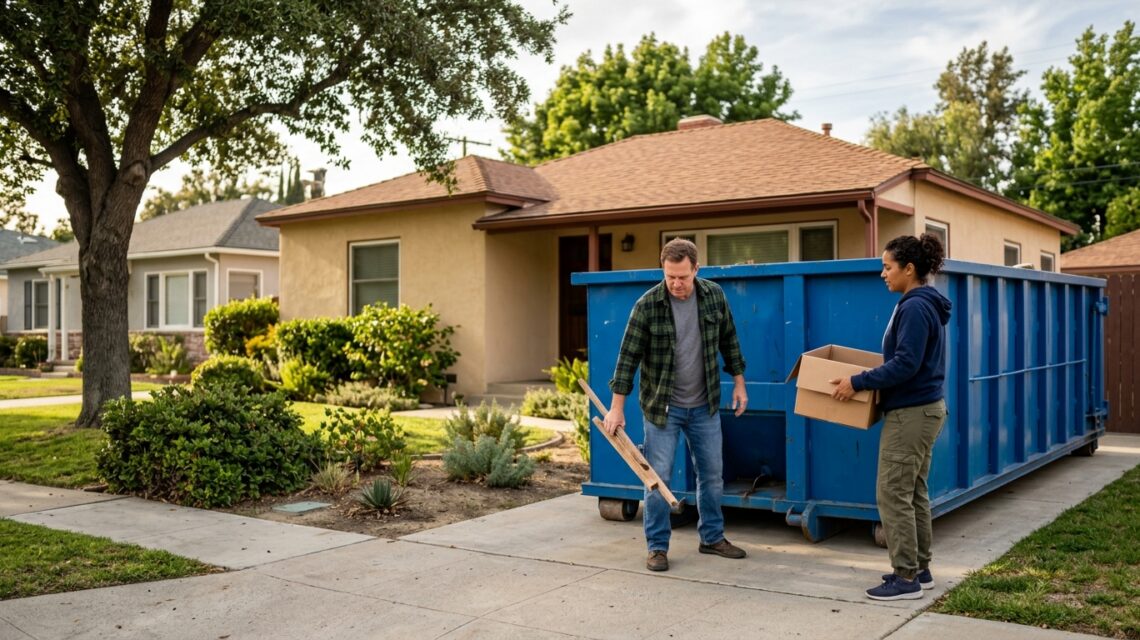
Picking a container size can feel like a gamble when you’ve never rented one before. Go too small and you’re stuck paying for a second haul. Go too big and you’re wasting money on space you don’t need. A 15 yard dumpster hits that sweet spot for plenty of home and small jobsite projects, but only if you know what you’re getting into first. Before you commit, here are eight things worth understanding about cost, capacity, and placement in 2026.
What a 15 yard dumpster actually holds
Typical dimensions and volume
Picture a steel box roughly 14 feet long, 7.5 feet wide, and 4 feet high. That’s the standard build, though it varies a bit by provider. In real terms, it holds about 4 to 6 pickup truck loads of debris, or somewhere around 150 to 200 trash bags. For anyone comparing specs across providers, it helps to review yard dumpster dimensions for the larger sizes too, just to see how fast the footprint grows. This size works best with mixed-weight debris: furniture, carpet, drywall, household junk. It’s not built for dense material like dirt, concrete, or asphalt. That’s a job for something sturdier.
How it compares to a 10 or 20 yard bin
Size alone doesn’t tell the whole story. Shape matters too. A 10 yard lowboy sits low to the ground and is built short and squat for heavy loads, not bulky ones. A 20 yard climbs taller and holds roughly a third more volume, which matters once you’re clearing out multiple rooms. Here’s how they stack up side by side.
| Size | Approx. dimensions | Best suited for | Load capacity feel |
|---|---|---|---|
| 10 yard lowboy | 12 ft x 7.5 ft x 3 ft | Dirt, concrete, asphalt | Heavy, dense debris only |
| 15 yard | 14 ft x 7.5 ft x 4 ft | Small cleanouts, mixed debris | 4-6 pickup truck loads |
| 20 yard | 16 ft x 7.5 ft x 5 ft | Renovations, roofing | 6-8 pickup truck loads |
Think of the 15 yard as the middle ground between those two. It’s bigger than the lowboy but not as tall or bulky as the 20. Once your booking is set, you’ll get an exact delivery window; details show up right on the booking confirmed page. Choosing wrong by one size up or down usually isn’t a disaster, but it can cost you an extra haul-away trip you didn’t need.
Projects where this size makes the most sense
Residential cleanouts and small remodels
This size shines on the kind of job that’s contained but messy. Think one room, not a whole house. It’s also the DIY-priced option when you’d otherwise call a crew to haul things for you. Here, you or your contractor load it, and the price stays lower because of that.
- A single-room remodel like a bathroom gut or small kitchen refresh, where tile, drywall, and old cabinetry need to go but you’re not touching the whole floor plan.
- A garage, attic, or basement cleanout where years of stored boxes, broken furniture, and forgotten junk finally get sorted and tossed.
- Furniture and appliance disposal during a move, though it’s worth knowing that Freon-containing units and mattresses can carry extra disposal fees, so confirm that by phone before loading them.
- General decluttering before a sale or move, where the goal is clearing clutter fast rather than managing construction debris.
If you’re trying to figure out how much a job like this actually produces, reviewing a breakdown of yard dumpster size options can help you avoid guessing wrong in either direction.
Light construction and yard debris
Smaller contractor jobs fit here too, not just homeowner projects. The weight stays manageable, and that matters since tonnage drives part of the cost.
- Small roofing jobs involving asphalt shingles, limited to a handful of squares rather than a full tear-off on a large home.
- Yard debris left behind after a tree crew finishes cutting and hauling off trunks and branches, since this size handles the leftover brush, mulch, and smaller limbs well.
- Light demo scraps from trim, fencing, or small deck removal that a contractor can load without heavy machinery.
Homeowners in denser neighborhoods sometimes assume delivery logistics are complicated. For projects closer to the valley’s busier corridors, checking details on dumpster rental van nuys availability can save a phone call. Bigger demo or whole-roof jobs outgrow this size fast — don’t force it. When in doubt, size up rather than ordering a second pickup.

15 yard dumpster rental cost breakdown
Pricing for roll-off containers isn’t always what you’d guess. Size and cost don’t move in a straight line, and knowing what’s bundled into your quote keeps you from getting blindsided on invoice day.
What’s included in an all-inclusive quote
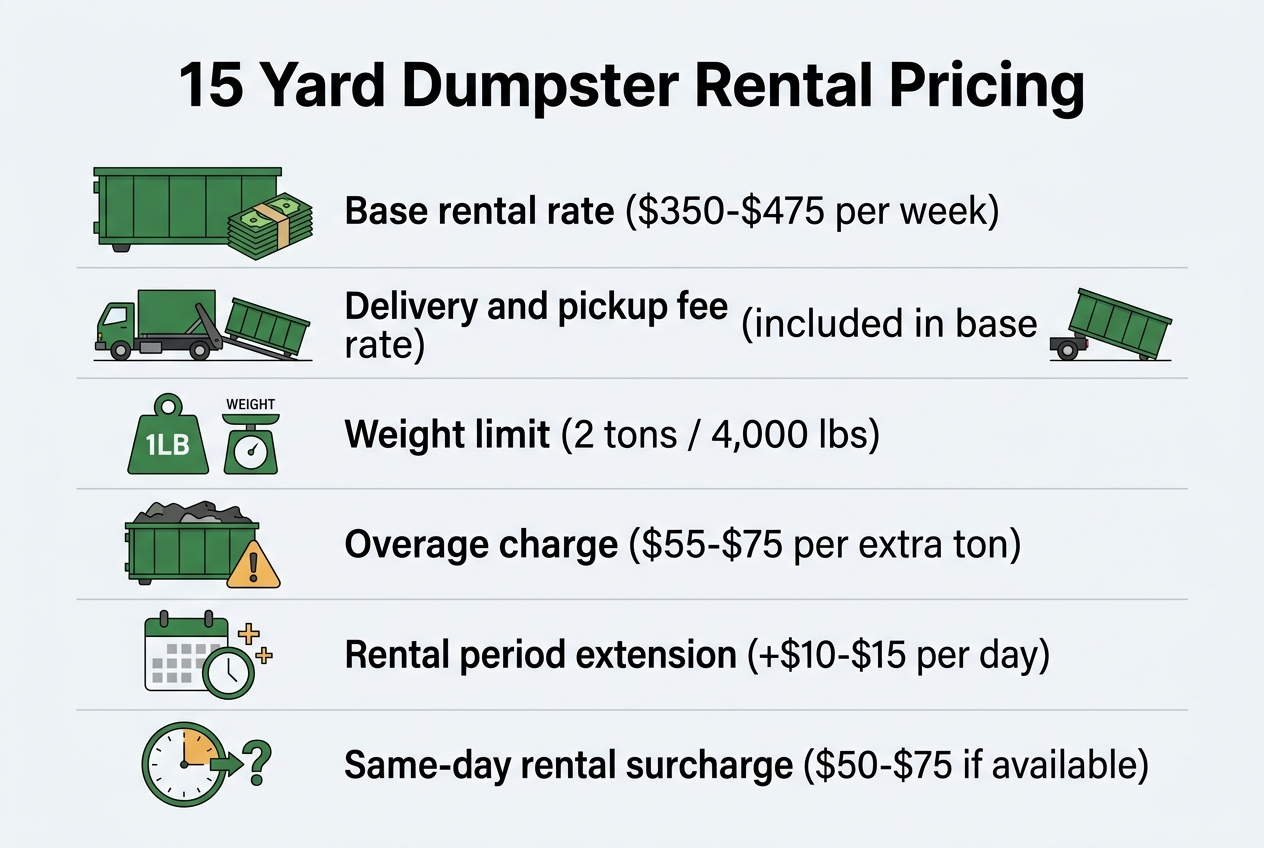
A proper all-inclusive quote covers delivery, pickup, fuel, and environmental fees up front. No separate trip charge, no mystery line item for gas. That’s the whole point of transparent pricing: you see one number and that’s what you pay, weight overages aside. Worth noting too, sizing isn’t linear. A 10 yard lowboy can run around $650, while a 40 yard container comes in near $685 — barely more for four times the capacity. Here’s a quick look at how reference points stack up:
| Dumpster size | Typical starting price | Best fit |
|---|---|---|
| 10 yard lowboy | ~$650 | Dirt, concrete, asphalt |
| 15 yard | Mid-range, size-dependent quote | Small cleanouts, residential jobs |
| 20 yard | Moderate increase over 15 | Renovations, roofing debris |
| 30 yard | Higher base, better per-yard value | Estate cleanups, commercial loads |
| 40 yard | ~$685 | Major construction, demolition debris |
Common add-on fees to ask about
Weight is where most surprises hide. Added weight fees typically run around $95 per ton once you’re past the included allowance, and it adds up fast with roofing shingles or wet soil. For deeper context on how tonnage affects your bill, this breakdown of yard dumpster rental cost factors walks through the math on smaller containers too. Three things drive cost up more than anything else: overage weight, extending your rental past the agreed window, and tossing in prohibited items that trigger disposal penalties. Pricing details can also shift a bit by neighborhood, so if you’re in the area, it helps to check specifics for dumpster rental toluca lake pricing before you book. The fix for all of this is simple: ask for a quote that spells out the weight allowance in tons before the truck shows up. If a provider won’t give you that number upfront, treat it as a red flag. For broader context on how contractors scope project costs and services, resources covering Services pricing in adjacent trades show the same pattern — clear scope, fewer surprises.
How to pick the right size for your project
Comparing 15 yard to neighboring sizes
Picking a size comes down to three things: what the material actually is, how much of it there is, and whether it’s heavy or just bulky. A pile of tile and concrete weighs far more per cubic foot than a stack of old furniture, even if it looks smaller. That distinction matters more than most people think. Get it wrong, and you’re either paying for empty space or scrambling for a second container.
A 15 yard container is the right call for a single-room cleanout or a small remodel. But if you’re gutting a kitchen and a bathroom at the same time, or pulling roofing material while also clearing out a garage, step up to a 20 yard. More rooms means more volume than most people expect, and that extra few feet of height saves you from overfilling. You can double-check your math with a dumpster size calculator before you commit to either one.
Don’t confuse the 15 yard with the 10 yard lowboy, either. The lowboy is built low and squat for heavy, low-volume loads like dirt, concrete, and asphalt. It is not meant for couches, cabinets, or bagged household debris. Load bulky items into a lowboy and you’ll waste most of its space while still hitting the weight cap. Match the shape of the container to the shape of your debris, not just the yardage number.
Questions to ask yourself before booking
Before you book anything, ask yourself what’s actually going into the bin. Is it mostly heavy debris like tile, concrete, or roofing shingles? Or is it bulky but lighter stuff, like furniture, cabinetry, and boxes? Heavy loads hit their weight limit fast, even in a smaller container, while bulky loads fill up space without weighing much at all. Knowing which category you’re dealing with tells you a lot about size before you even think about price.
Next, think about timeline and scope. One-day cleanout or a two-week renovation? Single trip or multiple loads? If you’re local to the valley, it also helps to know what’s typical for your area, including details covered under dumpster rental sun valley for similar-sized homes nearby. That kind of context helps you avoid guessing blind.
Still not sure? Just call and describe the project. A few honest details about debris type and volume gets you a straight answer, usually in under a minute. Guessing wrong costs you money. Asking first doesn’t.
Placement, permits, and driveway prep
Preparing your driveway or curb space
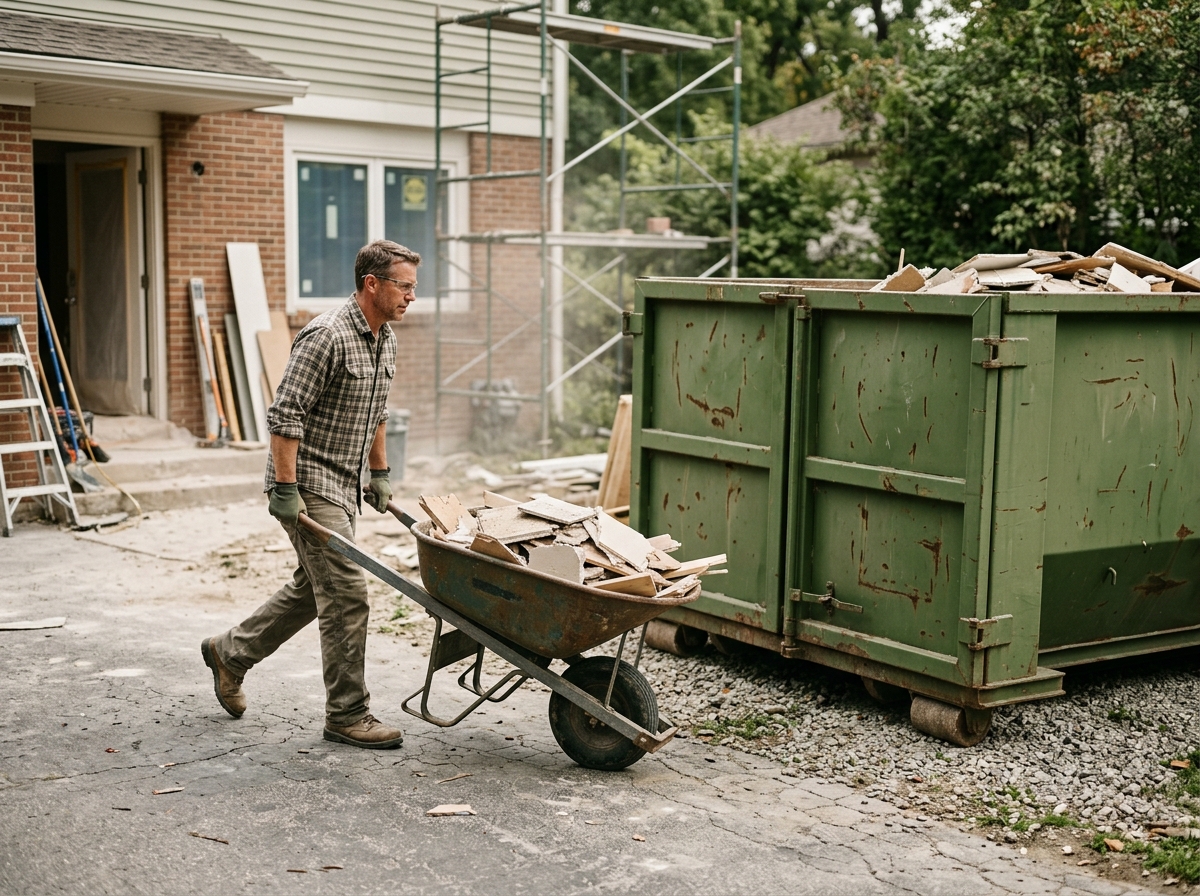
Before anything gets delivered, walk your driveway with a tape measure. A 15 yard dumpster needs more room than people expect once you factor in the delivery truck’s swing and the container’s full footprint. Overhead clearance matters just as much as width, especially with low power lines or mature trees nearby.
- Measure the width of your driveway or placement area and note any narrow gates or tight turns the truck will need to clear.
- Check overhead clearance for tree branches, power lines, or awnings that could snag the truck as it backs in.
- Move cars, trailers, and trash cans out of the drop zone well before the scheduled delivery window.
- Trim or tie back low branches that hang over the planned spot so they don’t get sheared off.
- Lay down plywood boards on asphalt driveways to keep the steel container from scarring or denting the surface.
- Flag sprinkler heads, irrigation lines, or soft pavers so the driver knows exactly where not to set the bin.
That last point sounds minor until you’re staring at a cracked sprinkler line. A few minutes of prep saves a much longer afternoon of repairs.
Permit basics for Los Angeles placements
Placing a dumpster on your own driveway usually needs no paperwork at all. Put it on the street, though, and most LA-area cities require a right-of-way or obstruction permit first. Rules shift depending on which department handles your block, and dumpster rentals Los Angeles San Fernando Valley guidance can help you figure out which office actually applies to your address. A dedicated provider can usually tell you whether your city typically requires a permit for street placement, but filing the actual application stays the customer’s job. Budget a few extra days if street placement is your only option, since approval timelines vary by jurisdiction.
What you can and can’t put in a 15 yard dumpster
Most everyday debris is fair game. Household junk, old furniture, scrap wood, drywall, roofing shingles, and general construction debris all load in without issue. But a few categories carry fees or need to go somewhere else entirely, and knowing the difference before delivery day saves you a headache (and a surprise charge).
| Item category | Status | What to know |
|---|---|---|
| Furniture, wood, drywall | Accepted | No prep needed; breaks down easily during disposal |
| Roofing shingles | Accepted | Heavy; watch weight, not just volume |
| Mattresses, box springs | Restricted | Often need a special fee; confirm by phone first |
| Certain appliances | Restricted | Freon units may require separate handling or a surcharge |
| Paint, chemicals, asbestos, liquids | Prohibited | Illegal and unsafe in a roll-off; licensed hazmat facility only |
Accepted debris categories
A 15 yard container is built for the stuff that piles up during a cleanout or small remodel: couches, dressers, cabinetry, lumber scraps, drywall sheets, and torn-off shingles. General construction debris from a bathroom gut or garage cleanout fits right in too. The catch isn’t really what you can fit — it’s what it weighs. Weight limits matter more than volume once you’re dealing with shingles, tile, or soggy wood, since those materials get heavy fast without taking up much space.
Items that need a different disposal route
Mattresses and certain appliances aren’t banned outright, but they’re fee-based, so it pays to ask before you toss one in. Hazardous materials are a hard no. Paint, chemicals, asbestos, and any liquids need a licensed hazmat or liquid waste facility, never a roll-off. There’s also a practical limit worth planning around: for bigger teardown jobs, understanding yard roll off dumpster options helps you match container size to material weight. And don’t pile debris above the fill line. It’s not allowed, and it’s not safe for transport, full stop.
How the rental process works from booking to pickup
Scheduling delivery and setting your timeline
Renting a roll-off isn’t complicated, but it helps to know what happens at each stage. Most projects follow the same basic path from first phone call to final pickup. Here’s the rundown:
- Call or request a quote and share your project details, the type of debris, and your rough timeline so the size recommendation actually fits.
- Confirm the container size, the exact placement spot on your property, and how many days you’ll need it for.
- Arrange delivery, which can often happen same-day or next-day if your timeline is tight; for truly urgent jobs, same day dumpster rental keeps a demo crew or cleanout crew from sitting idle.
- Load debris steadily within your agreed rental window rather than rushing it all in on the last day.
That window is yours to use. Just don’t wait until the final hour to start filling it.
Wrap-up, pickup, and extension options
Once you’re close to done, call and request a pickup date. If the job’s running long, ask about a short extension instead of scrambling to finish overnight. Availability varies, so it’s worth asking early rather than the morning you need it. After the container leaves your property, debris gets weighed and sorted, with recycling applied wherever the material allows under eco-friendly disposal practices. That last step matters more than people think. A dumpster that just gets dumped in a landfill isn’t doing you, or the neighborhood, any favors.
15 yard dumpster rental FAQs
Sizing and fit questions
Is this size right for your project? A 15 yard dumpster handles a single-room renovation, a garage cleanout, or a small roofing tear-off without much fuss. It’s roughly the equivalent of six pickup truck loads, which covers most jobs under 1,500 square feet. If you’re clearing a whole house or running a big remodel, size up. The dumpster-sizing section of this guide covers the full comparison, but as a quick gut check: if debris would fill a bedroom, this is probably your match.
Furniture and appliances can usually go in alongside construction debris, and that’s one reason this size gets picked for cleanouts so often. Couches, dressers, and small appliances load fine. Just know that items like refrigerators or window units containing freon, along with mattresses, sometimes carry extra disposal fees or restrictions depending on local processing rules. A quick phone call before drop-off saves you a surprise later. It beats renting a bag-style container for anything beyond a one-closet purge, since you get real capacity and all-inclusive pricing instead of paying per bag.
Cost, timing, and logistics questions
A typical rental runs about seven to ten days, which is plenty for most weekend warriors and small contractor jobs. Need more time because the project ran long? Extensions are usually available based on scheduling and availability, so call ahead rather than letting the dumpster sit past its pickup date. Overages can trigger extra charges, so communicate early. Learning how 15-yard capacity compares with daily debris output helps you estimate whether a standard rental window is enough.
Weight limits matter more than people expect. Go over the ton allowance built into your quote, and you’ll pay a per-ton overage fee, often in the $95 range, so loading heavy material like wet drywall or roofing shingles deserves some restraint. As for fit, this size is built for residential driveways. It’s narrower and shorter than the big construction containers, so a standard driveway or curb apron typically handles it without issue. For same-day availability in the LA and San Fernando Valley area, a quick phone call during business hours is the fastest way to confirm a slot, since schedules fill up on short notice during busy renovation seasons.
A 15 yard dumpster tends to land in that comfortable middle ground, big enough for a real cleanout or remodel without turning the driveway into a construction site. For smaller loads, like a bit of concrete or a tight demo job, Green Star Roll Off’s 10 yard lowboy dumpster rental is the kind of thing worth keeping in mind. Either way, matching the container to the actual pile of debris is what makes the whole project feel manageable instead of overwhelming.