
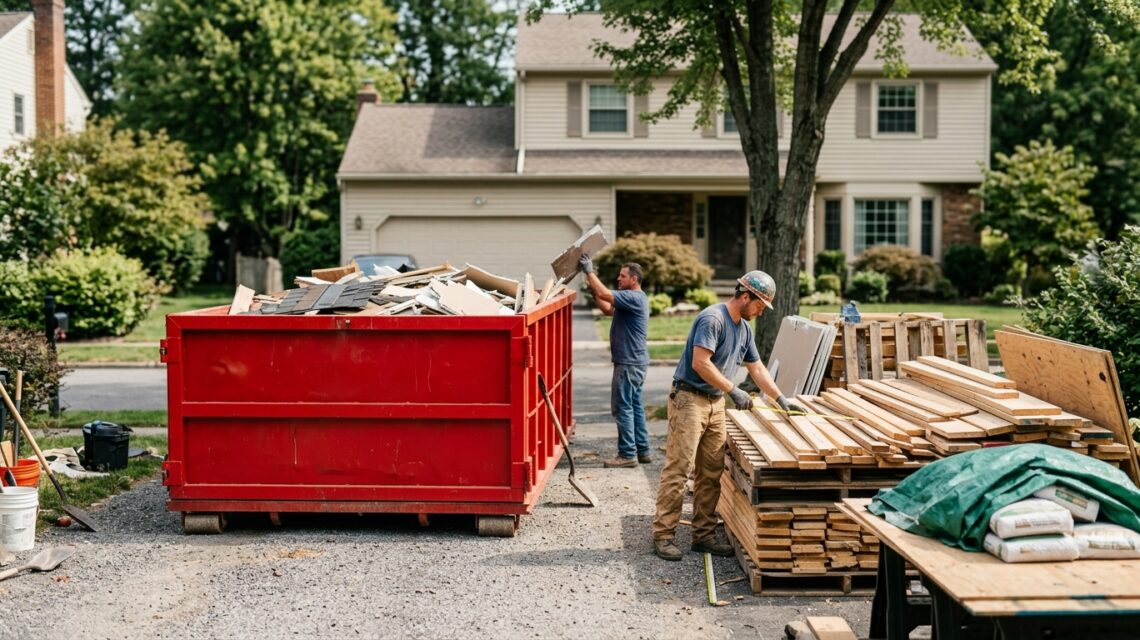
Big cleanouts, remodels, and roofing jobs all run into the same wall: too much debris, not enough space. A 30 yard dumpster can solve that fast, but picking the wrong size or terms turns a simple project into an expensive headache. Before you call for a drop-off, you need to know what actually fits, what it weighs, and what your driveway can handle. Here’s what matters.
1. A 30 yard dumpster fits most large cleanouts and renovations
Who typically needs this size
Think of a 30 yard dumpster as the mid-to-large workhorse of the roll-off lineup. It’s built for jobs that have outgrown a small bin but don’t need full demolition capacity. Estate cleanups, big home renovations, and commercial decluttering projects are its natural home. If you’ve searched for a clear breakdown of what fits and what doesn’t, the detailed specs in a yard roll off dumpster guide help confirm it before you commit to a size.
In practical terms, this container holds roughly 10 to 12 pickup truck loads of debris. That’s a lot of furniture, drywall, flooring, and boxed-up belongings. Whole-house cleanouts are a classic use case, especially when a family is clearing out a relative’s home after decades of accumulation. Large remodels that touch multiple rooms, roof tear-offs on bigger homes with heavy shingle loads, and office or retail decluttering projects all tend to land here too.
It helps to picture where this size sits in the broader range. The 20 yard handles a medium kitchen remodel just fine. Go bigger than a whole-house gut job, though, and you’re in 40 yard territory for major demolition. The 30 yard sits squarely in between — big enough for serious volume, not so big it’s overkill for a single large project. If an estate cleanout is the job, pairing this container with a separate cleanout crew to handle the actual sorting and hauling inside the home is the practical move. The dumpster itself is strictly a load-it-yourself disposal container.
2. Know the dimensions and weight capacity before you order
Dimensions at a glance
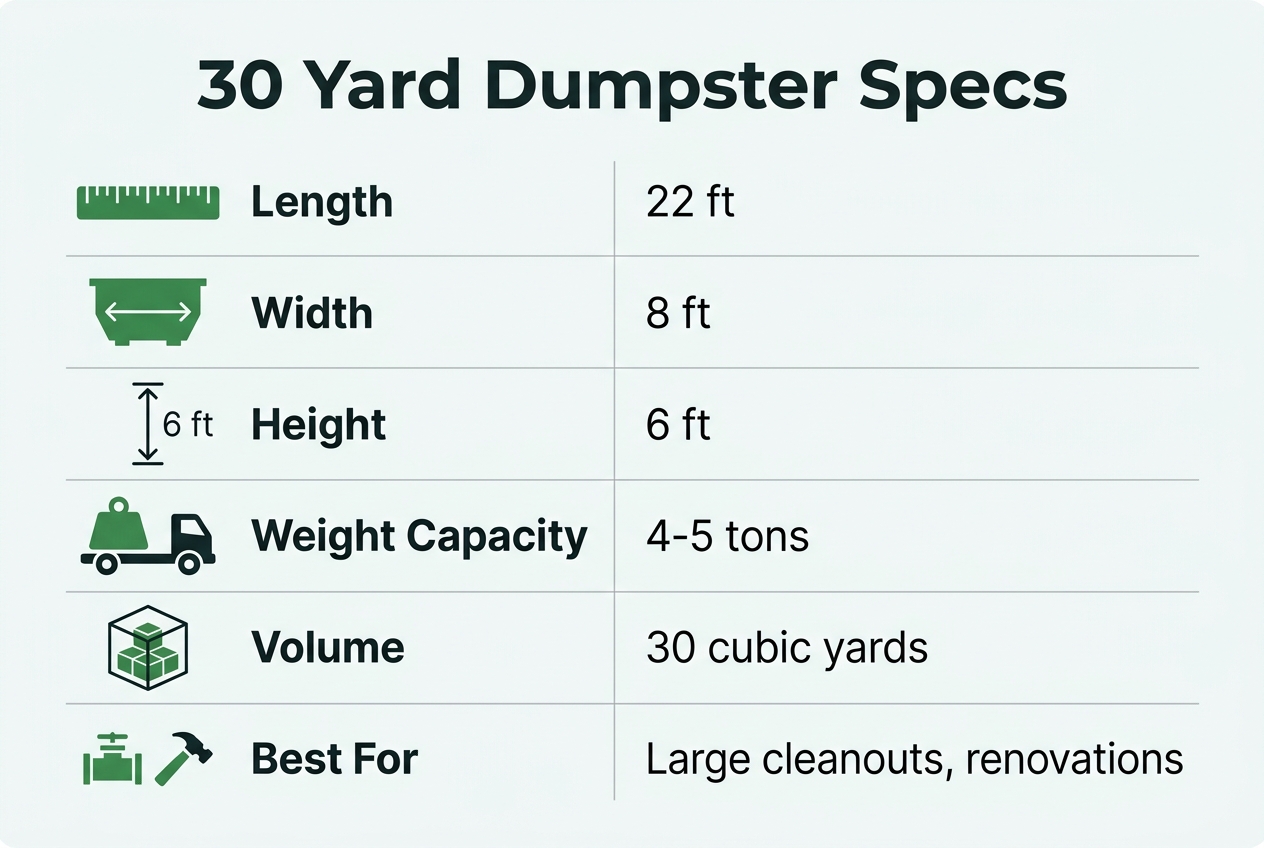
Before you book anything, picture the actual box landing in your driveway. A standard unit runs about 22 feet long, 8 feet wide, and 6 feet high. That’s a big footprint. Measuring your driveway or curb space first matters more than most people think. For comparison, yard dumpster dimensions on the next size up add roughly 2 feet of height, which changes what fits under low tree branches or carports.
|
Spec |
Typical measurement |
Why it matters |
|---|---|---|
|
Length |
~22 ft |
Needs a clear straight path for delivery truck placement |
|
Width |
~8 ft |
Must clear gates, fences, and parked cars |
|
Height |
~6 ft |
Check overhangs, wires, and garage doors nearby |
|
Weight capacity |
3 tons included |
Varies heavily by material density, not volume |
Why weight matters more than volume
Here’s the part people miss. A container can look half empty and still be at its weight limit. Weight, not space, is usually what stops the job. Concrete, dirt, and tile are dense. A few cubic yards of either can max out the ton allowance long before the walls are full. Mixed household debris behaves differently, filling up visually well before it gets heavy.
That mismatch is exactly why overweight fees exist. Picking the right size isn’t just about how much stuff you have. It’s about what that stuff weighs. Many local businesses run renovation jobs and assume a bigger box solves everything, then get surprised by a per-ton charge on the back end. If you’re mixing heavy debris with bulky light debris, it often pays to ask about a 10 yard lowboy for the dense material and a larger unit for the rest. Match material to container, not just job size to container. It’s the single cheapest decision you’ll make on the whole project.
3. Compare it against the other common dumpster sizes
Picking a size shouldn’t be a guessing game. Here’s a side-by-side look at the five common roll-off sizes, what they’re built for, and who typically rents each one. Scan it, match your project to a row, and you’ve got your answer.
Quick comparison table.
|
Size |
Best for |
Typical user |
Fill level notes |
|---|---|---|---|
|
10 yard lowboy |
Dirt, concrete, asphalt |
Landscapers, small concrete jobs |
Low walls, easy to toss heavy debris over the side |
|
15 yard |
Small residential cleanouts |
Homeowners, garage or attic clear-outs |
Fills fast with bulky, lighter items |
|
20 yard |
Medium renovations, roofing |
Remodelers, roofing crews |
Handles mixed shingles, drywall, and lumber |
|
30 yard |
Large cleanouts, commercial projects |
Estate cleanups, property managers |
Deep volume for bulky, low-density loads |
|
40 yard |
Major construction, warehouse cleanouts |
General contractors, large demo jobs |
Best for big, light-to-moderate debris runs |
Notice the pattern: size isn’t just about how much junk you have, it’s about what kind. A 10 yard lowboy with its short walls is made for shoveling heavy material like dirt or broken concrete, not for stuffing in a houseful of furniture. A 30 yard, on the other hand, is built for volume over weight, which is why it suits estate cleanouts and bulky commercial waste so well. If you’re still unsure, working through a residential dumpster rental size guide before you call can save you from paying for space you never use. And if you’re outside the core service map, checking options like dumpster rental toluca lake helps confirm what’s actually available near your address. Over-ordering wastes money. Under-ordering means a second delivery. Neither is fun.
30 yard dumpster rental: what it costs and what’s included
What’s typically included
A clean quote should answer the cost question once and be done with it. The best all-inclusive pricing models fold delivery, pickup, fuel surcharges, and environmental fees into one flat number. No second invoice waiting for you later. That’s the standard worth holding every provider to, whether you’re pricing a 30 yard box or something smaller.
Pricing across sizes tends to scale in a fairly logical way. For reference, Green Star’s 10-yard is $550 and its 40-yard is $650 — a surprisingly narrow gap that reflects how much of the cost is tied to the truck roll itself, not just the box size. A 30 yard dumpster is $600, with 3 tons and 10 rental days included.
Timelines matter too, especially on a cleanout you didn’t plan months ahead. Same-day or next-day delivery is common among dedicated providers, which matters a lot when a property manager or contractor needs a container on-site before the weekend. If you’re sorting through options for a smaller job nearby, comparing a dumpster rental sun valley provider’s rates against a 30-yard quote can clarify whether you actually need the bigger box.
When extra charges apply
Here’s where most surprise fees creep in: weight. Every rental includes a set tonnage allowance, and going over it triggers an overage charge, typically around $95 per ton. Heavy debris like shingles, concrete chunks, or wet soil can blow past that allowance fast. It pays to ask upfront what’s included before the truck even shows up.
Rental duration is another trigger point. Keeping a container past its 10-day window adds $20 per day, though many providers offer extensions if you need more time and the schedule allows it. Prohibited items — paints, batteries, certain appliances — can also trigger extra charges or an outright refusal at pickup. Worth confirming what’s banned before loading day. For a sense of how weight allowances and fees shift by container, reviewing a yard dumpster rental comparison can help you estimate costs before you commit.
No hidden fees means exactly that: the number you’re quoted should match the number you pay. If it doesn’t, ask why.
4. Items that are accepted — and what’s never allowed
Commonly accepted debris
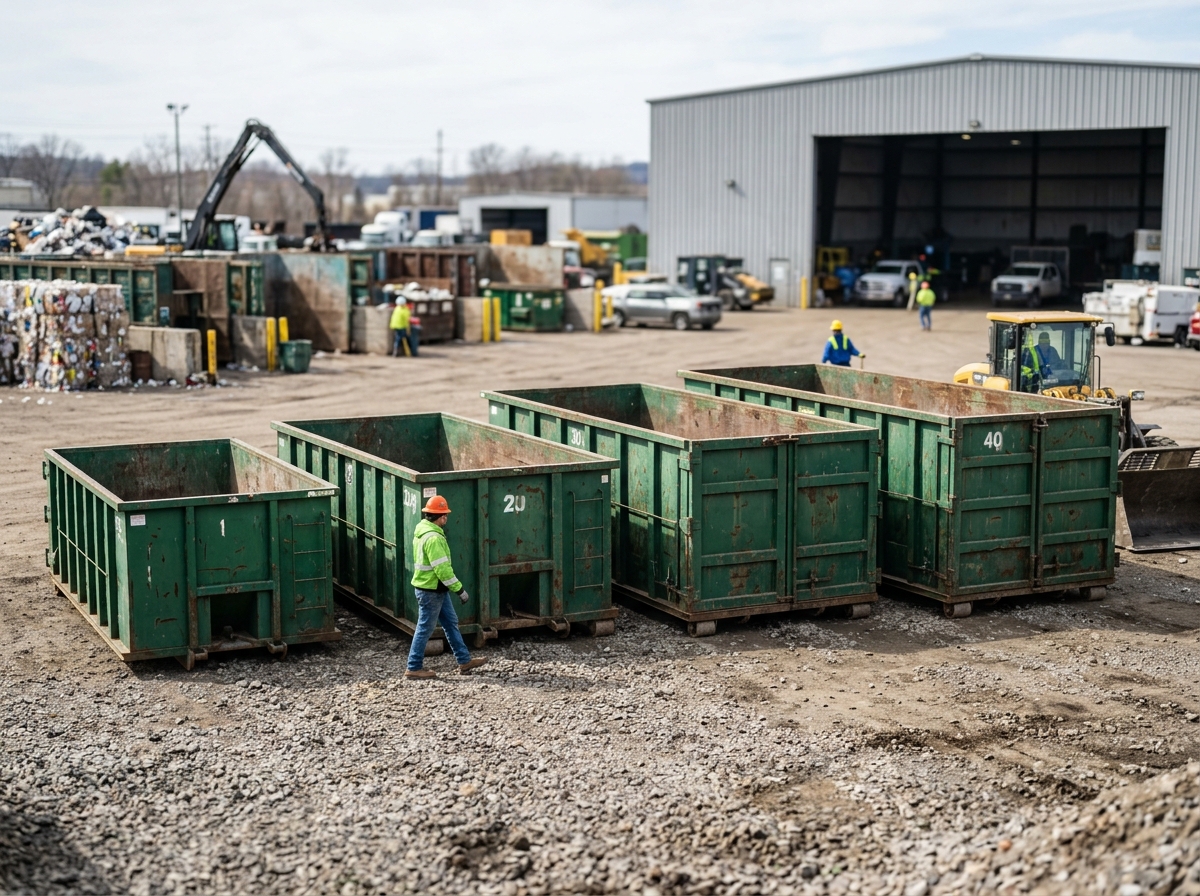
A 30 yard container is built for volume, and most everyday debris is fair game. Before you fill one, it helps to know how the industry sizes and rates these boxes. Reviewing a roll off dumpster sizes guide can save you a headache later when weight limits come into play. Here’s what typically goes in without issue:
-
Household junk like old furniture, boxes, and general clutter from a garage or estate cleanout;
-
Yard debris including branches, sod, and leftover landscaping material from a property refresh;
-
Construction scraps such as lumber, wiring, and packaging from a remodel or build-out;
-
Flooring and drywall pulled during a renovation, including tile and old carpet padding;
-
Flattened cardboard and packing materials from a move or a commercial cleanout.
That covers the bulk of what lands in a 30 yarder on a typical job.
Materials to never load
Some things just don’t belong in a roll-off, period. Hazardous materials like paint, solvents, asbestos, or household chemicals are banned from any size dumpster, full stop. Liquids are off-limits too, and that includes septic or grease waste in any volume. These rules exist for safety, not bureaucracy. Don’t test them.
Appliances and mattresses sit in a gray zone. Many providers will take them, but freon units and mattresses often carry extra fees or special handling rules. Worth a quick phone call before loading one. For anything hazardous, skip the dumpster entirely and use a licensed hazmat disposal facility instead. It’s the only compliant way to get rid of that material, and trying to sneak it into a roll-off can mean fines or a rejected pickup.
5. Steps to prepare your site for delivery and pickup
Before delivery day
A little prep goes a long way with a container this size. A loaded 30 yard roll-off is heavy, and the truck delivering it needs real room to maneuver. Walk your site first and picture the drop. Here’s what to sort out before the truck shows up:
-
Pick a flat, accessible spot with enough clearance on all sides for the delivery truck to pull in, drop the bin, and pull straight out again.
-
Look up before you commit to a spot — overhead wires, low tree branches, or carport roofs can snag a container as it’s raised off the truck bed.
-
Figure out whether your placement needs a street permit; if the bin will sit in a driveway or on private property, you’re usually fine, but curb placement is a different story.
-
Ask about local rules before you guess — staff familiar with LA regulations can walk you through what applies, though filing the actual application stays on you as the renter.
-
Clear the drop zone of cars, toys, hoses, and anything else that could get crushed or get in the way of placement.
If you’re working near a street or tight alley, reviewing a roll off dumpster truck los angeles guide before delivery helps you judge clearance more accurately than eyeballing it.
On pickup day
Overloading is the fastest way to turn a simple pickup into a delay. Keep debris below the fill line. Keep the area around the bin clear, and don’t pile loose items on top that could shift during pickup. Once your project’s actually done, don’t let the bin sit. Schedule the pull promptly — or, if you’re not quite finished, call ahead and ask about a rental extension instead of rushing the last of the work.
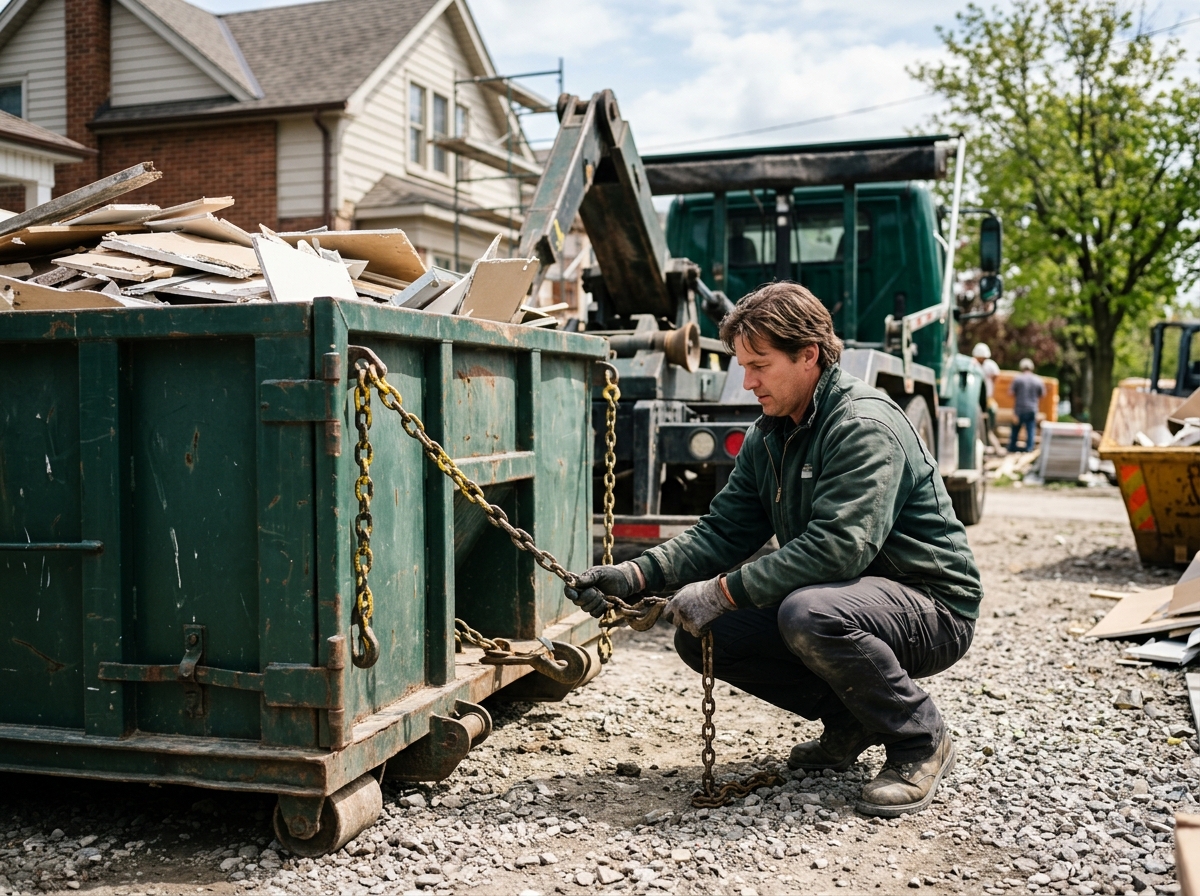
6. Scenarios where a 30 yard dumpster is the right call — or isn’t
When to size up or down
A 30 yard container earns its keep on big jobs. Estate cleanups are the classic example: furniture, old appliances, boxes of belongings, years of accumulated stuff. The catch is that a roll-off only holds debris, it doesn’t walk itself out of the house. Pair it with a separate cleanout crew who physically clears the rooms, then let the dumpster handle hauling once everything’s at the curb. Large renovation debris and commercial tenant improvement work fit just as well, since both tend to throw off bulky loads of drywall, flooring, and fixtures fast.
Not every job needs that much room, though. A small apartment cleanout or a single-room declutter is usually overkill at 30 yards — a 15 or 20 yard bin gets it done for less money and less driveway space. On the flip side, if you’re dealing strictly with concrete, dirt, or asphalt, skip the big box entirely. Those materials are dense, and a 30 yard container will hit its weight limit long before it’s visually full. The 10 yard lowboy, built low for heavy loads, is the smarter and cheaper pick there.
Businesses with recurring debris, think property managers juggling several buildings, often outgrow the single-container model fast. Instead of booking one 30 yard unit and hoping it lasts, long term dumpster rental with scheduled swaps keeps volume manageable without a yard full of overflow. It’s a steadier rhythm, and frankly, less of a headache than tracking down a rental every few weeks.
Tree work deserves its own note. The dumpster isn’t for cutting anything down — that’s a job for an arborist or tree crew. Once the trunk’s down and limbs are cut to size, though, a 30 yard container is ideal for hauling off the green waste, branches, and stump debris left behind. Order it for after the cutting, not during.
7. Questions to ask before you book
Questions about cost and timing
Before you sign anything, get specific answers. Vague quotes turn into surprise invoices once the dumpster’s already full and sitting in your driveway. A good provider will walk you through the numbers without making you ask twice.
-
How is pricing structured, and does the quote already bundle delivery, pickup, and disposal, or will those show up later as separate charges?
-
What’s the included weight allowance for a 30 yard container, and what’s the per-ton fee once you go over it — $95 a ton is a common benchmark in the LA market?
-
How fast can delivery actually happen if your timeline is tight, and is same-day or next-day service realistic for your zip code?
-
Does your specific address require a placement permit, especially if the container will sit on the street rather than a driveway?
-
What happens if the project runs long and the dumpster needs to stay on site past the original date?
-
Can the rental period be extended based on availability, and is there a daily rate for those extra days?
Small jobs sometimes get steered toward a bagged waste option out of habit. For anything beyond a weekend cleanup, though, learning about dumpster rental 6 yard pricing versus a lowboy or 30 yard box helps you see where the real value sits. Weight is the detail most people skip, and it’s the one that costs them. Ask for the allowance in writing, not a verbal estimate. Same goes for permits — rules shift block by block in Los Angeles, so don’t assume your neighbor’s experience applies to you. A quick phone call answers all six questions faster than any web form.
A 30 yard dumpster earns its keep on the big jobs—whole-house cleanouts, major remodels, roof tear-offs—where volume piles up faster than expected, and having that extra capacity on hand means fewer surprises and fewer scrambles mid-project. Reviewers keep circling back to the same things with roll-off rentals: a professional team that shows up when promised, friendly drivers, fair rates, and quick responses when plans shift, and those small details end up mattering just as much as the size of the container itself. If the project in mind is smaller and more contained, Green Star Roll Off’s 10 yard lowboy dumpster rental is worth keeping in the back of your mind too, but for anything sprawling, the 30 yard size is the one that keeps the work moving without constant hauling.