

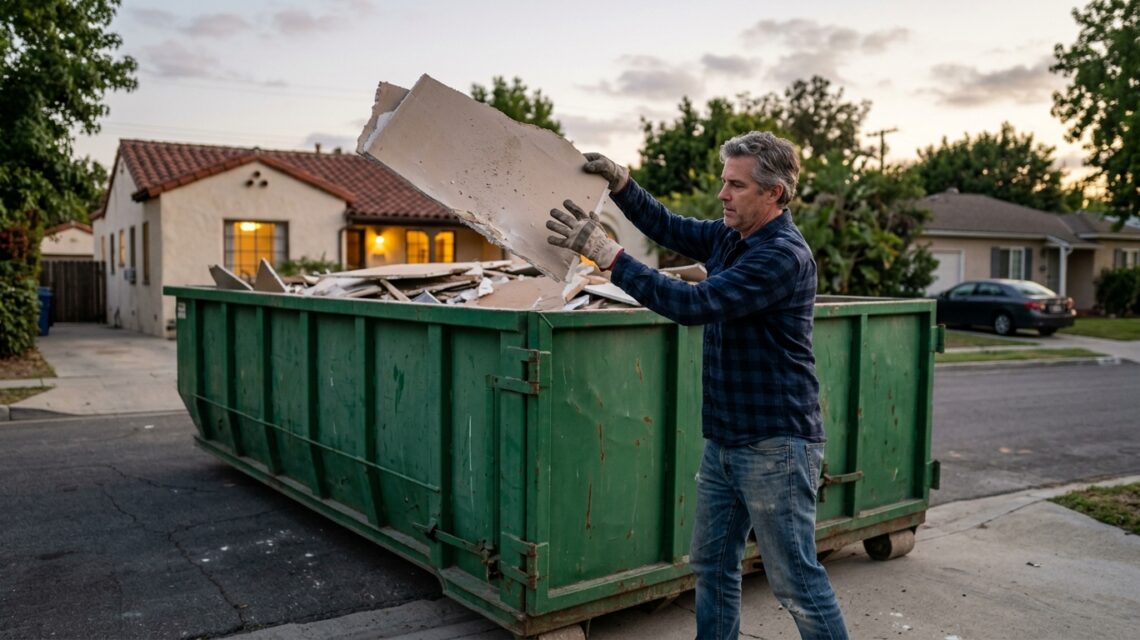
You searched for a 25-yard dumpster, and now you’re getting quotes for 20s and 30s instead. Confusing, right? It’s hard to tell whether you’re being upsold or pointed in the right direction. That in-between size isn’t standard across most Los Angeles haulers, so picking the right container comes down to what actually fits your debris, your driveway, and your timeline. Here’s what changes when you book. Below we break down seven things worth knowing before you commit: how the 20 and 30 yard sizes compare to the size you thought you needed, which materials LA landfills accept, what street placement rules mean for your permit responsibility, and how rental windows and extensions really work.
Why the 25-Yard Size Is Harder to Find Than You Think
Here’s the part nobody tells you upfront. The 25-yard roll-off sits in an awkward gap between two industry standards. Roll-off bodies get built in 10, 15, 20, 30 and 40 yard increments, and those sizes have carried the hauling business for decades. A 25 exists, but it’s a regional specialty — a handful of franchise operators in certain markets order them. Across Los Angeles and the San Fernando Valley, most yards simply never stocked one.
What 25 Cubic Yards Actually Holds
Where they do exist, the specs are predictable. A 25-yard box usually runs about 20 to 22 feet long, 8 feet wide, and 4 to 4.5 feet tall. Call it 7 to 9 full pickup truck loads of debris — a real amount, though not dramatically more than a well-packed 20.
Think about what that means on a real job. A full kitchen gut, a medium roof tear-off, a two-bedroom cleanout with furniture: all three land in that same band. When you’re comparing options for dumpster rentals los angeles san fernando valley homeowners actually use, you’ll notice the volume range matters far more than the label printed on the side.
Why Local Haulers Stock 20 and 30 Yard Boxes Instead
Fleets get built around truck compatibility, transfer station throughput, and resale value. A 20 and a 30 cover nearly every job between them, so ordering an odd-size body ties up money for no real gain. Fewer drivers, fewer spares, fewer headaches. It’s a business decision, not a conspiracy against your search term.
So if you typed “25 yard” into Google, what you really need is a container holding somewhere between 20 and 30 cubic yards. That’s a call about weight and driveway footprint, not a magic number — and once you’ve talked it through and get your booking confirmed, the size on the sticker stops mattering entirely.
1. The Real Alternatives to a 25-Yard Dumpster in Los Angeles
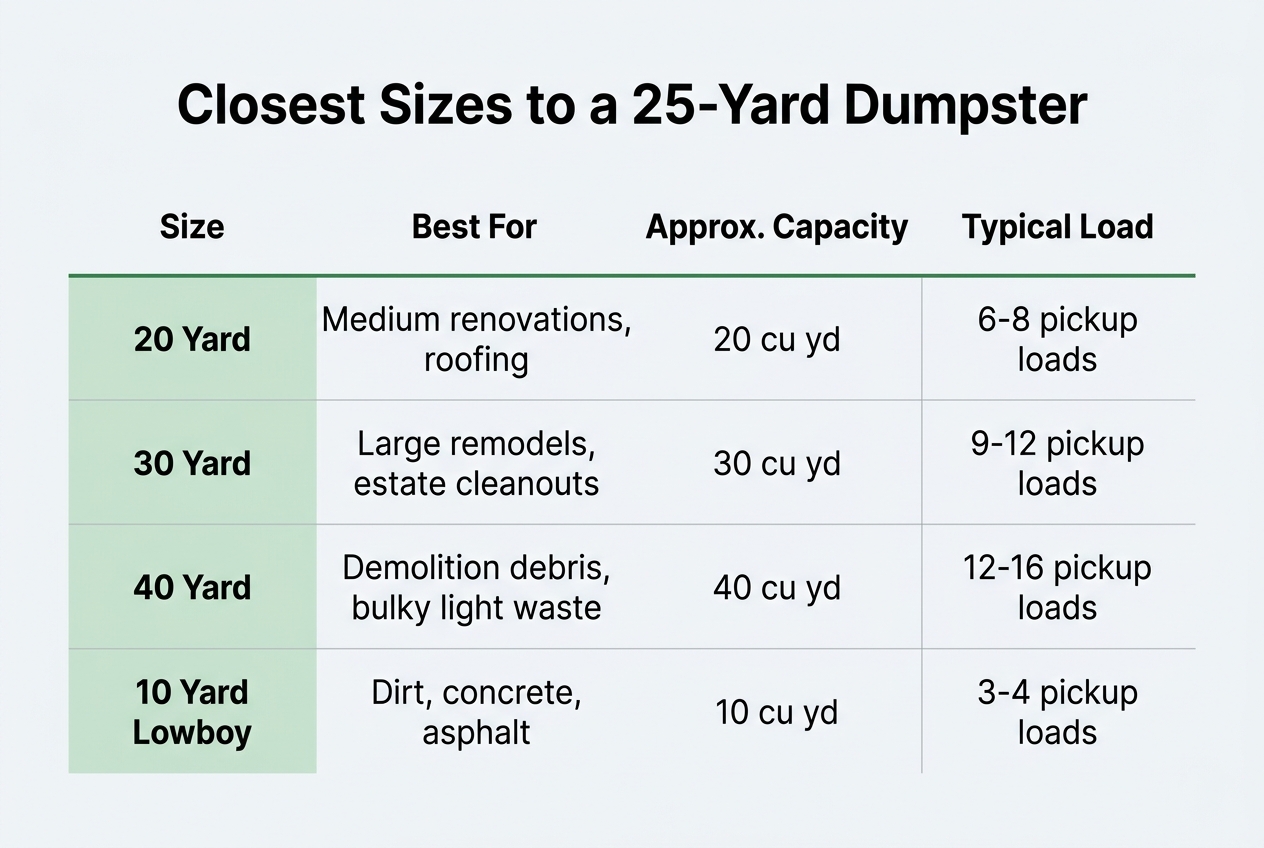
Since almost no LA yard stocks a 25, you’re really choosing between a 20 and a 30. Here’s how the standard sizes stack up, so you can bracket the capacity you were after and pick the side you’d rather land on.
| Size | Approx. Dimensions | Driveway Footprint | Typical Tonnage Included | Best For |
|---|---|---|---|---|
| 10 yd lowboy | 12′ L × 8′ W × 3′ H | Shortest box; fits tight Valley driveways | 2–4 tons (heavy-rated) | Dirt, concrete, asphalt, brick, tile |
| 15 yd | 16′ L × 8′ W × 4′ H | One car length plus clearance | 2–3 tons | Single-room cleanouts, small bath remodels, appliances |
| 20 yd | 22′ L × 8′ W × 4.5′ H | Fits most two-car driveways | 3–4 tons | Medium renovations, roofing tear-offs, garage and multi-room cleanouts |
| 30 yd | 22′ L × 8′ W × 6′ H | Same length as a 20, taller walls | 4–5 tons | Large cleanouts, estate cleanups, commercial jobs with bulky debris |
| 40 yd | 22′ L × 8′ W × 8′ H | Needs open driveway or lot space | 5–6 tons | Major construction, demolition debris, warehouse clearing |
Notice the 20 and the 30 share a footprint. The 30 just has taller sides, which matters for volume, not for parking. For a two-story cleanout in Van Nuys, planning around dumpster placement in Van Nuys is usually easier than people expect, because both boxes drop in the same spot.
Size-by-Side Capacity Table
One caution: never chase volume with heavy material. Dirt and broken concrete belong in the low-walled 10 yard, where you physically can’t overload the box. A 25-yard container full of concrete would be a nightmare no truck should lift.
When to Round Up to 30 Instead of Down to 20
Round up when debris is bulky and light — furniture, mattresses, cabinets, drywall, tree trimmings after a crew has cut them down. Round down when the load is dense or the driveway is short. Just like sizing equipment for a home project, whether that’s residential air conditioning sizing or a roll-off, guessing small costs more than guessing big, because a second haul means a second fee. For smaller jobs, the 15 yard option is where most homeowners start.
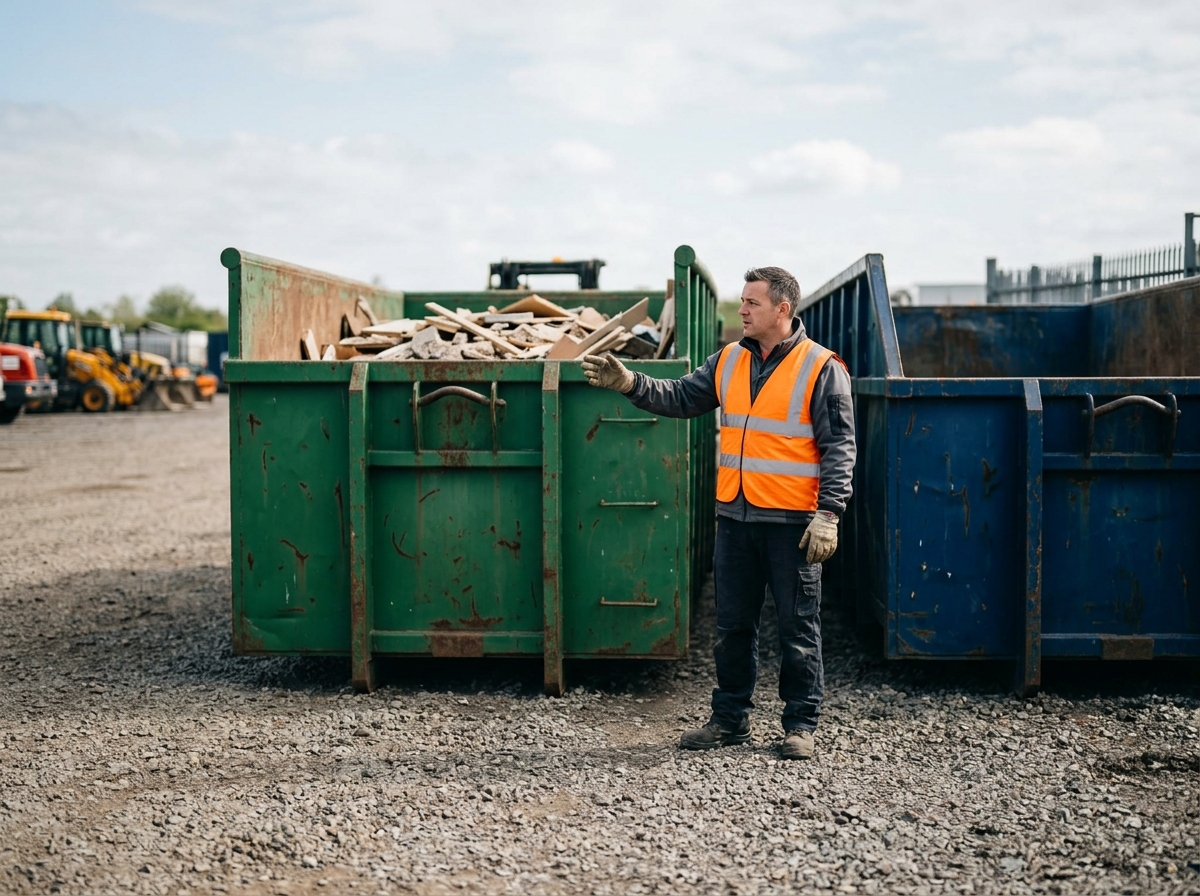
2. Weight Limits Matter More Than Cubic Yards
Cubic yards tell you how much space you get. Tonnage tells you what you’ll actually pay. Those are two different limits, and on most LA jobs only one of them stops you.
Light Debris vs. Heavy Debris Loads
With drywall scraps, framing lumber, old furniture and cardboard, volume runs out long before weight does. You’ll be stomping boxes to squeeze in the last load. Flip to tile, plaster, shingles, brick or concrete and the math reverses fast — the box looks half empty while the truck is already at its legal limit. That’s why heavy clean loads belong in a 10 yard lowboy with short walls, not a tall 30 yard box. Drivers can’t legally roll an overloaded container down Sherman Way, and a small job that would’ve used a bag is still better served by a lowboy, as the pricing and specs behind small-yardage roll-off containers make clear.
How Overage Fees Are Calculated per Ton
All-inclusive local rates run about $650 for a 10 yard lowboy and $685 for a 40 yard, with anything past the included tonnage billed near $95 per ton. Estimate before you book. It’s five minutes of math that protects your budget, and hillside streets around Toluca Lake dumpster placement add weight-limit pressure of their own.
| Material | Typical Unit | Approx. Weight |
|---|---|---|
| Asphalt shingles | 1 square (100 sq ft) | 230–250 lbs |
| Drywall | One 12×12 room, walls + ceiling | 1,200–1,500 lbs |
| Dirt or soil | 1 cubic yard | 2,000–2,700 lbs |
| Broken concrete | 1 cubic yard | 3,000–4,000 lbs |
| Mixed household junk | 1 cubic yard | 150–300 lbs |
Run your numbers, then call and confirm the included tonnage.
3. What You Can and Cannot Load in a Roll-Off Container
Whatever size you end up with, the rules about contents don’t change. A 20-yard and a 30-yard box accept the exact same material list. What matters is that everything you load has to be dry, solid, non-hazardous debris — and most of what comes out of a Valley remodel or garage cleanout qualifies without any trouble at all.
Accepted Debris by Project Type
Here’s the short version of what goes in without a phone call. Sorting as you load helps too, since clean loads of one material are easier to divert at the facility.
- Construction and demolition debris — lumber, framing scrap, tile, plaster, brick, and mixed jobsite waste from a remodel or teardown.
- Household junk and furniture — couches, dressers, bookshelves, boxes, carpet rolls, and the two decades of stuff stacked in the garage.
- Yard and green waste — branches, trunk sections, palm fronds, sod, and clippings after a tree crew has already cut and stacked everything.
- Roofing tear-off — asphalt shingles, felt, and underlayment, though shingles are heavy enough that tonnage, not space, sets your limit.
- Drywall, flooring, and non-freon appliances — sheetrock scrap, laminate, hardwood, plus stoves, dishwashers, and washers with no refrigerant.
Material type drives both the size and the weight math, so reading through a roll off dumpster sizes guide before you order saves you a swap you didn’t budget for. Same logic whether you’re in Reseda or booking a dumpster rental in Sun Valley, since the disposal facilities and their restrictions are shared across the region.
Items That Need a Different Vendor Entirely
Some things simply can’t ride in a roll-off, legally or safely. Paint, solvents, motor oil, pool chemicals, asbestos, batteries, and tires all belong at a licensed household hazardous waste or hazmat facility. Not the dumpster. Liquids, septic waste, and grease are never accepted at any container size either — that’s a licensed liquid waste hauler’s job, full stop.
Then there’s the gray zone. Mattresses, freon appliances, e-waste, and tires often carry surcharges or need special handling, so confirm those by phone before loading. And one honest note — recycling diversion isn’t a scrap metal payout. Sorted loads get diverted responsibly; nobody’s cutting you a check for the copper.
4. Match the Container to the Project, Not the Number
Forget the round number for a minute. What matters is the kind of debris you’re generating and how much of it there is. A garage full of boxes and a roof full of shingles fill space in completely different ways, and the right call usually becomes obvious once you describe the job out loud.
Residential Cleanouts and Remodels
Most home projects land in a narrow band of sizes. A whole-home renovation or a multi-room remodel with mixed debris — drywall, cabinets, flooring, trim — typically needs a 20 or 30 yard container. Roof tear-offs get sized by squares and how many shingle layers are coming off, and a 20 yard handles most single-family homes in the Valley. For a big estate cleanout, reviewing what fits inside a 30 yard roll off dumpster helps you plan the volume before anyone starts carrying boxes out the door.
Keep in mind the container arrives empty and stays where it’s parked. You or a hired cleanout crew do the loading.
Construction, Demolition and Commercial Jobsites
Heavier jobs often need two containers instead of one big guess:
- Demolition debris: a 40 yard takes the framing, lath, and bulk material after your demolition contractor finishes the teardown.
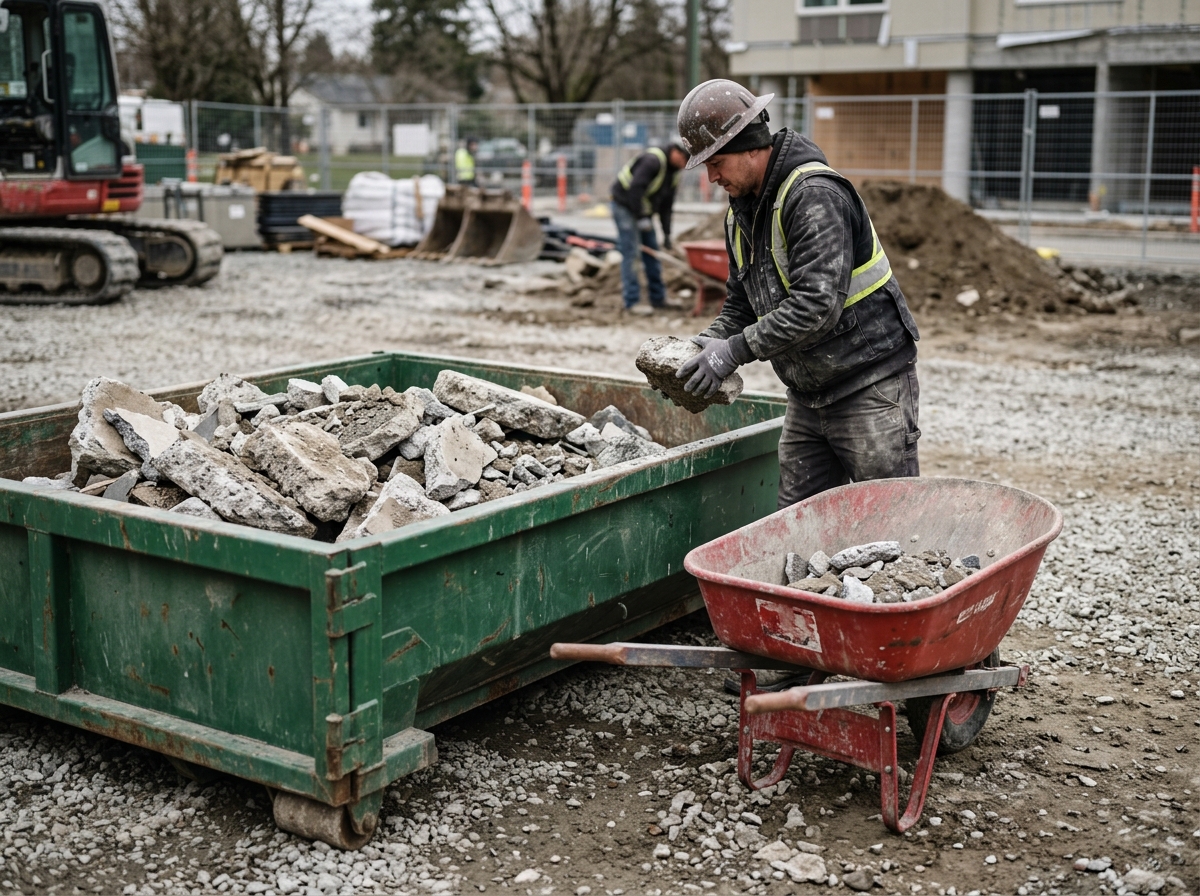
- Concrete, slab, and brick: a 10 yard lowboy, because that weight will blow past a large container’s limit long before you fill it.
- Tree and green waste: a 20 or 30 yard staged after a tree service has done the cutting and grinding, since branches take up far more room than they weigh.
- Small apartment or single-room cleanout: if a dumpster bag was your plan, a 10 yard lowboy or 15 yard is the smallest steel container available — and it holds considerably more.
- Ongoing commercial volume: a 30 or 40 yard on a longer rental with scheduled swaps beats calling for a new drop every week.
5. Placement, Permits and Driveway Realities in the San Fernando Valley
How Much Room the Delivery Truck Needs
A roll-off truck isn’t a pickup. Plan on roughly 60 feet of straight clearance so the driver can back in, tilt the bed, and roll the box off without scraping anything. You’ll also want 10 to 12 feet of width — the container runs about 8 feet wide, and the driver needs elbow room on both sides.
Vertical space trips up more Valley deliveries than anything else. The hoist arm goes up, so you need 20-plus feet of open air. Mature ficus branches over a Van Nuys driveway, low phone lines in Reseda, a carport overhang in North Hollywood — any of those can kill a drop. Walk the path before delivery day and look up, not just ahead.
Surface matters too. A loaded box can hit 10 tons, and steel wheels squeeze that weight onto four small points. Lay down plywood or 2×10 planks under the rails to spread the load and protect asphalt or decorative concrete. Weight, reach and clearance all shape the drop, and it’s easier to picture once you’ve seen how roll-off trucks operate in Los Angeles, especially on narrow hillside streets.
Street Placement Rules and Who Files the Permit
On your own driveway or private lot, you generally don’t need a permit. Park it in the street or anywhere in the public right-of-way, and Los Angeles typically does require one. Sidewalks are off-limits without written authorization. Blocking pedestrian access is how you collect a citation instead of a clean jobsite.
The application is the property owner’s or contractor’s responsibility to file with the city — haulers don’t pull it for you. A hauler who works these streets daily can explain setback rules, permitted hours and placement requirements so your paperwork is right the first time. Ask before you book, not after the truck shows up.
Two more jobsite notes. Keep debris level with the top rail; an overloaded box legally can’t be hauled. And a roll-off is an open-top disposal container, nothing more — restrooms come from a sanitation vendor, and lockable storage comes from a container storage company.
6. Rental Periods, Swaps and Extensions
Short-Term vs. Long-Term Rental Comparison
Most residential rentals in LA run on a 7 to 8 day window, which is plenty for a garage purge or a bathroom gut. Need longer? Extensions are usually available, though they depend on container availability that week. Here’s how the two tracks compare in practice.
| Factor | Short-Term Rental | Long-Term Rental |
|---|---|---|
| Typical duration | 7-8 days | 30 days or ongoing |
| Best fit | Cleanouts, events, seasonal yard work | Contractors, property managers, multi-site commercial |
| Common sizes | 10, 15, 20 yard | 20, 30, 40 yard |
| Pickup schedule | One haul at the end | Scheduled swaps as the container fills |
| Delivery speed | Often same-day or next-day | Planned around the build schedule |
When a job starts tomorrow and you haven’t ordered yet, it’s worth understanding how same day dumpster rental works before you assume you’ve missed your window. Call early in the business day and delivery across Reseda and the Valley is genuinely realistic. Wait until 4 p.m. and you’re booking tomorrow.
Scheduled Swap-Outs for Ongoing Jobsites
High-volume businesses that priced out a compactor often don’t need one. A 30 or 40 yard container on a scheduled swap cycle moves the same tonnage without leasing machinery, paying for power, or servicing hydraulics. You fill it, it goes, an empty box lands.
One caveat worth stating plainly: your weekly curbside trash and recycling still comes from your city hauler. Project-based roll-offs cover the surge, not the route.
7. Questions to Ask Before You Book a Roll-Off in LA
Pricing Transparency Red Flags
Start with one question: is the quote all-inclusive? That means delivery, pickup, fuel, environmental fees and a set tonnage allowance all baked into the number you hear on the phone. Plenty of quotes look cheap because they cover the drop-off only, and the rest shows up after the scale house weighs your load. Ask for the total, not the starting point.
Then pin down two figures. What’s the included weight for the size you picked, and what’s the per-ton overage rate after that? Rates around $95 per ton are common in LA, and knowing the number before you load beats finding it on an invoice. A 20-yard filled with plaster and tile can blow past its allowance fast.
Ask how fast the container can arrive and whether same-day delivery reaches your zip code. Confirm accepted payment methods too — cash, check, major cards — plus the office hours, typically Mon–Fri 8–6 and Sat 9–5. Vague answers to simple questions are the red flag.
Getting Size Advice From a Local Team
Ask who advises on placement and permits. A dispatcher who knows Valley streets will tell you whether your driveway clears the truck’s swing, and whether street placement triggers a city permit you’ll need to apply for yourself. Measure your space first; reviewing roll off dumpster dimensions helps you compare a 20 against a 30 before anyone rolls up. Tight driveways aren’t rare here.
Next, ask what happens to the debris. Sorting and recycling with documentation matters if your project chases LEED credits, and reporting should be available on request. Confirm restricted items as well — paint, solvents, tires, freon appliances and mattresses often carry rules or fees. Hazardous material goes to a licensed facility, never in the box.
Finally, just call. A quick conversation at 818-457-7711 usually settles sizing in five minutes, and a team known for quick responses and friendly drivers will steer you toward the right container rather than the biggest one.
Once your contractor has the concrete broken up and ready to go, a 10 yard lowboy dumpster rental is the low-sided container built for that kind of weight — dirt, asphalt, and busted slab included. The team at Green Star Roll Off works out of 18520 Wyandotte St in Reseda and knows the Los Angeles placement rules well enough to point you in the right direction before the truck ever rolls out. Give them a call at 818-457-7711 to reserve your 10 yard lowboy, and ask about same-day delivery if your timeline is tight.