
Small cleanup jobs and tight driveways don’t need an oversized bin taking up half your property for a week. If you’re weighing whether a compact option fits your project, understanding the 4 yard dumpster size can save you money, space, and the hassle of ordering more capacity than you’ll ever use. Green Star Roll Off breaks down what this size holds, who it fits best, and how to know if it’s right for your home or business cleanup.
What Is a 4 Yard Dumpster Size and Who Needs One
How Cubic Yards Are Measured
A cubic yard measures three feet by three feet by three feet. That block of space equals 27 cubic feet of material. A 4 yard dumpster holds four of those blocks, or roughly 108 cubic feet total. In real terms, that fits about 20 to 25 kitchen-sized trash bags.
This measurement tells you volume, not weight. A bin filled with light debris, like cardboard, looks full long before it hits its weight limit. Dense materials, like tile or bricks, hit the weight limit fast while leaving visible space. Knowing this difference helps you pick the right container before your next cleanup starts.
Everyday Waste vs Project Debris
Small businesses often use this size for daily or weekly waste, like packaging, food scraps, or office trash. Homeowners lean on it for garage cleanouts, yard debris, or small furniture disposal. Property managers use it between tenant turnovers to clear out minor junk left behind.
Unlike a one-time construction bin, this size supports ongoing, routine use. It works well for spaces that generate steady but modest waste. Larger jobs, like full remodels, usually call for something bigger. Anyone comparing options might look at dumpster rental 6 yard containers for slightly heavier loads.
Signs You Need This Size
You likely need this size if your waste fits in a single pickup truck bed. Frequent small loads, tight driveways, or limited storage space are also strong signs. Many local businesses choose it for consistent weekly service instead of large, infrequent hauls.
If your project involves major demolition, check 20 yard dumpster dimensions instead. But for routine, everyday debris, this smaller option stays the practical, cost-effective choice.
4 Yard Dumpster Dimensions and Capacity
Standard Length, Width, and Height
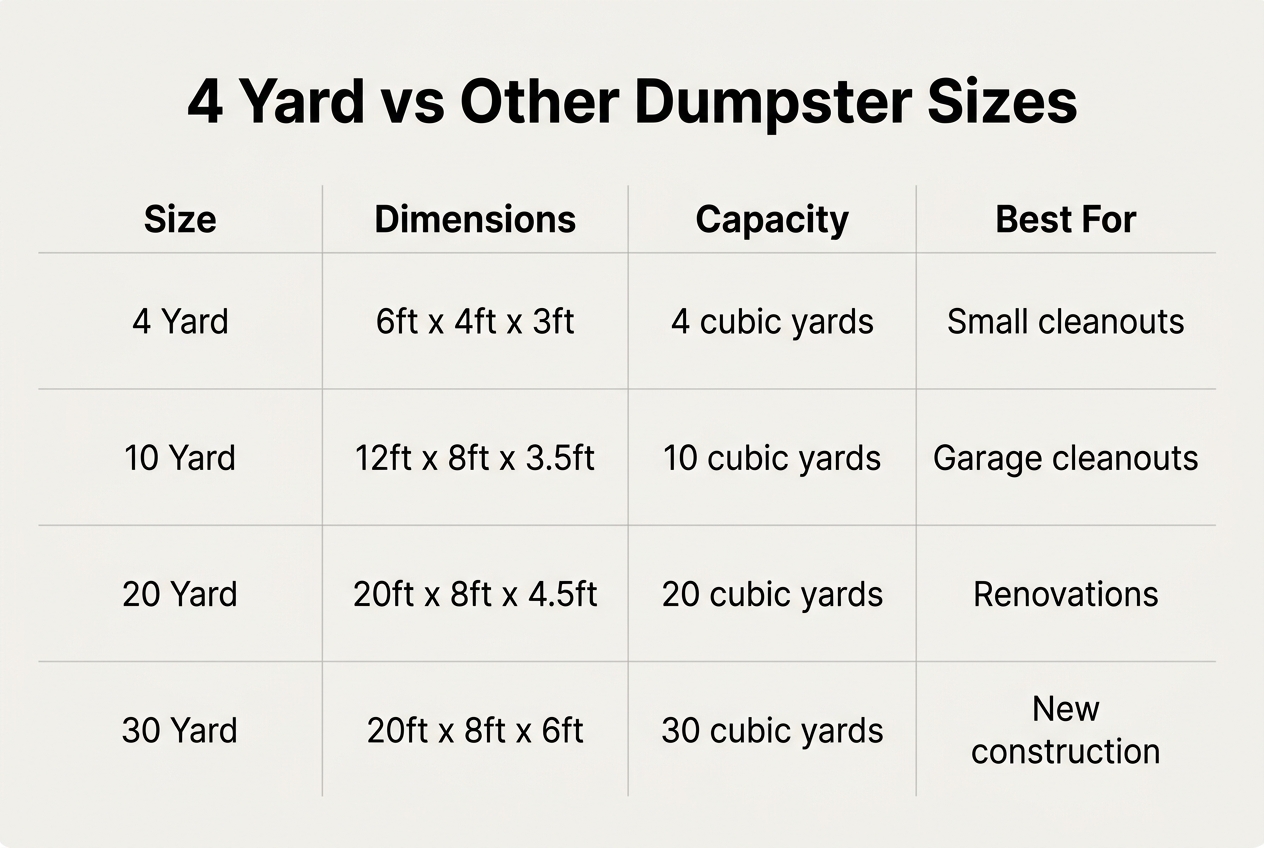
A 4 yard dumpster is compact, built for tight spaces like alleys and small lots. Most units measure close to 6 feet long, 4 feet wide, and 3.5 feet tall. That footprint is roughly the size of a large refrigerator lying on its side. For comparison, if you need something much bigger, check the 40 yard dumpster dimensions to see the scale difference.
How Much Trash It Actually Holds
This bin holds about 4 cubic yards of debris, equal to roughly 32 filled trash bags. The table below breaks down real-world capacity.
| Item Comparison | Approximate Quantity |
|---|---|
| Kitchen trash bags | 30-32 bags |
| Bathroom remodel debris | 1 small bathroom |
| Office cleanout boxes | 50-60 boxes |
| Furniture pieces | 3-4 large items |
Weight Limits and Overage Fees
Most providers cap this size around 1 to 1.5 tons. Weight gets calculated using certified truck scales at the landfill or transfer station. Heavier materials, like concrete or roofing shingles, fill weight limits fast. Going over the limit usually triggers extra per-ton charges, so estimating debris weight beforehand saves money.
How the 4 Yard Bin Compares to Other Commercial Dumpster Sizes
Choosing a container gets easier when you see the sizes side by side. The table below lines up common commercial dumpsters by capacity and typical use. For more detail, check this roll off dumpster sizes guide.
| Size | Capacity | Trash Bags (approx.) | Best For |
|---|---|---|---|
| 2 Yard | 2 cubic yards | 12-16 | Small offices, tight spaces |
| 4 Yard | 4 cubic yards | 24-32 | Retail shops, restaurants |
| 6 Yard | 6 cubic yards | 36-48 | Larger stores, weekly service |
| 8 Yard | 8 cubic yards | 48-64 | High-volume businesses |
2 Yard vs 4 Yard
The 4 yard bin holds double the trash of a 2 yard unit. Small shops outgrow the 2 yard size fast, especially during busy seasons. Stepping up avoids overflow and extra pickup calls.
4 Yard vs 6 Yard
A 6 yard container adds 50% more room. Businesses with daily food waste or packaging often need that extra capacity to keep bins from overflowing between service days.
4 Yard vs 8 Yard
The 8 yard size doubles the 4 yard’s volume. It suits high-traffic operations like grocery stores.

Best Uses for a 4 Yard Dumpster
Retail Stores and Offices
Small shops and offices produce steady, predictable waste. A 4 yard dumpster handles cardboard, packaging, and everyday trash without taking up much space. Many local businesses choose weekly or biweekly pickups to keep clutter under control. This size works well for storefronts that don’t generate huge volumes but still need consistent service.
Restaurants and Personal Care Businesses
Restaurants, salons, and spas often need frequent removal for food scraps, packaging, and general debris. A small container fits tight lots and back-alley spaces common in older commercial buildings. For outdoor cleanup projects, a yard waste dumpster can supplement regular service during seasonal landscaping.
Property Management and Warehousing
Property managers and small warehouses benefit from having a reliable, right-sized bin on-site. This size also suits light residential work, including small remodels or single-room cleanouts.
- Apartment complexes use it for common-area trash and light tenant turnover debris.
- Small warehouses rely on it for packaging waste and shipping materials.
- Homeowners tackle bathroom or kitchen remodels without renting oversized equipment.
- Office parks manage recurring paper, cardboard, and breakroom waste efficiently.
- Retail strip centers coordinate shared service among multiple small tenants.
Roll-Off Dumpsters vs Front-Load and Rear-Load Containers
Front Load Dumpster Basics
Front load dumpsters are the boxy metal bins you see behind restaurants and grocery stores. They stay on-site permanently and get emptied by a truck with forks that lift the bin from the front. These containers are built for ongoing, repeat service rather than short-term projects.
Businesses typically sign contracts for weekly or biweekly pickups. The bin never leaves the property; only its contents get dumped and returned. This setup works well for steady trash volume, like daily kitchen waste, but it’s not built for one-time cleanouts or renovation debris.
Rear Load Dumpster Basics
Rear load dumpsters look similar to front load bins but get serviced from behind. A truck backs up, connects to the bin, and tips it mechanically. These are common in tight alleys or lots where a front-loading truck can’t maneuver.
Like front load units, rear load containers stay put and serve as a permanent waste solution. They’re billed through recurring service agreements, not single rentals, making them a poor fit for temporary jobs like garage cleanouts or small remodels.
Where Roll-Off Containers Fit In
A 4 yard bin falls into a different category entirely: roll-off rental. It arrives on a truck, sits for the duration of your project, then gets hauled away once you’re done. There’s no long-term contract involved.
This distinction matters when comparing options. Someone tackling a large commercial teardown might eventually need a 30 yard roll off dumpster, while a homeowner clearing a closet needs something much smaller. For exact size specifications across container types, the Dumpster Dimensions – Utilities guide offers useful reference data.
Choosing the Right Dumpster Size for Your Project
Estimating Your Waste Volume
Start by picturing your waste in cubic yards. A 4 Yard Commercial Dumpster holds about 4 pickup truck loads. Walk your space and estimate bag or box counts before you commit to a size.
- Count the trash bags you fill in an average week to spot patterns.
- Measure bulky items like furniture or pallets that take up extra room.
- Factor in seasonal spikes, such as holiday packaging or spring cleaning debris.
- Check local weight limits, since dense materials fill less space but weigh more.
- Add a small buffer, roughly 10 percent, for unexpected overflow.
One-Time Projects vs Ongoing Service
A single cleanup usually needs a one-time pull. Regular business waste calls for scheduled pickups instead. Frequency changes the math. A weekly pickup schedule can use a smaller bin repeatedly, while a one-time job may need extra capacity upfront since there’s no second chance to add more.
When to Upsize to a Roll-Off Container
Large remodels, roof tear-offs, or full property cleanouts outgrow small bins fast. Reviewing roll off dumpster dimensions helps you compare capacity before renting. Common upsized options include 10, 20, 30, and 40 yard containers, each suited to bigger debris loads and longer project timelines.
Pricing Factors for a 4 Yard Dumpster Rental
What Affects Your Rental Quote
Several factors shape your final price. Location matters most, since fuel costs and disposal fees vary by city. Rental length also plays a role, along with the type of debris you toss. Heavier materials, like concrete or shingles, often cost more to haul. Reading a guide on dumpster rental cost can help you understand typical price ranges before you call for quotes.
Weekly vs Monthly Service Costs
Many local businesses need ongoing waste removal, not just a one-time rental period. Pricing usually shifts based on pickup frequency. Compare the options below.
| Service Plan | Pickup Frequency | Typical Use Case |
|---|---|---|
| Weekly | Once per week | Small retail shops |
| Bi-Weekly | Every two weeks | Offices, salons |
| Monthly | Once per month | Low-waste businesses |
| On-Call | As needed | Seasonal projects |
Avoiding Overage and Contamination Fees
Hidden fees can surprise renters who skip the fine print. Overage charges apply when debris exceeds the weight limit. Contamination fees hit when banned items, like paint or tires, end up inside. Ask your provider for upfront pricing before booking.
Features and Add-Ons for Your Container
A small container can include extra features that make daily use easier. These add-ons are optional, but they solve common problems on busy job sites and tight driveways. Ask about them before booking, since not every unit ships with these upgrades.
- Casters allow staff to roll the container between rooms or work areas without lifting it.
- Locking lids keep curious passersby, animals, and weather out of the bin.
- Drain plugs should stay in place so liquids can’t leak out of the bin and onto the pavement.
- Reinforced corners protect the bin from dents when moved across pavement or gravel.
Casters for Easy Positioning
Casters turn a stationary bin into a mobile one. This helps in warehouses, retail spaces, or renovation zones where the bin needs to shift throughout the day.
Locking Lids for Security
A locking lid prevents unauthorized dumping and protects sensitive materials. Many local businesses request this feature for job sites near public sidewalks.
Drain Plugs and Moisture Control
Drain plugs keep liquids from leaking out of the container, which is why they should stay in place: anything that drains onto pavement can wash into a storm drain. For comparison across container types, the 15 yard dumpster dimensions page shows how larger bins handle similar moisture challenges.
Setting Up Your Dumpster: Placement and Access Tips
Choosing a Storage Area
Pick a spot before the truck arrives. A flat, stable location near your work area saves time and effort when loading debris. Driveways work well for most homeowners, since they offer solid ground and easy access from the street.
Avoid placing the container under low tree branches, power lines, or near fences. These obstacles can block delivery or damage the truck during pickup. Think about how often you’ll walk back and forth to the bin, and choose a location that keeps that path short and clear.
Clearance and Surface Requirements
Most drivers need about 60 feet of straight clearance to position the truck and lower the container safely. The surface should be hard and level, such as concrete or asphalt. Soft ground like grass or gravel can shift under the weight, causing tilting or sinking.
Overhead clearance matters too. Aim for at least 15 feet of vertical space, since the truck’s arm lifts high during drop-off and removal. Checking our roll off dumpster rental guide beforehand can help you confirm space requirements for your specific property.
When You Might Need a Permit
Placing a dumpster on private property, like a driveway, usually requires no paperwork. Street placement is different. Many cities require a permit when a container sits on public roadway or blocks a sidewalk.
Rules vary by municipality, so check with your local public works department before delivery. Some areas also require reflective markers or barricades for nighttime visibility. Confirming these details early prevents fines and delays once your project begins.
How to Schedule Delivery and Pickup
Requesting a Quote and Booking
Most rental requests start with a quick call or online form. You share your zip code, project type, and how long you need the container. A dispatcher checks local availability and gives you a price based on weight limits and rental days. Same-day delivery is often possible if you call before early afternoon.
Booking usually takes just a few minutes. Have your delivery address, a contact phone number, and preferred drop-off window ready. If your project is larger than expected, ask about options like a 40 yard dumpster rental instead, since some jobs outgrow a small container fast.
Delivery Day Expectations
Drivers use a roll-off truck to place the container in your driveway or curbside spot. The process takes about 10 to 15 minutes. You’ll want 60 feet of clearance for the truck to maneuver safely.
Confirm placement details the morning of delivery. Mark the exact spot with cones or tape if you won’t be home, and clear the area of cars, low branches, or wires.
Scheduling Ongoing or Final Pickup
Rental periods typically run 7 to 10 days, but extensions are easy to arrange. Call ahead once the bin is full or your project wraps up. Final pickup usually happens within 24 to 48 hours of your request, keeping your site clear and organized.
Frequently Asked Questions About Dumpster Sizes
What Items Are Not Allowed
Most dumpster rentals ban a similar list of materials. Hazardous waste is always off limits. This includes paint, motor oil, solvents, batteries, and pesticides. Tires, propane tanks, and appliances with refrigerants also usually require special handling instead of standard disposal.
Electronics like old TVs and computers often need separate recycling due to local rules. Medical waste, asbestos, and wet paint cans are also restricted in nearly every service area. Breaking these rules can lead to extra fees or delayed pickup.
Before loading a bin, ask your provider for a full prohibited items list. Sorting materials ahead of time saves money and avoids surprises on pickup day. This matters even for smaller containers, since the rules apply the same way regardless of size.
How Long Can I Rent a Dumpster
Standard rental periods usually run seven to ten days. This window fits most cleanouts, small remodels, and yard projects without rushing the work. Many providers offer flexible extensions if a project runs longer than expected.
Daily extension fees typically apply once the included period ends. Confirming the exact timeframe before booking helps avoid unexpected charges. Larger jobs, similar to those needing 30 yard dumpster dimensions, may require longer rental windows planned in advance.
How Is Pricing Determined
Pricing depends on weight limits, rental length, and local disposal fees. Location also plays a role, since transportation distance affects delivery cost. Same-day scheduling is often available, but confirming availability early helps secure a preferred delivery date.
Most quotes include a set weight allowance, with overage charged per ton. Asking for a clear breakdown before booking helps you compare options accurately and avoid hidden costs later.
So if a 4 yard dumpster is what you had in mind, it’s worth stepping back and measuring the job itself — the number of bags, the bulky pieces, the debris that always turns up once you actually start. Most homeowners find that a small roll-off, like the 10 yard lowboy Green Star Roll Off keeps in rotation, handles a tight driveway just as gracefully while leaving room for whatever the project uncovers. Knowing your real volume before anything gets delivered is the simplest way to avoid a second haul.