
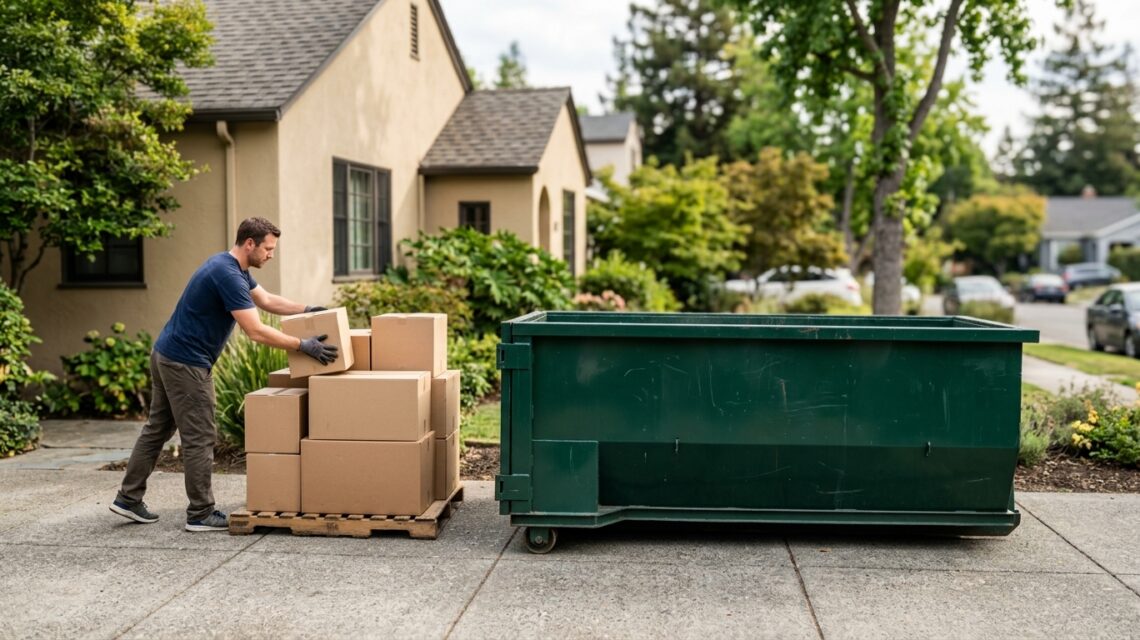
Small cleanup jobs and tight driveways don’t need a massive roll-off container hogging half your property. But finding the right compact option gets confusing fast, since every company quotes different sizes and prices. A dumpster rental 6 yard unit fills that gap nicely. It offers enough room for bathroom remodels, garage cleanouts, or landscaping debris, without the bulk or cost of larger bins. Green Star Roll Off breaks down exactly what this size holds, what it costs in 2026, and how to book the right container the first time. That way you avoid overpaying or ordering the wrong dumpster for your project.
What Is a Dumpster Rental 6 Yard and Who Needs One
Typical Dimensions and Load Capacity
A 6 yard container typically measures around 10 feet long, 4 feet wide, and 3.5 feet tall. That footprint fits easily in a driveway, a narrow alley, or a small parking lot. Six cubic yards equals roughly 12 pickup truck loads of debris — plenty for most small home projects without wasted space.
In weight terms, this size usually holds between 1,500 and 2,000 pounds, depending on the material. Heavy debris like concrete or roofing shingles fills the weight limit faster than the space limit. For a broader comparison of container measurements, check out this guide to roll off dumpster dimensions, which explains how sizing scales up for bigger jobs.
Anyone comparing this option against much larger units should know the difference is significant. A quick look at 30 yard dumpster dimensions shows how much more length, width, and height those containers need on a property.
Ideal Projects for This Size
Homeowners tackling a bathroom remodel, garage cleanout, or small landscaping job find this size ideal. It handles old fixtures, yard waste, and light construction debris, all without eating up excessive yard space or driveway room.
Small contractors rely on this size too, especially for single-room renovations or minor demolition work. Landlords use it, particularly when clearing out a rental unit between tenants or hauling away old furniture and flooring. The compact footprint makes it practical for tight urban lots and residential neighborhoods where space stays limited.
Dumpster Sizes Compared: Finding the Right Fit
Small Dumpsters (2–8 Yard)
Small dumpsters, including the 6 yard size, hold about 3-4 pickup truckloads of debris. They fit tight driveways and suit small cleanouts, bathroom remodels, or yard waste. Choose the wrong size here, and you’ll likely end up overpaying for space you never fill.
Mid-Size Dumpsters (10–20 Yard)
Mid-size units step up in capacity fast. A 10 yard holds roughly 5 truckloads, while a 20 yard handles about 10. These work well for flooring jobs, garage cleanouts, or mid-scope renovations. Check the 20 yard dumpster dimensions before booking, since footprint size varies more than volume alone suggests.
Large Dumpsters (30–40 Yard)
Large dumpsters serve big demolition or new-construction projects. A 30 yard fits about 15 truckloads; a 40 yard fits 20 or more. These sizes need wide, open placement areas.
| Size | Volume | Truckloads | Best Use |
|---|---|---|---|
| 6 Yard | 6 cubic yards | 3 | Small cleanouts |
| 10 Yard | 10 cubic yards | 5 | Bathroom remodel |
| 15 Yard | 15 cubic yards | 7-8 | Kitchen remodel |
| 20 Yard | 20 cubic yards | 10 | Flooring, roofing |
| 30 Yard | 30 cubic yards | 15 | Home addition |
| 40 Yard | 40 cubic yards | 20+ | New construction |
For a full breakdown of dimensions and weight limits across every option, review this roll off dumpster sizes guide before finalizing your choice.
How Much a Small Dumpster Rental Costs
What’s Included in the Base Price
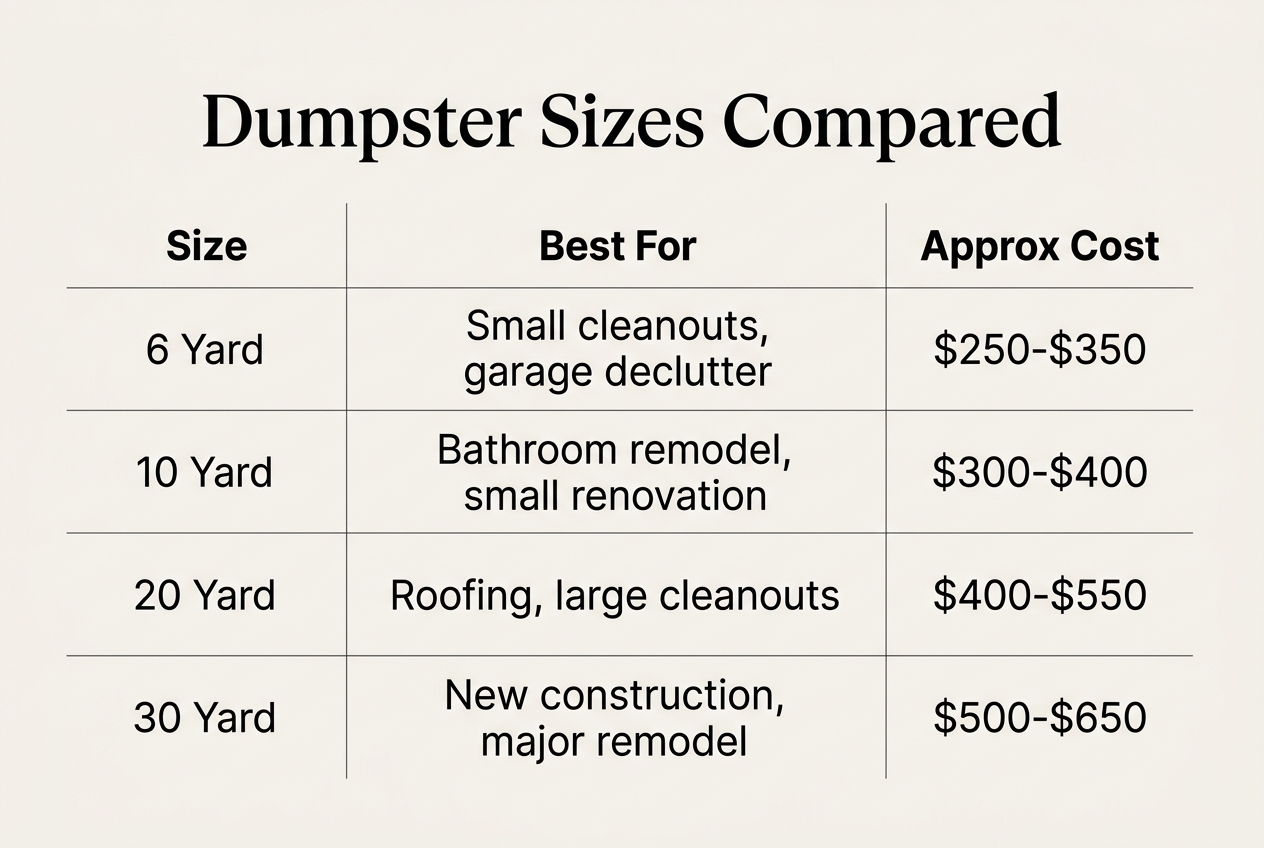
A 6 yard dumpster usually costs between $250 and $450 for a standard rental. This base price covers delivery, pickup, and a set rental period, often 5 to 7 days. Most quotes also include a weight limit, typically 1 to 2 tons, before extra charges kick in. For a deeper breakdown of pricing tiers by size, check this roll off dumpster rental guide.
Pricing varies by location. Urban areas often charge more because of disposal fees and landfill distance. Suburban zones may offer lower rates since dump sites sit closer by. Rental duration shapes the price too. A weekend rental costs less than a two-week job site rental.
Weight limits matter as well. Heavy materials like concrete or dirt reach the cap faster than household junk. Many providers list weight allowances clearly in their quote, so ask before booking.
Extra Fees to Watch For
Overage fees apply when you exceed the weight limit. These charges often run $50 to $100 per extra ton. Ask about the exact rate before the dumpster arrives, since rates vary widely by provider and region.
Extension fees apply if you keep the dumpster longer than planned. Expect $5 to $15 per extra day. Some providers also charge for prohibited items, blocked access, or a second pickup trip. Plan your rental duration carefully, and you’ll dodge most of these surprise costs.
Everyday Projects That Fit in a Compact Dumpster
Home Cleanouts and Decluttering
A compact dumpster works well for clearing out clutter. Many homeowners use one when tackling a Residential Dumpster Rental project like a garage cleanout or closet purge. These jobs create steady, moderate debris rather than huge piles, which fits the smaller container size.
Small Renovation and Repair Jobs
Small repairs produce limited waste. A single bathroom remodel, a kitchen backsplash update, or window replacement usually stays within a compact dumpster’s limits. For much larger demolition jobs, it helps to compare 40 yard dumpster dimensions to see how volume needs can grow.
Yard Waste and Landscaping Debris
Outdoor projects also fit this size well. Consider these common examples:
- Clearing out old furniture, mattresses, and boxes during a home decluttering session.
- Removing drywall, tile, and cabinetry scraps from a small bathroom or kitchen update.
- Disposing of shingles and trim after a minor roof repair or siding patch job.
- Hauling away branches, sod, and soil from a weekend landscaping refresh.
- Clearing storage units or basements filled with years of accumulated items.
- Managing packaging waste for small businesses during inventory resets or office moves.
Each example produces a predictable, moderate volume, which makes sizing decisions easier.
Steps to Renting a Small Roll-Off Container
Requesting a Quote and Checking Availability
Start by calling or booking online. Give your zip code, project type, and rental length. A same-day quote should include delivery, pickup, tonnage limits, and any overage fees. Ask about availability first — weekends fill fast during busy seasons. If your project is much larger, compare options like a 30 yard roll off dumpster before locking in a size.
Preparing Your Property for Delivery
Clear a flat spot at least 10 feet wide and 60 feet long so the truck can maneuver. Mark utility lines, sprinklers, and low branches. The table below breaks down the typical process from quote to pickup.
| Step | Action | Typical Timeframe |
|---|---|---|
| 1 | Request quote, confirm size | Same day |
| 2 | Choose delivery date | 1-2 days out |
| 3 | Clear driveway space | Before delivery |
| 4 | Load debris | Rental period, 3-10 days |
| 5 | Schedule pickup | Call 24 hours ahead |
Loading and Pickup Best Practices
Load heavy items first, then fill gaps with smaller debris. Keep waste below the fill line. Many local businesses handling remodels use this method to dodge extra hauling fees.
Rules, Permits, and Placement Considerations
Permit Requirements by Location Type
Placement location decides whether you need a permit. A 6 yard dumpster set on private property, like a driveway or yard, usually needs no permit. Place it on a public street, though, and most cities require one. Los Angeles and San Fernando Valley municipalities often require a permit for any container blocking a curb lane or sidewalk. Fees depend on the city and rental length.
Some homeowners assume driveways are always exempt. That’s not always true. If the driveway slopes into a public right-of-way, or the container overhangs the street, a permit may still apply. Always confirm placement rules before delivery day. Checking guidance on dumpster permits before scheduling can prevent fines or delayed pickup.
Timing matters too. Permits can take a few business days to process in busier cities. Plan ahead for tight construction schedules.
HOA and Neighborhood Restrictions
Homeowners associations often add their own rules beyond city permits. Some HOAs restrict visible dumpster placement, require screening, or limit rental days to under a week. Always check your HOA handbook before booking, since violations can bring fines separate from any municipal penalty.
Surface protection is another key concern. Plywood boards or rubber mats placed under the dumpster protect driveways and asphalt from scratches or cracking under heavy weight. Many local businesses request this service when renting for residential jobs, especially with older concrete.
Weather and access also affect placement decisions. Wet or icy ground can make delivery trucks slip or sink, so schedule drop-offs during drier stretches when possible. Ensure clear overhead access, away from low branches or power lines, and leave enough width for the truck to maneuver.
What You Can and Cannot Throw Away
Accepted Household and Construction Debris
A 6 yard container handles most everyday waste. Before loading anything, check this guide on what can you throw in a dumpster to avoid rejected pickups. Accepted debris usually includes:
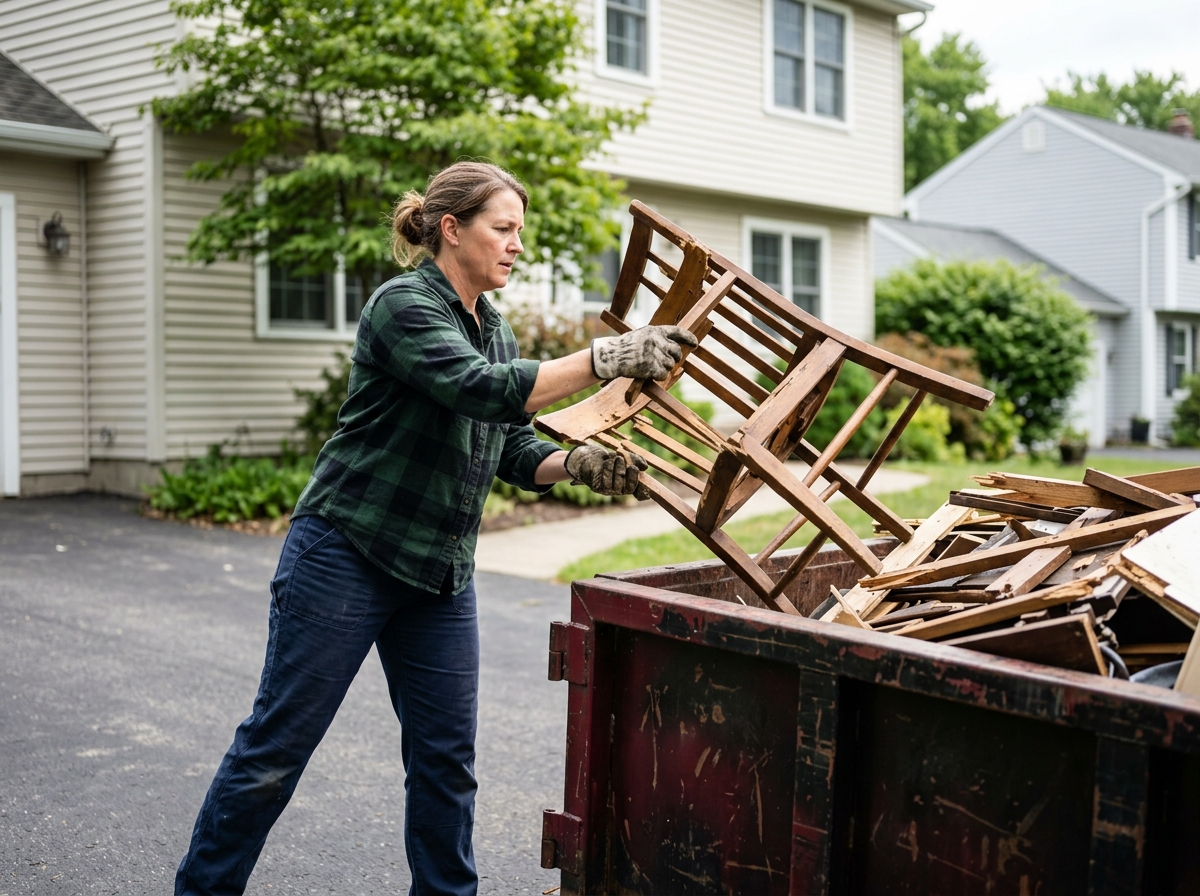
- Old furniture like couches, dressers, and tables that no longer fit your space.
- Wood scraps, drywall, and flooring materials left over from a remodel.
- Yard waste including branches, leaves, and small amounts of soil or sod.
- Household clutter such as boxes, broken appliances, and general trash bags.
- Shingles and siding removed during a small roofing or exterior repair job.
Prohibited and Hazardous Materials
Some items stay banned from every container, no matter the size. Hazardous waste creates safety risks during transport and disposal. Common examples include:
- Paint cans, solvents, and other chemicals that can leak or ignite during hauling.
- Tires, batteries, and motor oil, which require separate recycling programs.
- Asbestos materials found in older insulation or aging roofing tiles.
- Medical waste, including needles or expired medications, due to contamination concerns.
Any standard Roll Off Dumpster Rental agreement will list these restrictions clearly.
Weight Limits and Overage Charges
Smaller containers carry lower weight caps, often between 1 and 2 tons. Heavy debris like concrete or shingles fills that limit fast. Go over the cap, and you’ll pay overage fees, usually charged per extra ton. Ask your provider for the exact limit before loading dense materials.
Small Dumpster vs Bagster and Junk Removal: Pros and Cons
Choosing the right disposal method depends on your load size, timeline, and budget. The table below compares a small roll-off container against a bag-style unit and a junk removal crew.
| Option | Typical Cost | Capacity | Best For |
|---|---|---|---|
| 6 Yard Roll-Off | $250–$400 | 3–4 pickup truck loads | Multi-day cleanouts |
| Bagster-Style Bag | $150–$200 | 3,300 lbs limit | Single small task |
| Junk Removal Crew | $300–$600 | Varies by truck | No lifting, fast turnaround |
When a Roll-Off Container Wins
A roll-off container beats other options when your project spans several days. You load it on your own schedule. Checking dumpster rental cost data shows the price per day often lands lower than repeated bag pickups.
When Junk Removal Makes More Sense
Junk removal fits smaller jobs where labor matters more than volume. A crew hauls, lifts, and loads everything for you. For borderline projects, comparing a 6 Yard Dumpster Rental against a crew quote helps you pick the smarter option.
Tips for Maximizing Space and Avoiding Extra Fees
Smart Loading Techniques
A 6-yard container is compact, so loading order matters. Start with large, flat items like doors or plywood sheets. Lay them along the bottom to create a stable base. Then fill gaps with smaller debris, working like a puzzle instead of tossing items randomly.
Break down boxes, furniture, and framing before loading. A collapsed cardboard box takes a fraction of the space it needs when left whole. Removing legs from tables or chairs can free up several cubic feet. This simple step often means the difference between one dumpster load and paying for a second haul.
Distribute weight evenly across the container, keeping heavier debris low and centered. This prevents tipping during transport and helps drivers pick up the bin safely. Many local businesses use this method to avoid delays, since uneven loads sometimes require repositioning before pickup. Even distribution also protects against structural strain on the container walls.
Common Mistakes That Trigger Fees
Overfilling above the fill line is the most common mistake. Drivers cannot legally transport a bin with debris piled higher than its walls, and this usually means a return trip or a rejected pickup. Understanding typical dumpster rental cost structures helps renters budget for weight limits before the container arrives.
Mixing prohibited materials, like tires or electronics, with regular debris can trigger inspection fees.
Frequently Asked Questions About Small Dumpster Rentals
How Long Can I Keep the Dumpster?
Most rental periods run 7 to 10 days as a standard window. This covers weekend cleanouts and small remodels without rushing the work. Need more time? Many providers offer extensions for a small daily fee, often $5 to $15 per extra day. Always ask about the exact timeframe before booking, since policies vary between companies.
How Fast Can It Be Delivered?
Speed matters when a project starts unexpectedly. Many local businesses offer same-day or next-day delivery for compact containers, especially for orders placed before early afternoon. Placement usually takes just minutes once the truck arrives, since these smaller units fit driveways easily. Confirm your surface type and clearance space ahead of time to avoid delays.
What Size Do I Really Need?
Sizing questions almost always lead to cost and rule concerns too. Before booking, ask these questions to avoid surprises:
- How much debris will your project actually generate, measured in truckloads or rooms cleared?
- Are there weight limits that could trigger overage charges if you fill it with heavy materials?
- Does your load include restricted items like tires, paint, or electronics that need separate disposal?
- Will a larger unit, like one built to 15 yard dumpster dimensions, actually serve you better for bulkier jobs?
- Is your driveway or curb space wide enough for delivery and pickup trucks?
Answering these upfront saves money and prevents delivery-day headaches.
So if a 6 yard container is what keeps coming up in your search, it’s worth pausing to ask whether that size actually matches the pile you’re looking at — most home cleanouts and small remodels outgrow it faster than people expect. Sizing up slightly, to something like a 15 yard dumpster rental from Green Star Roll Off, tends to leave enough room that you’re not sorting through what makes the cut and what gets left behind. Take a rough measure of your debris, think about how long you’ll realistically need the container sitting there, and let those two answers guide the size you settle on.