
Guessing at dumpster size before a major renovation, estate cleanout, or new construction project often leads to costly mistakes. Rent a container that’s too small, and you’ll pay for a second haul. Go too big, and you waste money on space you never use. Understanding exact 30 yard dumpster dimensions before you book helps you match the container to your project’s real volume, avoid delivery-day surprises, and plan for adequate placement space on your property. Green Star Roll Off breaks down the precise length, width, height, and weight capacity figures you need, along with practical guidance on what actually fits inside this popular mid-to-large size option.
Understanding Dumpster Volume and Measurements
What Is a Cubic Yard?
A cubic yard is a cube of space measuring three feet on every side. Picture a large box, three feet tall, three feet wide, three feet deep. That box equals one cubic yard of volume. Dumpster capacity is measured by counting how many of these cubes fit inside the container.
A 30 yard dumpster holds roughly 30 of these cubes at once. That’s a lot of stacked material, but shape matters too. Debris rarely fills a container in perfect cubes. Real-world capacity depends on how items pack together and settle during loading.
How Length, Width, and Height Determine Capacity
Volume comes from multiplying three measurements together: length, width, and height. Change any one number, and the total capacity shifts. That’s why two dumpsters with similar lengths can hold very different amounts of debris, depending on depth.
Height often gets overlooked, yet it plays a major role. A taller container adds volume without needing extra yard space. Comparing options like 20 yard dumpster dimensions against larger models shows how a few added feet in height or length can boost total capacity significantly.
Why Volume Matters More Than Container Shape
Two containers can look similar in length yet hold very different loads. Volume, not outward appearance, determines how much debris actually fits. Always check the listed cubic yardage before assuming a dumpster matches your project’s needs.
Smaller options, such as a 10 yard dumpster rental, prove this point clearly. Its compact shape holds far less than a 30 yard unit, even though both look like simple rectangular bins from the outside.
30 Yard Dumpster Dimensions Explained
Standard Length, Width, and Height
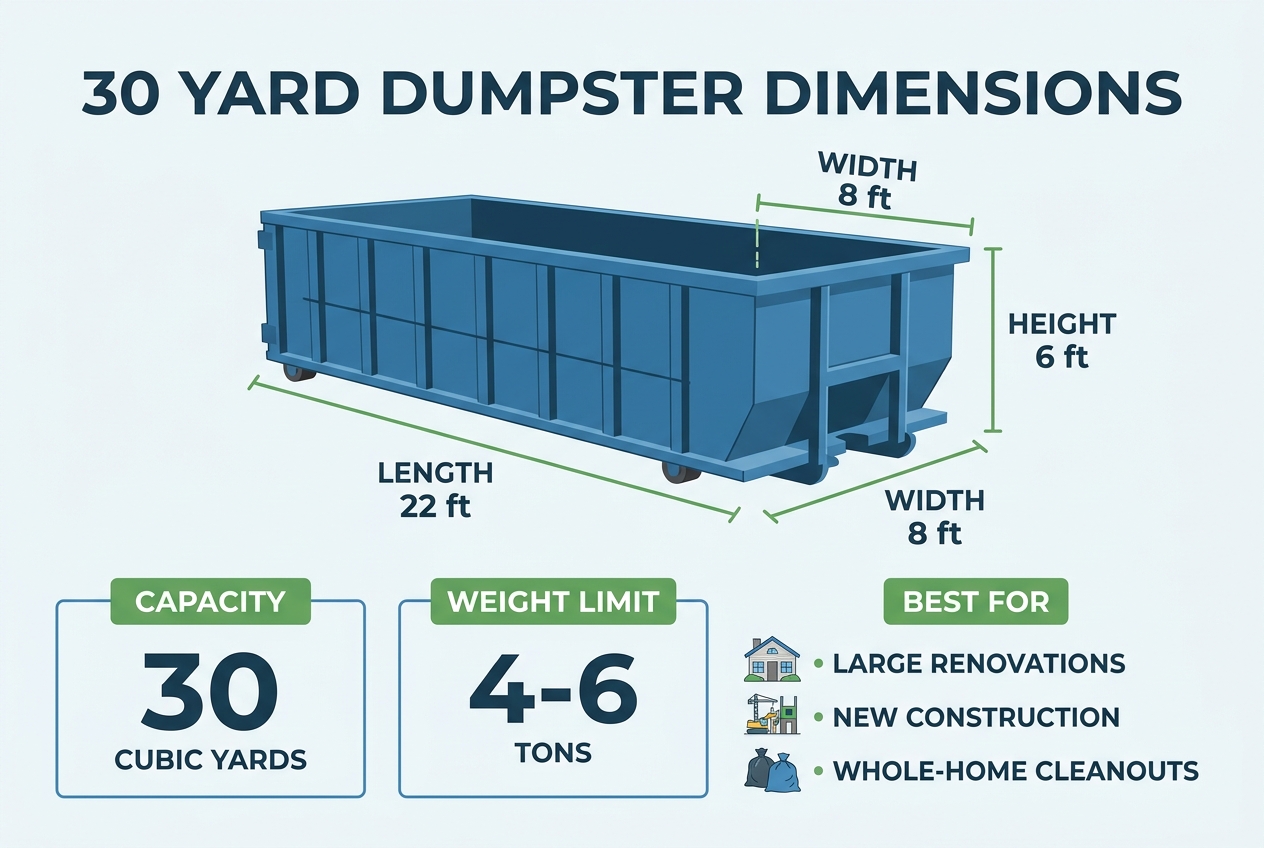
A standard 30 yard dumpster measures about 22 feet long, 8 feet wide, and 6 feet tall. These numbers can shift slightly by manufacturer, so check exact roll off dumpster dimensions before you finalize a booking. The tall sides make this bin best suited for bulky, low-density debris rather than dense fill.
Typical Weight Limits and Load Capacity
Most 30 yard containers hold between 4 and 6 tons, depending on local rules and the hauler’s equipment. Never load past the fill line marked on the container walls. Overfilled bins cannot be hauled safely and often trigger extra fees. The table below breaks down key specs at a glance.
| Spec | Typical Measurement | Notes |
|---|---|---|
| Length | 22 ft | Requires a long, clear driveway space |
| Width | 8 ft | Standard driveway width usually fits |
| Height | 6 ft | Fill line sits below the top edge |
| Weight Limit | 4-6 tons | Varies by hauler and debris type |
Door and Access Configurations
Many 30 yard units include a swing-open door on one end. This door makes loading heavy or wide items much easier than lifting over the side wall. For a broader comparison of door styles and bin sizes, review a full dumpster sizes guide before you rent. Confirm door access with your provider ahead of delivery day.
What a 30 Yard Dumpster Can Hold
Estimated Truckloads and Bag Equivalents
A 30 yard dumpster holds roughly nine to twelve standard pickup truckloads of debris. That translates into about 150 to 200 large trash bags, depending on how compact the material is. Thinking in truckloads or bags helps you picture the space before delivery day arrives.
For a whole-house cleanout or major renovation, this size often replaces multiple trips to the landfill. Instead of hauling loose debris in a truck bed, you load everything once and schedule a pickup. It saves time, fuel, and physical effort on larger projects.
Common Materials It Accommodates
This container handles bulky household items like furniture, mattresses, appliances, and cabinetry. It also manages construction debris such as lumber, drywall, siding, and roofing shingles from mid-size jobs. A full kitchen remodel or a two-story demolition often fits comfortably within these limits.
Many local businesses also use this size for office cleanouts, warehouse purges, or retail renovations. If your project involves heavier material like concrete or dirt, check weight limits first. Density matters more than volume here.
Signs Your Debris Exceeds This Size
If debris piles above the fill line or won’t fit with the doors closed, you’ve reached capacity. Multiple room demolitions or full roof tear-offs sometimes require more space. In those cases, a 40 yard dumpster rental offers extra room.
Best Projects for a 30 Yard Dumpster
Home Renovations and Additions
A 30 yard roll off dumpster works well for big residential jobs. Full kitchen remodels, whole-house additions, and multi-room renovations create more debris than smaller bins can handle. This size keeps homeowners from ordering a second container mid-project.
Commercial Cleanouts and Demolitions
Many local businesses choose this size for office cleanouts, retail buildouts, and small building teardowns. It fits jobs that produce steady volumes of mixed waste over several days.
- Office cleanouts involving old furniture, ceiling tiles, and outdated flooring removed during a remodel.
- Retail buildouts that generate fixtures, drywall, and packaging waste from new store setups.
- Small structure demolitions, like garages or sheds, that produce heavy mixed debris.
- Warehouse decluttering projects clearing pallets, shelving, and damaged inventory.
- Restaurant renovations removing old cabinetry, equipment crates, and flooring materials.
Roofing and Large Construction Jobs
This size also suits heavy construction work. Full roof tear-offs on large homes, new home builds, and multi-phase remodeling jobs all fit this scale. The container matches the size of the job, not just the type of work.
Comparing Roll-Off Dumpster Sizes
Picking the right container gets easier once you see the whole lineup side by side. This roll off dumpster rental guide comparison shows how capacity, length, and best-use cases shift as sizes grow.
10, 15, and 20 Yard Containers
Smaller dumpsters suit tighter spaces and smaller cleanouts. A 10 yard box handles a garage cleanout. A 15 yard fits a small bathroom remodel. A 20 yard covers larger flooring or roofing jobs. Each step up adds length and height, not just volume.
30 Yard vs 40 Yard Containers
The 30 yard container sits in the middle of the large-dumpster range. It offers strong capacity without demanding as much driveway space as a 40 yard unit.
| Size | Length | Width | Height | Best For |
|---|---|---|---|---|
| 10 Yard | 12 ft | 8 ft | 3.5 ft | Small cleanouts |
| 15 Yard | 16 ft | 8 ft | 4 ft | Bathroom remodels |
| 20 Yard | 16 ft | 8 ft | 5.5 ft | Flooring, roofing |
| 30 Yard | 22 ft | 8 ft | 6 ft | Home additions, large debris jobs |
| 40 Yard | 22 ft | 8 ft | 8 ft | Commercial builds, major demolition |
Choosing Between Adjacent Sizes
When two sizes seem close, think about weight limits and space, not just volume. A 30 yard fits most driveways, while a 40 yard needs extra clearance. Many local businesses choose 30 yard containers for this balance.
How to Choose the Right Dumpster Size for Your Project
Type and Density of Debris
Weight matters as much as size. Heavy materials like concrete, dirt, or shingles fill weight limits fast, even in a large bin. Lighter debris, like furniture or drywall, fills space before it fills weight capacity. Knowing your debris type helps you avoid overage fees.
Estimating Total Project Volume
Before booking, estimate how much debris your project will actually produce. A dumpster size calculator can help you convert room counts or square footage into cubic yards. This step prevents the common mistake of ordering too small a bin and needing a second haul.
Space Constraints at Your Property
A 30-Yard Roll-Off Dumpster needs a long, level surface for safe placement. Measure your driveway or curb space before delivery day. Use this checklist to confirm you’re picking the right size:
- Check overhead clearance for trees, power lines, or awnings near the drop zone.
- Confirm your driveway or lot has enough length and width for the container and truck.
- Calculate the estimated weight of your debris, not just its volume.
- Ask about permit requirements if the bin will sit on a street or public right-of-way.
- Plan for loading access, since front-load doors matter for heavy or bulky items.
Working through this list keeps your rental efficient and avoids surprise costs.
Preparing Your Property for Delivery
Choosing a Level, Accessible Location
A 30 yard dumpster is long and heavy. It needs a flat, firm surface to sit safely. Concrete driveways work best. Grass or gravel can shift under the weight, especially after rain.
Measure the space before booking. The truck needs about 60 feet of straight clearance to maneuver and drop the container. Leave extra room on each side for loading. Think about daily traffic too. Placing the box too close to a garage door or walkway can block normal activity for the whole rental period.
Permit Requirements for Street Placement
Driveway space isn’t always available. Street placement is common for tight lots or busy job sites. Most cities require a permit for this. Rules vary by neighborhood, so check local codes before delivery day.
A permit usually covers reflective markers, lighting, and a set rental window. Skipping this step can lead to fines or a forced relocation.
Clearing Space and Overhead Obstructions
Overhead clearance matters as much as ground space. Low tree branches, power lines, and roof eaves can interfere with delivery. A loaded truck needs about 22 feet of vertical clearance to tilt the dumpster into place.
Clear the drop zone of vehicles, toys, and loose debris beforehand. Mark sprinkler heads or septic lids so drivers avoid them. Good prep also helps control the final bill. Reviewing dumpster rental cost shows how delays or repositioning fees can add up when a site isn’t ready.
Loading and Servicing Your Dumpster Safely
Even Distribution and Fill-Line Rules
Loading a 30 yard container the right way keeps it safe to haul. Spread debris evenly across the floor first. Heavy items like concrete or shingles should go in low and flat, not piled on one side. This even weight distribution prevents tipping during transport and keeps the truck’s axles balanced.
Never fill material above the marked fill line, usually level with the container walls. Overfilled loads can shift on the road and become a hazard. Most companies also enforce weight limits, often between 4 and 6 tons for a 30 yard box. Staying within the fill line and weight limit avoids extra fees and keeps the pickup process quick and simple.
Prohibited and Restricted Materials
Certain items never belong in a roll-off container. Tires, batteries, paint, solvents, and refrigerants require special handling. Many local businesses also ask before tossing electronics or appliances with freon, since these often need separate disposal. Checking the rules early saves time and money on any 30 Yard Roll-Off Dumpster Rental.
Mixing prohibited waste with regular debris can trigger contamination fees or a delayed pickup. It’s smart to keep a short list posted near the container. This simple habit protects workers and keeps the whole disposal process compliant.
Scheduling Pickup and Swap-Outs
Plan pickup dates before the container fills completely. A quick call for a swap-out keeps larger projects moving without downtime. Providers offering dumpster rentals los angeles san fernando valley often allow flexible scheduling for busy job sites.
Booking early, especially during peak renovation season, helps avoid delays. Clear access to the container also speeds up the exchange. This kind of proactive scheduling keeps demolition and cleanup work on track.
Cost Factors for Renting a 30 Yard Dumpster
Rental Duration and Flat-Rate Pricing
Most providers offer a flat-rate price that covers delivery, pickup, and a set rental period. A typical window runs 7 to 10 days. Renting longer usually adds a daily fee. If your project is smaller, comparing a 20 yard dumpster rental can help you decide if you actually need the larger size.
Overage and Weight Surcharges
Weight limits matter. Most 30 yard dumpsters include a set ton allowance, often 4 to 6 tons. Going over that limit adds cost per extra ton. Heavy debris like concrete or shingles fills the weight limit fast, even if the container looks half empty.
| Cost Factor | Typical Range | Notes |
|---|---|---|
| Flat-rate rental | $400–$700 | Includes delivery and pickup |
| Extra rental days | $5–$15/day | Charged after the included period |
| Overweight fee | $50–$100/ton | Applied past the weight allowance |
| Prohibited item fee | Varies | For tires, batteries, or hazardous waste |
Regional Pricing Differences
Local dump fees, permits, and demand all shift pricing. Always ask for a full quote before booking, so hidden fees don’t surprise you later.
Frequently Asked Questions About 30 Yard Dumpsters
How Long Can I Keep the Dumpster?
Most rental periods run 7 to 14 days, though timelines vary by provider. Longer projects can often extend the rental for a daily fee. If your job is smaller, a 15 yard dumpster rental may offer a shorter, cheaper turnaround. Always confirm the included rental window before signing, since extra days can add up quickly on bigger cleanouts.
Can It Fit in a Driveway?
A 30 yard dumpster is large, so placement needs planning. Most standard driveways can hold one, but a few details matter most.
- The container needs about 60 feet of straight clearance for the delivery truck to back in safely.
- Overhead space should be clear of low branches, wires, or awnings that could block the lift arm.
- Ground surface should be flat and solid, since soft soil or gravel can cause tipping or sinking.
- Nearby vehicles, fences, or garden beds should be moved to avoid scrapes during placement.
- Permits may be required if the dumpster sits on a public street instead of private property.
What Happens If I Overfill It?
Every dumpster has a fill line marked below the rim. Loading debris above this line, called overfilling, is unsafe for transport. Drivers cannot legally haul a container with material spilling over the edges. You may be asked to remove excess debris, or the pickup could be delayed until the load meets safety limits.
Now that the numbers are clear — roughly 22 feet long, 8 feet wide, and about 6 feet tall, give or take by manufacturer — the next step is measuring your own driveway or work area and picturing the container sitting in it, with enough clearance overhead and enough room for the truck to back in and tilt the box off. It also helps to think honestly about your debris: if a 30 yard feels like more than you need, a 15 yard dumpster rental from Green Star Roll Off covers smaller cleanouts in a footprint that fits most residential driveways. Either way, knowing the dimensions before delivery day is what keeps the whole thing simple.