

Getting a quote for a roll-off container can feel like a guessing game, with prices swinging wildly between companies for what seems like the same service. That uncertainty makes it hard to budget for a home cleanout, renovation, or construction project without wondering if you’re overpaying. This guide breaks down exactly what drives dumpster rental cost in 2026, from container size and rental duration to hidden fees and regional pricing differences. Read it, and you can request a quote with confidence and skip the costly surprises.
Understanding Dumpster Rental Cost in Los Angeles
Typical Price Range by Rental Type
Most Los Angeles renters pay between $350 and $650 for a standard week-long rental. Smaller bins for garage cleanouts sit near the low end. Larger units for construction debris or roofing jobs push toward the higher end. Understanding dumpster rental cost starts with knowing this baseline range before adding extras.
Residential projects, like decluttering or small remodels, usually cost less than commercial jobs. Commercial and construction rentals often involve heavier debris, longer rental periods, and multiple pickups. That pushes the final price beyond the typical residential range.
Los Angeles vs. National Averages
Nationally, dumpster rentals average $300 to $500 per week. Los Angeles prices run slightly higher due to landfill fees, permit costs, and fuel expenses tied to city traffic and distance to disposal sites.
Many local businesses also face stricter rules for debris sorting and disposal, which can add small surcharges. Reviewing a dumpster sizes guide helps renters compare options and skip paying for space they don’t need.
What’s Included in a Standard Quote
A typical quote covers delivery, pickup, and a set rental period, usually seven to ten days. It also includes a weight allowance, often between one and three tons depending on size.
Extra charges may apply for overweight loads or extended rental time. Knowing what’s included helps renters plan realistic budgets from the start.
Dumpster Sizes and What They Cost
10, 15, and 20-Yard Dumpsters
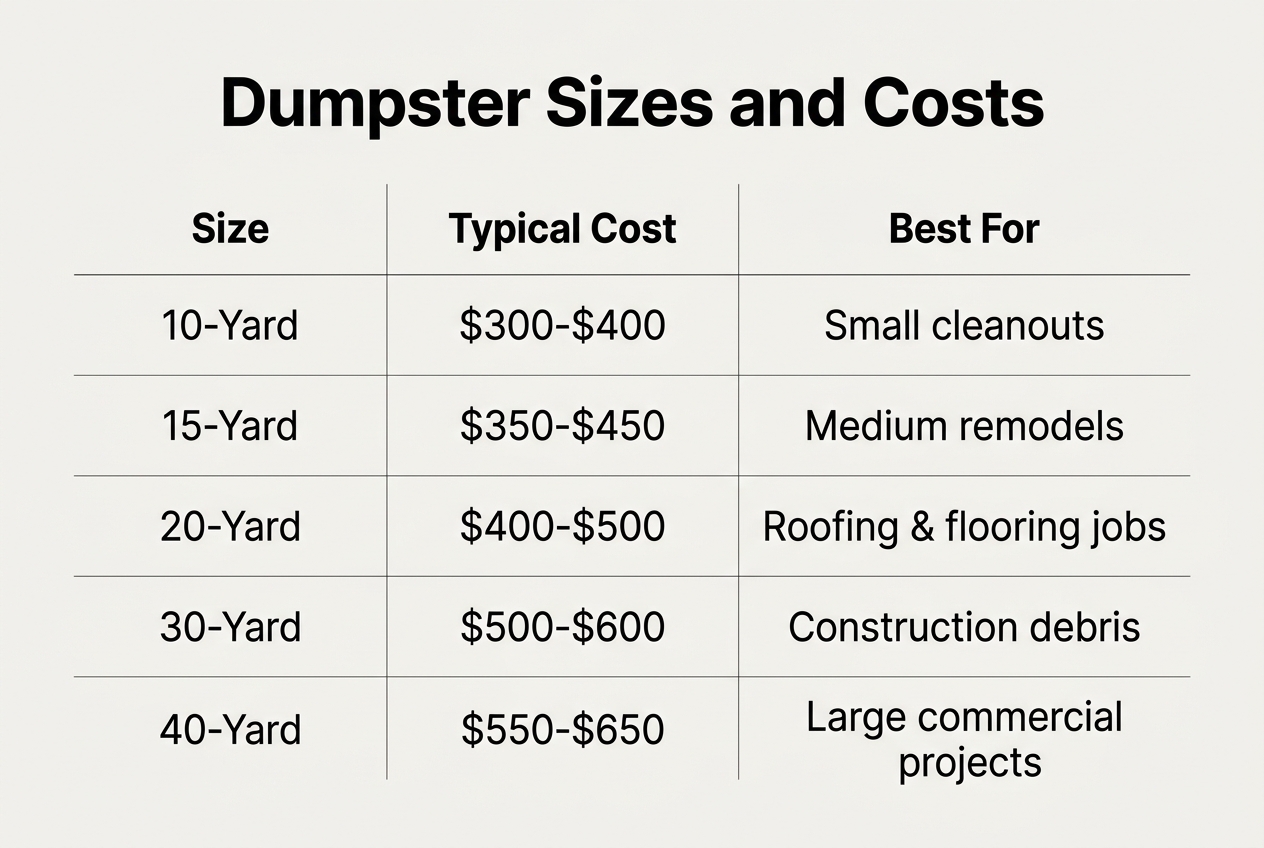
Small and mid-size dumpsters cover most home projects. A 10-yard dumpster usually runs $300 to $450 and suits garage cleanouts or small bathroom remodels. A 15-yard bin costs $350 to $500, good for medium renovations. A 20-yard dumpster runs $400 to $550 and handles larger cleanouts or flooring jobs. Many local businesses also rent these for office cleanups.
30 and 40-Yard Dumpsters
Bigger projects need bigger containers. A 30-yard dumpster costs $450 to $650 and fits full home renovations. For major construction or demolition debris, a 40 yard dumpster rental typically costs $500 to $750.
Weight Limits and Overage Charges
Every size has a weight limit. Go over it, and extra fees kick in per ton.
| Size | Typical Cost | Weight Limit |
|---|---|---|
| 10 Yard | $300–$450 | 1–2 tons |
| 20 Yard | $400–$550 | 3 tons |
| 30 Yard | $450–$650 | 4 tons |
| 40 Yard | $500–$750 | 5–6 tons |
Overage fees usually range from $50 to $100 per extra ton. Always ask about limits before loading heavy materials.
Finding the Right Size for Your Project
Estimating Your Debris Volume
Start by measuring the space your debris fills, not the size of the room or yard. A single bathroom remodel might fill 4 cubic yards, while a whole-house cleanout can top 30. Think in truckloads: one pickup truck bed roughly equals 3 cubic yards of waste. That comparison helps you picture volume before you order.
A dumpster size calculator makes this easier by turning project details into a clear yard estimate. It also stops you from guessing based on weight alone, since bulky items like furniture take up space without weighing much.
Signs You Need a Bigger Container
Overloaded dumpsters are the most common sizing mistake. If debris rises above the fill line, or bulky items like couches won’t lie flat, you likely need a bigger bin. Many local businesses underestimate demolition debris, which is heavier and bulkier than routine trash.
Multiple loads within one week is another warning sign. It usually costs less to size up front than to pay for a second haul-away.
Renting Small to Save Money
Sizing down works only when debris is light and predictable, like yard waste or small cleanouts. Choosing the smallest option that reasonably fits your project keeps you from paying for unused space. Just leave room for surprises, since underestimating often costs more than starting one size larger.
Dumpsters for Every Type of Job
Residential Cleanouts and Renovations
Homeowners usually need a dumpster for shorter jobs. A garage cleanout, attic purge, or kitchen remodel often fits in a 10 or 15-yard container. These projects typically run three to seven days, since most homeowners work on evenings and weekends.
A residential dumpster rental usually handles mixed debris. That means furniture, drywall, old carpet, and general household junk together. Weight limits matter here, since heavier materials like tile or concrete can push a load over its cap fast, adding surprise charges.
Commercial and Business Projects
Businesses often need dumpsters for longer stretches. Office cleanouts, retail remodels, and restaurant renovations can stretch across several weeks. Many local businesses schedule regular pickups instead of a single haul, keeping worksites clear during ongoing operations.
Commercial debris tends to be heavier and more uniform, like drywall scraps, old fixtures, or packaging waste. A 20 or 30-yard container usually fits these needs better than smaller sizes built for household jobs.
Construction and Demolition Debris
Construction sites generate the heaviest, bulkiest waste of any project type. Concrete, lumber, roofing shingles, and metal framing add up fast, often requiring 30 or 40-yard dumpsters. Larger builds may need multiple swaps during a single project.
Demolition debris often gets billed differently than mixed waste, since it’s heavier per yard. Costs can vary widely by region, too. Matching the container to the material keeps demolition jobs on schedule and on budget.
Factors That Affect Your Total Cost
Location and Delivery Distance
Where you live changes your price. Trucks travel farther for some jobs, and that adds fuel costs. Permit rules also differ by city. If your dumpster sits on a street or public curb, you may need a permit. Some cities charge extra fees or require inspections before drop-off. For example, renting a dumpster rental studio city project may involve different permit steps than a rental in a nearby suburb.
Rental Duration and Extension Fees
Most rentals include a set number of days, often 7 to 10. Keeping the dumpster longer usually adds a daily fee. Planning your timeline helps you avoid surprise extension charges.
Debris Type and Weight
Weight limits matter a lot. Heavier debris raises your final bill fast. Several factors shape the total price you pay:
- Construction debris like concrete or brick weighs far more than household junk.
- Yard waste can be bulky but light, keeping costs lower per load.
- Mixed loads with furniture and appliances may need special handling fees.
- Overloading the bin past the weight limit triggers extra charges per ton.
- Hazardous materials, like paint or batteries, often require separate disposal methods.
Knowing your debris type before booking helps you choose the right size and skip overage fees.
Hidden Fees to Watch For
Overage and Overweight Charges
Many quotes look simple until extra charges appear. The most common surprise fee is overweight tonnage. Most rentals include a weight limit, often two tons. Heavy materials like concrete or shingles push past that limit fast, adding cost per extra ton. Overfilling the bin above the fill line can trigger a similar charge.
Swap-Out and Extended Rental Fees
Long projects often need a swap-out, where a full dumpster gets emptied and returned. This service usually costs extra beyond the base rental. Keeping a dumpster longer than the agreed rental period adds daily fees too. Ask about these terms before signing, especially for multi-week jobs.
The table below compares common add-on fees so you know what to expect.
| Fee Type | Typical Trigger | Average Cost |
|---|---|---|
| Overweight Charge | Exceeding included tonnage | $50–$100 per ton |
| Overfill Fee | Trash above fill line | $75–$150 flat |
| Swap-Out Fee | Mid-project dumpster exchange | $75–$200 |
| Extended Rental | Extra days beyond term | $10–$25 per day |
Flat-Rate vs. Variable-Rate Pricing
Flat-rate pricing bundles delivery, pickup, and disposal into one price. Variable-rate pricing charges separately for each part, which can raise the total unexpectedly. A 20 yard dumpster rental quoted as flat-rate is easier to budget for.

How to Get the Best Value on Your Rental
Best Times of Year to Rent
Timing affects price more than most renters realize. Spring and summer bring heavy demand for cleanouts and remodels, so rates climb and trucks book up fast. Late fall and winter tend to be slower months. Schedule then, and you often get lower prices and easier availability.
If your project has flexible dates, ask about weekday drop-offs instead of weekends. Many local businesses rent Monday through Thursday for better rates. Planning even two weeks ahead also helps you dodge rush fees tied to last-minute requests.
Requesting an Upfront, All-In Quote
Always ask for a quote that bundles delivery, pickup, and disposal into one number. A provider offering a 15 yard dumpster rental should state the flat rate clearly before drop-off. This stops surprise charges once the job wraps up.
Compare at least two or three quotes side by side. Look at weight limits, rental days included, and what counts as extra. A slightly higher price with generous limits often saves money overall.
Avoiding Unnecessary Add-Ons
Skip extras you don’t need, like extended rental periods or premium placement services. Stick to the essentials, and your final bill stays predictable.
Dumpster Rental vs. Junk Removal: Which Costs Less?
Renting a dumpster and hiring a junk removal crew solve similar problems, but the pricing works differently. A dumpster rental charges a flat rate for days and weight, while junk removal bills for labor and volume hauled.
Cost Comparison at a Glance
| Option | Typical Cost | Best For |
|---|---|---|
| Small dumpster | $300–$450 | Weeklong DIY cleanouts |
| Large dumpster | $450–$700 | Renovations, roofing debris |
| Junk removal (small load) | $150–$300 | One-time pickups |
| Junk removal (full house) | $600–$1,200 | Estate cleanouts, no labor wanted |
Pros and Cons of Each Option
DIY hauling with a rented bin saves money on longer projects. A 10 yard dumpster rental often costs less than three separate junk hauls. Professional junk removal wins when time matters more than price, since crews load everything for you.
Which Option Fits Your Project
Choose a dumpster for ongoing debris over several days. Choose junk removal for single, fast pickups.
What to Know Before You Rent a Dumpster
Where to Place the Dumpster
Placement matters more than most renters expect. A flat, hard surface like a driveway works best for stability and easy delivery. Grass and dirt can lead to sinking or ruts, especially after rain. Many providers recommend plywood boards under the wheels to protect asphalt or concrete from scratches and stains.
Do You Need a Permit
Permit rules depend entirely on where the dumpster sits. Driveway placement usually needs no paperwork since it’s private property. Street placement is different, since it involves public space and city oversight. Before booking, review these common permit basics:
- Driveway or private property placement typically requires no city permit at all.
- Street or curbside placement almost always requires a local permit before delivery.
- Permit approval can take anywhere from one day to over a week, depending on the city.
- Some cities require reflective markers or cones around street-placed dumpsters for safety.
- Homeowners associations may have their own placement rules separate from city codes.
Knowing what’s allowed also affects what you load. Checking what can you throw in a dumpster ahead of time helps you avoid rejected pickups.
How Long You Can Keep It
Most rentals run for 7 to 10 days as a standard window. Shorter cleanouts may only need a weekend, while renovations often stretch longer. Extending the rental period is usually possible for a daily fee, so ask about extension rates before your project begins.
What You Can and Cannot Throw Away
Commonly Accepted Materials
Most dumpsters accept everyday debris like wood, drywall, furniture, carpet, and general household junk. Construction dumpsters handle shingles, siding, and scrap lumber. Roll-off bins used for cleanouts typically take boxes, appliances without freon, and old mattresses. Knowing what fits your load type helps you avoid delays on pickup day.
If you’re clearing out a home before a big move, a moving dumpster rental can handle boxes, packing materials, and unwanted furniture in one haul. This keeps your moving day organized and your driveway clear of scattered piles.
Prohibited and Hazardous Items
Certain materials are banned from every dumpster, regardless of size. Paint cans, motor oil, tires, batteries, and propane tanks count as hazardous waste. Asbestos, medical waste, and refrigerants also fall outside standard acceptance rules.
These restrictions exist for safety and environmental reasons. Landfills enforce strict rules, and providers face fines for violations. Always ask before tossing anything questionable, especially chemicals, electronics, or fluorescent bulbs.
Special Rules for Mixed Debris
Mixing prohibited items with regular debris often triggers extra charges. A single paint can hidden in drywall scraps can add $50 to $150 in sorting fees. Overweight loads from mixed concrete or dirt also cost more, since disposal sites price by weight and material type.
Many local businesses avoid these fees by separating heavy debris, like brick or asphalt, into dedicated bins. This keeps costs predictable and stops surprise charges on your final invoice.
Dumpster Rental Cost FAQs
Is It Cheaper to Haul Debris Yourself
Renting a truck and hauling debris yourself looks cheap at first glance. But the real costs add up fast. Truck rental, fuel, dump fees, and your own time all count. A single trip to the landfill can cost $50 to $100 in fees alone, and most projects need several trips.
A roll off dumpster often beats self-hauling once you tally these hidden expenses. You pay one flat price and skip the repeated trips. For larger jobs like a full remodel, a 30 yard roll off dumpster can handle everything in one drop-off, saving hours of labor and gas money.
How Long Can I Keep a Rental Dumpster
Most rental periods run 7 to 10 days as a standard window. This timeframe covers typical cleanouts, renovations, and small construction jobs without extra charges. Need more time? Many providers offer daily extension rates, usually $5 to $15 per extra day.
Permits matter too. Street placement often requires a city permit, especially in busy Los Angeles neighborhoods. Driveway placement usually skips that step. Always confirm rental duration and permit rules before delivery to avoid surprise fees or delays on your project timeline.
Can I Get Same-Day Delivery Pricing
Yes, same-day delivery is available in many areas, though pricing can shift slightly based on demand and scheduling. Morning calls have the best chance of same-day placement, since routes fill up as the day progresses.
Same-day service rarely costs more than standard scheduling. Many local businesses and homeowners rely on this option for urgent cleanups or unexpected job site needs. Confirm availability by phone, since same-day slots depend on your zip code and current truck routes.
If you’re planning a project in Los Angeles or the San Fernando Valley and want a clear idea of what to expect cost-wise, the team at Green Star Roll Off is a great place to start. They offer same-day rentals with competitive pricing, whether you’re tackling a home cleanout, a commercial job, or a construction site. Reach out to book your dumpster and get an upfront quote tailored to your project.