
Ordering a dumpster that’s too small means costly extra hauls, while going too big means overpaying for space you’ll never fill—and with rental rates climbing in 2026, that guesswork gets expensive fast. Understanding roll off dumpster sizes is the difference between a smooth cleanup and a budget-busting headache, whether you’re clearing out a garage or managing a full home renovation. Green Star Roll Off breaks down every container option available today, matching real project types to the right yardage so you order once and get it right.
Understanding Roll Off Dumpsters
What Makes a Dumpster ‘Roll Off’
A roll off dumpster gets its name from how it moves. A special truck tilts the container, rolls it off the bed, and sets it down on rails. A front load bin works differently. It stays fixed at a business and gets emptied on a set schedule by a truck with forks. Roll off units, by contrast, are open-top boxes made for short-term use and heavy debris.
Front load bins suit steady, ongoing waste, like restaurant trash. Roll off boxes suit one-time jobs, like a renovation or a garage cleanout. Knowing basic roll off dumpster dimensions helps you picture how a box will fit in your driveway or lot before it ever shows up.
Common Situations That Call for One
Homeowners often rent a roll off for kitchen remodels, roof tear-offs, or yard cleanups. Contractors go bigger for framing scraps, drywall, and concrete. Plenty of local businesses order one during office renovations or seasonal decluttering, too. Each job calls for a different box, and checking 30 yard dumpster dimensions can help larger projects plan space needs ahead of time.
Delivery is straightforward. A driver brings the empty container on a flatbed truck, rolls it off at a marked spot, and levels it. You fill it at your own pace within the rental period. When you’re done, one call schedules pickup, and the same truck hauls the loaded box away for disposal or recycling.
Roll Off Dumpster Sizes Explained
Roll off dumpsters typically range from 10 to 40 cubic yards. That covers small cleanouts, mid-size remodels, and full construction demolitions. Choosing the right one starts with understanding how size actually gets measured. For a broader breakdown of options, this roll off dumpster rental guide covers the full lineup in more detail.
How Dumpster Yardage Is Measured
A cubic yard is a space 3 feet long, 3 feet wide, and 3 feet tall. Dumpster “yardage” tells you total volume, not weight. A 10 yard container holds about 10 cubic yards of debris—roughly three pickup truck loads. Knowing this helps you match container size to your actual debris, not just a guess.
Typical Dimensions by Container Type
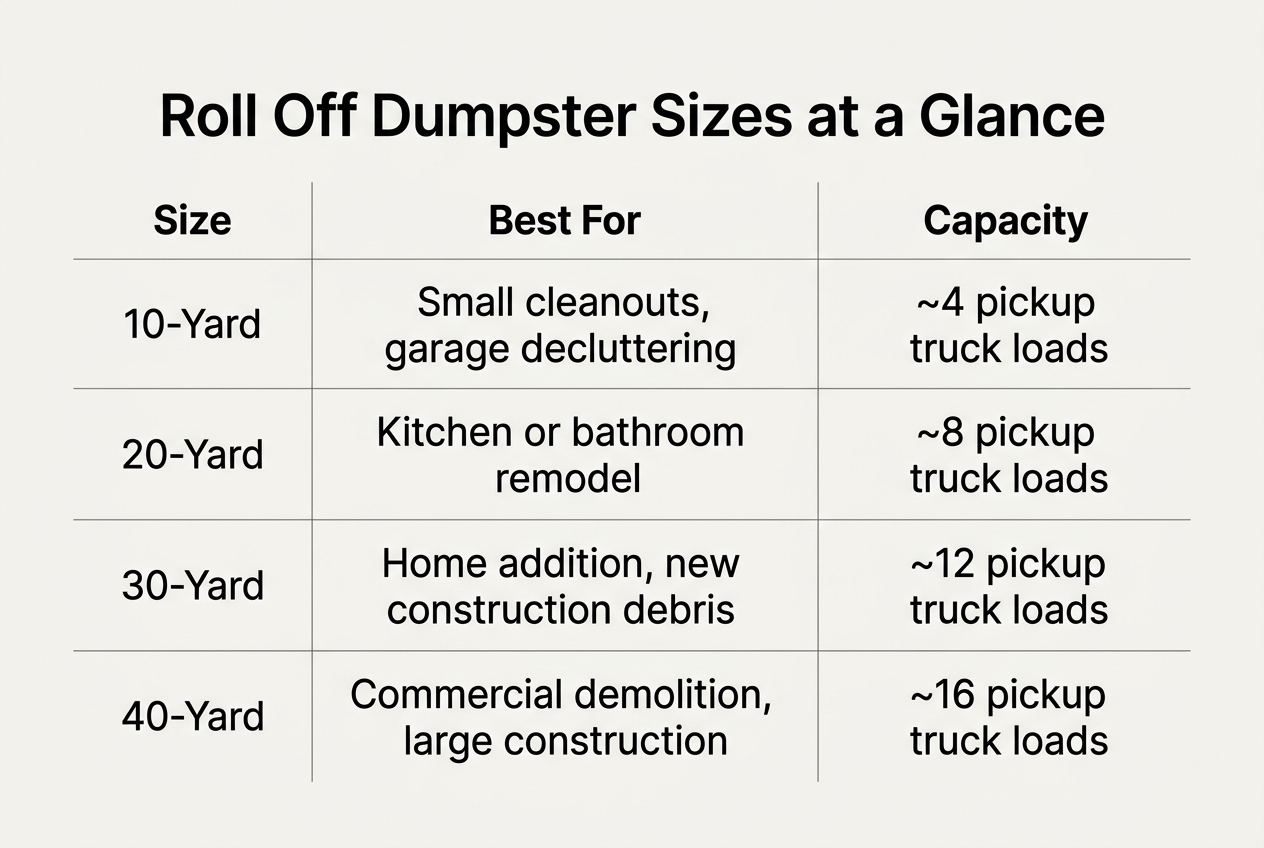
Length, width, and height all vary by size class. The table below shows the common specs used across the industry. For exact measurements on a popular mid-size option, check these 20 yard dumpster dimensions.
| Size | Length x Width x Height | Best For |
|---|---|---|
| 10 Yard | 14 ft x 8 ft x 3.5 ft | Small cleanouts, garage projects |
| 20 Yard | 22 ft x 8 ft x 4.5 ft | Renovations, roofing jobs |
| 30 Yard | 22 ft x 8 ft x 6 ft | Home additions, major cleanouts |
| 40 Yard | 22 ft x 8 ft x 8 ft | New construction, large demolition |
Small Roll Off Containers for Compact Jobs
10 Yard Container Uses
A 10 yard dumpster is the smallest roll off option most providers offer. It holds about three pickup truck loads of debris. This size works well for garage cleanouts, small bathroom remodels, and yard debris removal after trimming trees or clearing brush.
Weight limits matter here. Most 10 yard containers cap out around 2 to 3 tons, depending on the hauler. Heavy materials like concrete or dirt can hit that limit fast, even if the bin still looks half empty. Access matters too. Even these smaller containers need 60 feet of straight clearance for the delivery truck, plus a flat surface to sit on. Tight driveways or narrow alleys can make that tricky.
12 and 15 Yard Container Differences
The 12 yard and 15 yard sizes sit between small and mid-size categories. A 12 yard container suits medium cleanouts, carpet removal, or small deck teardowns. A 15 yard model offers roughly 50% more capacity, making it a better fit for kitchen remodels or multi-room decluttering.
Both sizes share similar dimensions—usually around 14 feet long and 3 to 4 feet high—so the real difference comes down to depth and volume. Weight allowances typically run 2 to 4 tons. Larger projects, though, may outgrow these options entirely, which is where a 30 yard roll off dumpster becomes worth considering.
Mid-Size and Large Containers for Bigger Projects
20 Yard Container Applications
A 20 yard dumpster works well for mid-sized renovations. It handles roofing tear-offs, flooring removal, and garage cleanouts. This size holds about 4 pickup truck loads of debris. Most homeowners find it strikes a balance between capacity and easy placement in a driveway.
Roofing crews often prefer this container because shingles are heavy. A 20 yard unit keeps weight limits manageable while still fitting large volumes of torn-off material.
30 and 40 Yard Container Applications
Larger projects need more room. The table below compares 20, 30, and 40 yard units side by side.
| Size | Best For | Approx. Capacity | Space Needed |
|---|---|---|---|
| 20 Yard | Roofing, mid-size remodels | 4 truck loads | 20 ft x 8 ft |
| 30 Yard | New construction, additions | 6 truck loads | 22 ft x 8 ft |
| 40 Yard | Large commercial builds | 8 truck loads | 22 ft x 8 ft, taller clearance |
Check the 40 yard dumpster dimensions before booking. These units run tall and long, so overhead wires and tight driveways can become a problem. New construction sites often choose 30 or 40 yard containers because framing scraps and drywall pile up fast.
How to Choose the Right Size for Your Project
Estimating Your Debris Volume
Start by picturing your debris in cubic yards. A single-room cleanout fills far less space than a full home remodel. Walk through your project and note what will get thrown away. Estimating waste before booking helps you avoid renting too small or too large a container.
Matching Container Size to Project Type
Different jobs create different debris types, and that changes your choice. Consider these common scenarios before deciding:
- A garage cleanout usually needs a smaller container since items are bulky but not heavy.
- A kitchen remodel often produces cabinets, tile, and drywall that fill space quickly.
- A full roof tear-off adds significant weight, even in a modest amount of space.
- A landscaping project generates dirt and yard waste that gets heavy fast.
- A large construction job may need multiple containers or a bigger size to handle mixed debris.
Avoiding Overage and Weight Fees
Weight limits matter as much as volume. Overfilling a container, or going past its weight allowance, can trigger extra charges. Reviewing dumpster rental cost details beforehand helps you budget properly. When in doubt, ask a dedicated provider for guidance based on your debris type and estimated weight.
Commercial Dumpster Sizes for Businesses
1 to 3 Yard Commercial Options
Small commercial containers work well for offices and shops with steady but light waste output. These bins go by a different name—front-load dumpsters—instead of roll off units. The main difference is servicing frequency. Roll off containers get dropped off, filled once, then hauled away. Front-load bins stay on site and get emptied on a set schedule, sometimes several times a week.
4 to 8 Yard Commercial Options
Restaurants and retail stores often need more capacity due to packaging waste and food scraps. An 8 yard container can hold roughly the same debris as three pickup truck loads. Many local businesses choose scheduled pickups over one-time rentals because trash builds up daily, not just during a single project.
| Size | Typical Use | Service Frequency | Best For |
|---|---|---|---|
| 1 Yard | Small office trash | 1-2 times weekly | Small offices |
| 2 Yard | Retail packaging waste | 2-3 times weekly | Boutiques, salons |
| 4 Yard | Restaurant food waste | 3-5 times weekly | Cafes, diners |
| 8 Yard | High-volume waste | Daily or near-daily | Large restaurants, plazas |
Comparing these smaller bins to larger equipment can help clarify which option fits a growing business. For a closer look at mid-size specs, reviewing 15 yard dumpster dimensions shows how commercial needs scale upward.
Residential Trash Cart Sizes
32 and 64 Gallon Carts
Small trash carts handle everyday household waste. The 32 gallon cart fits homes with light weekly output, like single renters or small families. The 64 gallon cart suits mid-size households with more regular trash and recycling needs. Neither cart is built for renovation debris, yard clearing, or bulky furniture. For that kind of project waste, a temporary container is the better fit. Our dumpster sizes guide breaks down which container matches which job.
96 Gallon Carts for Larger Households
The 96 gallon cart works best for larger families or homes generating steady trash volume each week. It’s also common for households running a home business with extra packaging waste. These carts follow scheduled municipal or contracted pickup, unlike a roll off unit that stays until the project ends. Key differences worth noting include:
- Trash carts are collected on a fixed weekly or biweekly schedule set by the hauler.
- Carts handle routine kitchen, bathroom, and yard waste, not construction debris.
- Overloading a cart lid can cause missed pickups or extra fees.
- Roll off containers stay on-site for days or weeks during active projects.
- Mixing project debris into a household cart often violates local waste rules.
- Choosing the right cart size reduces overflow between collection days.
Factors That Affect Pricing and Availability
What Drives Rental Costs
Several factors shape the final price of a rental. Container size matters most. A 10-yard box costs less than a 40-yard unit simply because it holds less debris. Weight limits affect price too. Most rentals include a set tonnage, and going over that limit adds extra fees per ton.
Rental duration plays a role as well. A weekend rental usually costs less than a two-week rental. Stretching your timeline often means paying a daily rate on top of the base price. Location matters, too, since fuel costs and local disposal fees vary by city and landfill distance.
Understanding these variables helps you budget correctly. Learning the full dumpster rental cost breakdown before booking prevents surprise charges. Ask for a detailed quote that lists size, weight allowance, and rental period upfront.
Same-Day and Fast Delivery Options
Many providers offer same-day delivery for urgent projects. This works best when you call early in the morning. Afternoon requests may need to wait until the next business day, depending on truck availability and route scheduling.
Fast delivery often costs slightly more during peak seasons like spring and early summer. Confirm placement space, size needs, and delivery windows before the truck arrives. Quick planning avoids delays and keeps your project on schedule.
Permits and Placement Rules
Placing a container on a driveway usually requires no permit. Street placement is different. Many cities require a permit before a dumpster sits on public roadway, and rules vary by municipality.
Processing can take a few days, so apply early. Always confirm local rules to avoid fines or delivery delays.
Tips for a Smooth Rental Experience
Preparing Your Property
A little prep work goes a long way before delivery day. Clear a flat, accessible spot with enough overhead clearance for the delivery truck. Measure the space and check for low branches, wires, or narrow gates. For larger units, like a 40 yard dumpster rental, extra room matters for safe placement and pickup.
- Mark the exact drop-off spot with cones or spray paint so the driver knows where to place the container.
- Remove vehicles, toys, or landscaping materials from the driveway or curb area.
- Lay down plywood boards on grass or asphalt to prevent dents or scratches.
- Check local permit rules if the container will sit on a public street.
- Confirm ground stability, since soft soil can cause the unit to sink or tilt.
Loading Best Practices
Efficient loading protects both your back and your budget. Place heavy debris low and flat items along the sides first. Break down bulky items to save space, and avoid tossing materials from a height. Fill evenly rather than piling waste above the rim, since overloaded bins often get rejected at pickup.
When your project wraps up, schedule pickup promptly. Give the provider at least a day’s notice, confirm the final weight estimate, and keep the loading zone clear for easy retrieval.
Frequently Asked Questions About Dumpster Sizing
Can I Switch Sizes Mid-Rental
Yes—most companies allow a size swap during an active rental. If you rented a smaller bin and realize your debris is piling up faster than planned, call the provider before the container gets overloaded. They can schedule a swap: dropping off a larger unit and hauling away the full one. This usually involves an extra trip fee, but it costs less than damaging the container or paying overage penalties.
Timing matters. Requesting a swap early in the project avoids delays. A homeowner clearing a garage, for example, might start with a 15-yard unit, then discover old furniture and appliances they forgot to count. Upgrading to a 20 yard dumpster rental mid-project is common for exactly this reason, especially on renovation or estate cleanout jobs.
It also helps to ask about rental length upfront. Most agreements run 7 to 10 days, and extending that window costs less than rushing to fill an undersized container. Planning ahead, even loosely, saves money and cuts down on last-minute scrambling.
What Happens If I Overfill a Container
Overfilling creates real problems. Drivers cannot legally haul a dumpster with debris piled above the fill line. If yours is overloaded, the crew may refuse pickup until you remove material—or charge a re-load fee to make it safe for transport.
Weight limits matter just as much as volume. Every size has a weight cap, often 2 to 6 tons depending on the container. Heavy materials like concrete, dirt, or shingles hit that limit fast, even in a half-full dumpster. Going over it triggers overage charges, sometimes $50 to $100 per extra ton.
To avoid surprises, ask your provider about weight limits and overage rates before booking. Spreading heavy debris evenly and skipping bulky, low-value items can keep you under budget and on schedule.
Before settling on an approach, it helps to be honest about how much you’re really clearing, who will be doing the lifting, and where the material has to end up. A crew that loads for you costs more but saves your weekend, while a container you fill yourself stretches further if you have willing hands and time — and anything unusual, from freon appliances to old paint or chemicals, needs its own path through a licensed facility rather than a general debris load. Ask about size, how long you can keep it, and what’s genuinely accepted, because those three answers tend to shape the cost far more than the sticker price does.