
Ordering the wrong size dumpster is a costly mistake. Pay for a 30-yard container that sits half-empty, or run out of room mid-project and need a second pickup you didn’t budget for. The problem almost always comes down to one overlooked detail: not fully understanding roll off dumpster dimensions before you book. Green Star Roll Off built this 2026 size guide to give you exact measurements, weight limits, and real-world capacity comparisons for every standard container, so you can match the right dumpster to your project the first time.
Roll Off Dumpster Dimensions Explained: Length, Width, and Height
How Cubic Yards Are Measured
A cubic yard is a space three feet long, three feet wide, and three feet tall. Dumpster capacity is just length times width times height, converted into that unit. A 20 yard container, for example, might measure 22 feet long, 7.5 feet wide, and 4.5 feet high. Multiply those out and you get roughly 20 cubic yards of usable space.
This math helps you picture volume, not just a size label. Two dumpsters listed as “20 yards” can still hold debris differently based on their shape. A longer, shallower box handles bulky items like furniture better than a short, deep one. Understanding this measurement lets you compare containers accurately before booking one for your project.
Standard Length and Width Ranges
Manufacturers build roll off dumpsters using different steel molds, so exact measurements vary by company. Most containers run 12 to 22 feet long and 7.5 to 8 feet wide. A 30 yard roll off dumpster typically measures about 22 feet long, matching a 20 yard unit but with taller side walls for extra depth.
These variations matter when planning delivery. Always confirm exact dimensions with your provider rather than assuming industry averages apply. A few extra inches in width can decide whether a container fits between a garage and a fence line safely.
Height Restrictions and Overhead Clearance
Container height typically runs 3.5 to 8 feet, depending on the size you pick. Taller units, like 40 yard boxes, need clear overhead space for delivery trucks lifting them into position. Check for low branches, power lines, or carport roofs before scheduling drop-off.
Homeowners tackling landscaping cleanup often choose a shorter yard waste dumpster that fits easily under trees. Measure your driveway’s clearance beforehand. It prevents delays and protects both the truck and your property during placement.
What Size Dumpster Do I Need?
Estimating Debris Volume
Start by picturing your debris in cubic yards. A single-room cleanout often fills 5 to 8 yards. A full garage teardown can hit 15 to 20 yards. A kitchen remodel with cabinets, flooring, and drywall usually needs 10 to 15 yards. Matching size to project type saves money and prevents mid-job surprises.
Measure your pile before you call. Estimate length, width, and height in feet, then convert to yards. If you’re unsure, a dumpster size calculator can turn rough measurements into a solid size recommendation in seconds.
Weight Limits by Material Type
Volume isn’t the only limit. Every container also has a weight cap, and dense materials fill that cap fast. Concrete, dirt, and roofing shingles are heavy even in small amounts. A half-full dumpster of shingles can already exceed its weight allowance.
Lighter debris, like furniture, cardboard, or drywall scraps, rarely hits the weight limit before the space fills up. For heavy jobs, a smaller container built for tough material, like a 15 Yard Dumpster Rental, often makes more sense than a larger box you can’t legally fill.
Common Sizing Mistakes to Avoid
Many renters guess too small to save money, then order a second container mid-project. Others guess too large and pay for wasted space. Both mistakes cost time and cash.
Mixed debris, like a renovation with wood, tile, and metal, confuses estimates further. When your project sits between two sizes, call for guidance. A quick conversation about material type and volume prevents costly overage fees later.
Roll Off Dumpster Sizes Compared
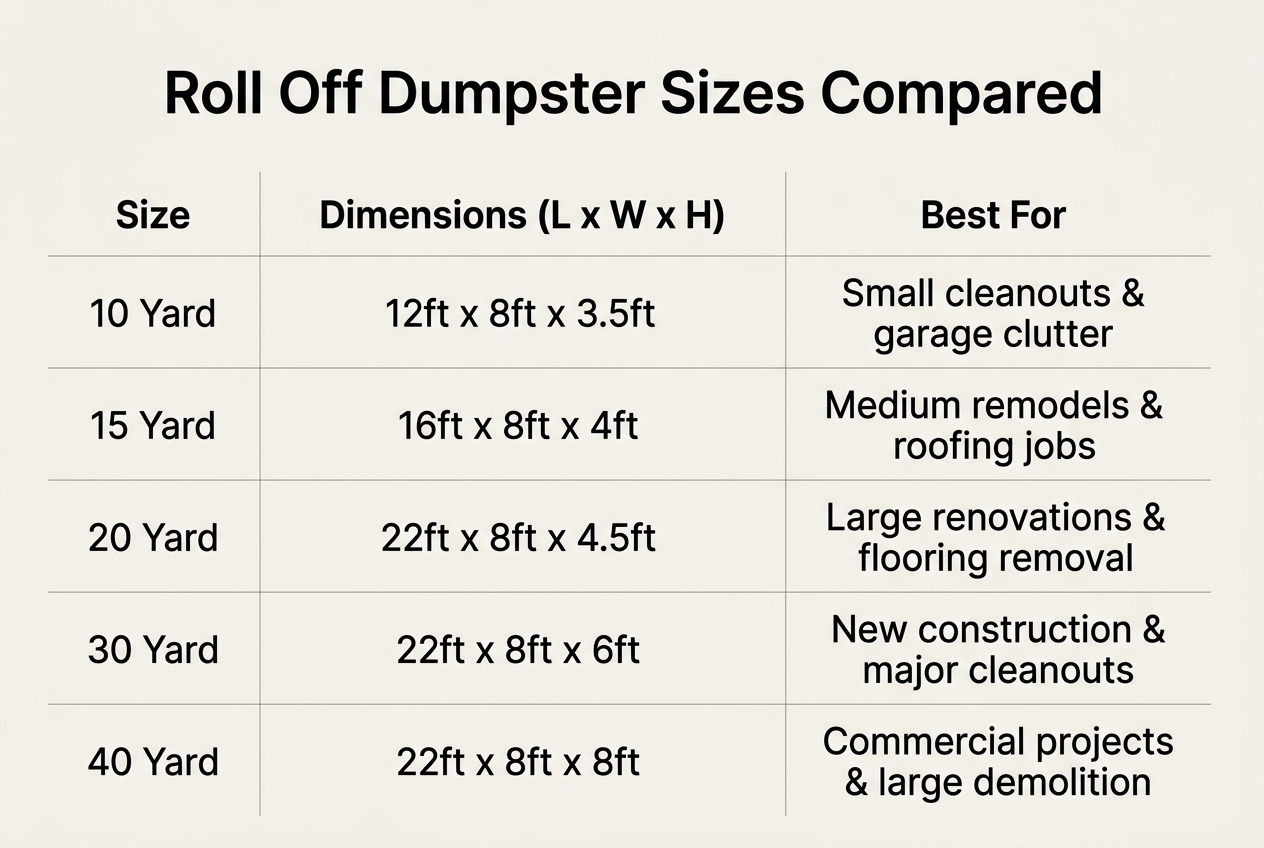
Comparing sizes side by side makes planning easier. The table below lines up common containers by length, width, height, and typical job type. This kind of quick-reference chart helps you avoid guesswork before a rental arrives.
10, 15, and 20 Yard Containers
These smaller units handle most home cleanouts and mid-size renovations. A 10 yard box suits garage cleanups, while a 20 yard fits roofing or flooring tear-outs.
| Size | Length x Width x Height | Capacity | Best Use Case |
|---|---|---|---|
| 10 Yard | 12 ft x 8 ft x 3.5 ft | ~3 truckloads | Small cleanouts, yard debris |
| 15 Yard | 14 ft x 8 ft x 4 ft | ~4.5 truckloads | Single-room remodels |
| 20 Yard | 16 ft x 8 ft x 4.5 ft | ~6 truckloads | Roofing, flooring jobs |
30 and 40 Yard Containers
Larger boxes support whole-house projects. A 30 yard unit measures 20 ft by 8 ft by 6 ft, holding about 9 truckloads. A 40 yard unit reaches 22 ft by 8 ft by 8 ft, holding roughly 12 truckloads. Many local businesses use these for demolition debris and large-scale commercial jobs.
Dimensions vs Truckload Equivalents
Truckload comparisons help estimate volume without picturing cubic yards. For deeper specs, review this roll off dumpster rental guide.
10 Yard and 15 Yard Roll Off Containers
10 Yard Dimensions and Uses
A 10 yard dumpster typically measures 12 feet long, 8 feet wide, and 3.5 feet high. It holds about 10 cubic yards of debris, roughly three pickup truck loads. This is the smallest roll off size most companies offer, making it a good fit for tight spaces.
These containers work well for small cleanouts, garage clearing, or single-room renovations. A bathroom remodel, a small deck removal, or yard debris from a weekend cleanup usually fits comfortably. Weight limits often range between 2,000 and 3,000 pounds, so heavier materials like concrete may need a smaller specialty bin instead.
15 Yard Dimensions and Uses
A 15 yard dumpster usually measures 12 feet long, 8 feet wide, and 4.5 feet high. That extra foot of height adds real capacity without changing the footprint much. It suits mid-sized cleanouts and minor renovations that produce more debris than a 10 yard can hold.
Homeowners often choose this size for kitchen remodels, flooring replacement, or clearing out a full basement. It also handles combined projects, like a bathroom update plus general household junk removal, without needing a second haul.
Choosing Between the Two
Both sizes need similar driveway space, roughly 60 feet of clearance and 12 feet of width for delivery. The real question is volume, not footprint.
If your project outgrows either option, larger units such as a 40 yard dumpster rental may be worth comparing before you commit.
20 Yard and 30 Yard Roll Off Containers
20 Yard Dimensions and Uses
A 20 yard dumpster measures about 22 feet long, 8 feet wide, and 4.5 feet tall. It holds roughly 20 cubic yards of debris, or about six pickup truck loads. This size fits medium remodels, garage cleanouts, and small roofing jobs.
Most homeowners fill a 20 yard bin to about 75-80% capacity before hauling day. If you want more details before booking a 20 yard dumpster rental, check specs and typical uses first. This helps you avoid overloading or renting a size too small.
30 Yard Dimensions and Uses
A 30 yard container runs about 22 feet long, 8 feet wide, and 6 feet tall. That extra height adds ten more cubic yards of space compared to the 20 yard model. Large home additions, whole-house cleanouts, and bigger roofing tear-offs suit this size well.
Fill levels matter here too. Bulky items like furniture or large drywall sections take up space fast, even when actual weight stays low. Many renters reach 85% capacity without exceeding weight limits.
Best Projects for Mid-Size Dumpsters
Remodels and roofing jobs create mixed debris: wood, shingles, drywall, and metal. Weight matters more than volume with heavy materials like shingles or concrete scraps. Overloading raises fees and can trigger extra hauling charges.
40 Yard Roll Off Containers and Large Project Needs
40 Yard Dimensions and Capacity
The 40 yard container is the largest standard roll off option available. It typically measures 22 feet long, 8 feet wide, and 8 feet tall. That footprint holds around 40 cubic yards of debris, equal to roughly 12 pickup truck loads. Walls stand tall, so bulky items fit without spilling over the top.
This size works best for heavy volume, not heavy weight. Weight limits often sit near 8,000 to 10,000 pounds. Exceeding that limit brings extra fees.
Ideal Use Cases
Large-scale demolition projects generate massive debris piles fast. A 40 yard container handles full home teardowns, commercial building strip-outs, and major renovations. Roofing jobs covering large commercial properties also fit this category well.
New construction sites benefit too. Framing scraps, drywall, and packaging waste pile up quickly on multi-unit builds. Property cleanouts involving entire estates or warehouses also call for this size. Smaller projects rarely need this much space; a 15 yard dumpster rental often suits lighter jobs instead.
Site Access Requirements
Commercial job sites need wide, flat space for a 40 yard container. Delivery trucks require roughly 60 feet of straight clearance to maneuver safely. Overhead wires and low branches can block placement entirely.
Ground surface matters too. Asphalt or concrete handles the weight better than soft soil or grass. Confirm placement plans early, since repositioning a full 40 yard unit is difficult once loaded.
Steps to Choosing the Right Dumpster Placement
Evaluating Ground Surface and Slope
A dumpster needs flat, stable ground. Soft dirt, gravel, or a sloped driveway can cause shifting once the box is loaded. Surface strength matters most for heavy debris like concrete or shingles. Wood planks placed under the container’s rails can protect asphalt from dents during hot weather.
Measuring Overhead and Side Clearance
Trucks need vertical and side room to deliver and pull containers safely. Check for low branches, power lines, awnings, or narrow gates before scheduling delivery. Also note the truck’s swing radius, since tight alleys can block a safe drop-off.
Permit Requirements for Street Placement
Placing a dumpster on a public street usually requires a city permit. Rules vary by neighborhood and by project length. Use this checklist before delivery day:
- Confirm whether your city requires a permit for curbside placement, since fines can apply without one.
- Measure driveway width and slope to prevent equipment shifting after loading.
- Check overhead clearance for wires, trees, or carports along the delivery path.
- Mark off space for the truck to maneuver safely during drop-off and pickup.
- Notify neighbors if the container will sit near shared property lines.
Careful planning protects pavement, avoids fines, and keeps projects on schedule. Homeowners researching dumpster rentals los angeles san fernando valley should ask their provider about local permit rules before booking.
Preparing Your Property Before Drop-Off
Clearing the Delivery Zone
A smooth delivery starts with a clear path. The truck needs a straight shot to the drop spot, with no low branches or tight turns. Advance planning saves time and prevents damage on delivery day. Before the truck arrives, walk the property and complete a few key steps.
- Remove parked cars, trailers, or trash cans from the planned delivery path.
- Trim overhanging branches that could block the truck’s roof clearance.
- Measure the space to confirm it matches the container size.
- Note any slopes or soft ground that could affect placement.
- Set aside a flat, ten-foot-wide lane for the truck to back into.
Protecting Driveway Surfaces
A loaded container is heavy. Placing plywood boards or planks under the drop zone spreads the weight and guards against cracks. This matters most on asphalt during hot weather, when surfaces soften. Homeowners renting smaller units, like a 10 yard dumpster rental, still benefit from boards, since even light containers can dent softer driveways. Cover nearby landscaping with tarps to catch debris.
Coordinating Delivery Timing
Call 811 before delivery day to mark buried utility lines. Flag sprinkler heads, septic covers, and gas meters near the placement area. Confirm an arrival window and keep a phone line open, since trucks may need last-minute directions to reach tight urban driveways.
Commercial and Front Load Dumpster Sizes vs Roll Off
Front load dumpsters are built for ongoing service, not one-time hauling. They sit behind stores or restaurants and get emptied on a set schedule. Roll off containers work differently. They stay on site until the project ends, then leave for good. Understanding this split helps businesses avoid picking the wrong equipment.
1 to 4 Yard Commercial Dumpsters
Small commercial bins, sized 1 to 4 yards, suit offices, cafes, and small retail shops with steady but light trash output. These containers get picked up weekly or biweekly, not swapped out like a roll off box.
6 and 8 Yard Commercial Dumpsters
Larger commercial units, 6 to 8 yards, fit restaurants and busier stores. They still rely on repeat pickups rather than a single haul. The table below shows how these compare to common roll off sizes.
| Container Type | Size Range | Best Use | Service Style |
|---|---|---|---|
| Small Front Load | 1-4 yards | Offices, cafes | Scheduled pickup |
| Large Front Load | 6-8 yards | Restaurants, retail | Scheduled pickup |
| Small Roll Off | 10-15 yards | Cleanouts, remodels | One-time haul |
| Large Roll Off | 20-30 yards | Construction, demolition | One-time haul |
When Roll Off Beats Front Load
Choose roll off for renovations, roofing jobs, or large cleanouts with a clear end date. Many local businesses check dumpster rental cost before deciding between short-term rental and recurring service. Project length is the deciding factor.
Roll Off Dumpster Pros and Cons by Size
Advantages of Smaller Containers
Smaller dumpsters, like 10 and 15 yard models, fit tight driveways. They cost less upfront and suit quick cleanouts. A compact footprint means less worry about blocking access or damaging pavement. They also work well for a moving dumpster rental, since most households don’t fill a huge bin during relocation.
Advantages of Larger Containers
Bigger units, such as 30 and 40 yard boxes, hold more debris. This means fewer hauls and less downtime for busy job sites. The extra capacity saves money on large renovation or demolition projects, where multiple small dumpsters would cost more overall.
Cost and Space Tradeoffs
Choosing a size means balancing price, space, and how much waste you expect. The table below breaks down common tradeoffs.
| Size | Footprint | Typical Cost Range | Best Tradeoff |
|---|---|---|---|
| 10 Yard | Smallest, fits narrow lots | Lower cost | Limited capacity |
| 15 Yard | Small to medium | Slightly higher | Good for mid-size cleanouts |
| 20 Yard | Medium footprint | Moderate cost | Balanced size and price |
| 30 Yard | Large, needs open space | Higher cost | Fewer pickups needed |
| 40 Yard | Largest footprint | Highest cost | Best for major projects |
Weigh your budget against available space before deciding. A smart size choice avoids overpaying or running out of room mid-project.
Frequently Asked Questions About Dumpster Dimensions
How Full Can a Dumpster Be Loaded?
Every dumpster has a fill line, usually marked a few inches below the top rail. Debris must stay level with that line. Piling material above it creates an unsafe load for transport, and drivers cannot legally haul an overfilled container on public roads.
Weight limits matter just as much as fill height. A 20-yard container might allow around 3-4 tons, depending on the provider and local rules. Heavy debris like concrete, shingles, or dirt fills the weight limit long before it reaches the top. Check a dumpster sizes guide before loading dense materials, since these often need smaller containers rated for extra weight.
Rental periods typically run 7 to 10 days. Extra days usually cost a small daily fee. Planning your loading schedule around this window helps you avoid overage charges.
What Happens If I Choose the Wrong Size?
An undersized dumpster leads to overflow, extra pickups, and added fees. An oversized one wastes money on space you never use. Both mistakes are common, especially on projects with mixed debris types.
Most providers can swap containers, but this adds a trip charge and delays your project timeline. Measuring debris volume before ordering saves time and money.
Can I Upgrade or Swap Sizes Mid-Rental?
Yes. Most rentals allow a size swap if your debris volume exceeds expectations. The provider removes the current container and delivers a larger one, often within the same day or next business day.
Swaps usually carry a separate haul fee, since it counts as an extra pickup and delivery. Call early, once you notice space running low, and keep your project moving without last-minute delays or blocked driveways.
Before settling on an approach, it helps to be honest about how much of the work you actually want to do yourself, and how much weight the job really carries — a few boxes and an old dresser are a very different problem from a full garage packed to the rafters. Bags have their place on genuinely small jobs, but they cap out quickly and can strand you mid-project, while a steel roll-off container gives you room to keep going and pricing that doesn’t shift as the pile grows. Ask what the total cost includes once hauling and disposal are figured in, how long you’ll realistically need the container sitting there, and whether anything in your pile — appliances with refrigerant, mattresses, leftover paint — needs to travel a different route entirely.